Keep the name on the little plastic label
Read the sun, water drop and thermometer symbols on a houseplant label. Learn what to check at home and which plant name to save.
The short answer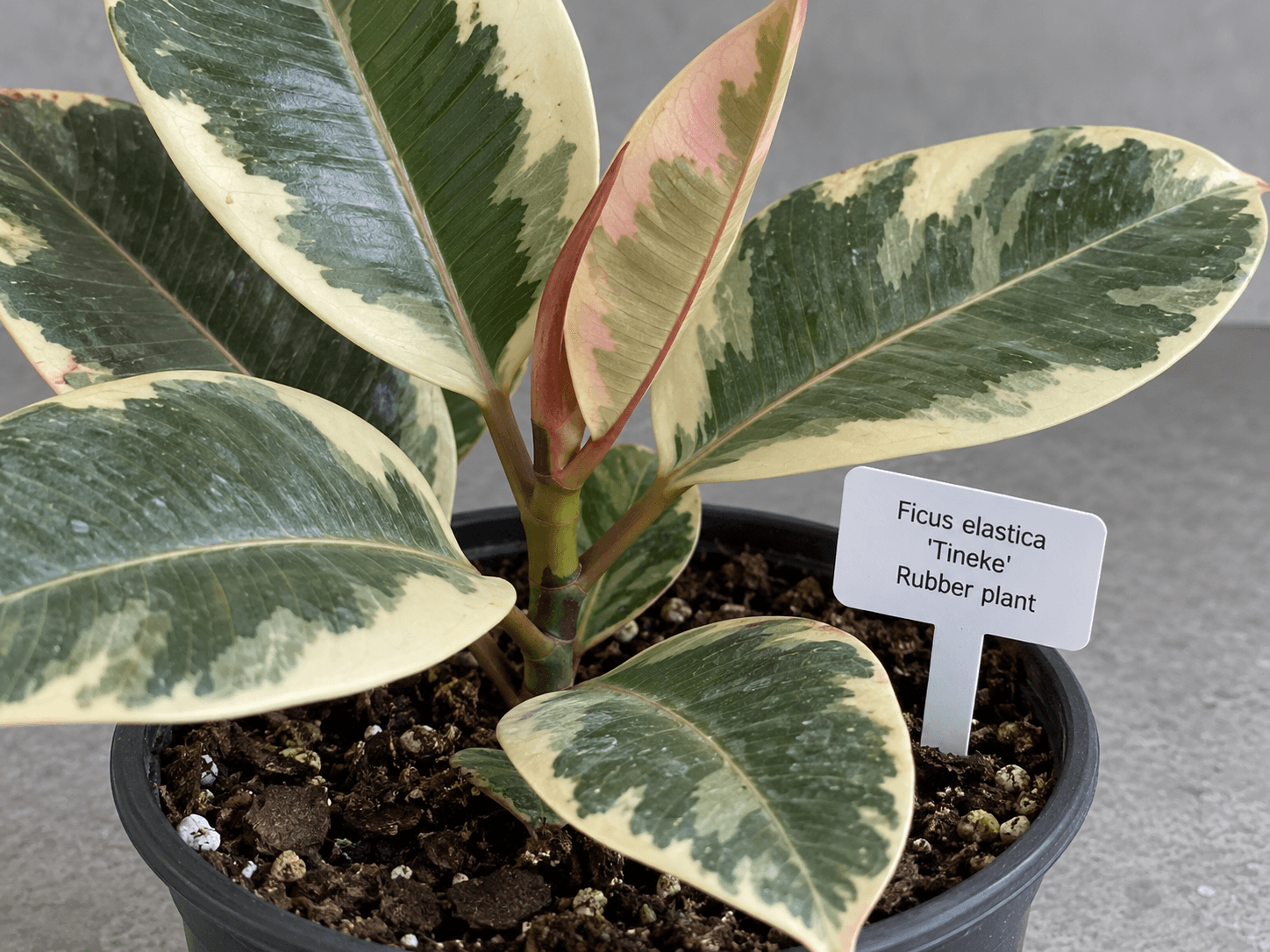
What do the symbols on a houseplant label mean?
Shapes vary between growers. Read the accompanying words and the supplier's key.
- Sun
- Look for words like direct sun or bright indirect light. Check whether direct sun reaches the leaves where you plan to put the pot.
- Half-shaded sun
- Often partial sun or shade. Outdoor sun-hour rules do not describe every indoor window.
- Sun with a warning
- In the VBN system, avoid direct sun. Bright filtered light still matters.
- Water drops or watering can
- Look for how moist the mix should stay, then feel it before watering. If the label only shows drops, look up the plant’s moisture needs by name.
- Pot in a water tray
- An immersion instruction. Follow the label, then let excess water drain away.
- Thermometer
- Check the numbers and units. A preferred temperature range differs from a winter-hardiness rating.
- Plant-food bottle
- Feeding guidance. Use the fertiliser product label for concentration; an icon alone gives no dose.
- Height and spread arrows
- Expected size. Read the measurement and allow room for a mature plant beyond its nursery pot.
Our sketches show common motifs, not a universal label standard. VBN uses a warning beside the sun; other labels use shaded suns.
VBN publishes one defined symbol system, but labels from different growers can look different. A half-shaded sun on a garden tag and a sun with a warning on a pot-plant label are not interchangeable. Keep the wording beside the picture when you photograph the label.
A sun icon cannot describe your neighbouring building, curtain or distance from the glass. Look up the light requirement and assess the proposed place at leaf height. Likewise, "water weekly" cannot account for pot size, medium, temperature and season. Use the label as a prompt to check the plant, not a command to water wet mix.
Check what the light symbol means at your windowTurn the watering symbol into a pot checkRead height and spread carefully. If the label does not say whether it describes the plant on sale or a mature specimen, look for a fuller profile. A compact shop display can contain young plants that will outgrow the shelf you had in mind.
Find the name you can look up
A label reading "green plant" gives you very little to work with. A fuller name helps distinguish plants that share a common name but need different care. Photograph both sides of the label before it fades, and keep the supplier information in case you need to ask for an identification.
| Label text | What it tells you |
|---|---|
| Ficus elastica | The genus Ficus and the specific epithet elastica identify the species. |
| 'Tineke' | The cultivar name identifies a named cultivated selection. Keep the quotation marks when recording it. |
| Rubber plant | A useful common name, but less precise than the complete name above. |
Not every useful label includes a species name. Some cultivated hybrids are named with a genus and cultivar. Keep what the label actually says rather than filling in a missing species from a similar-looking photograph.
Two names can refer to the same plant
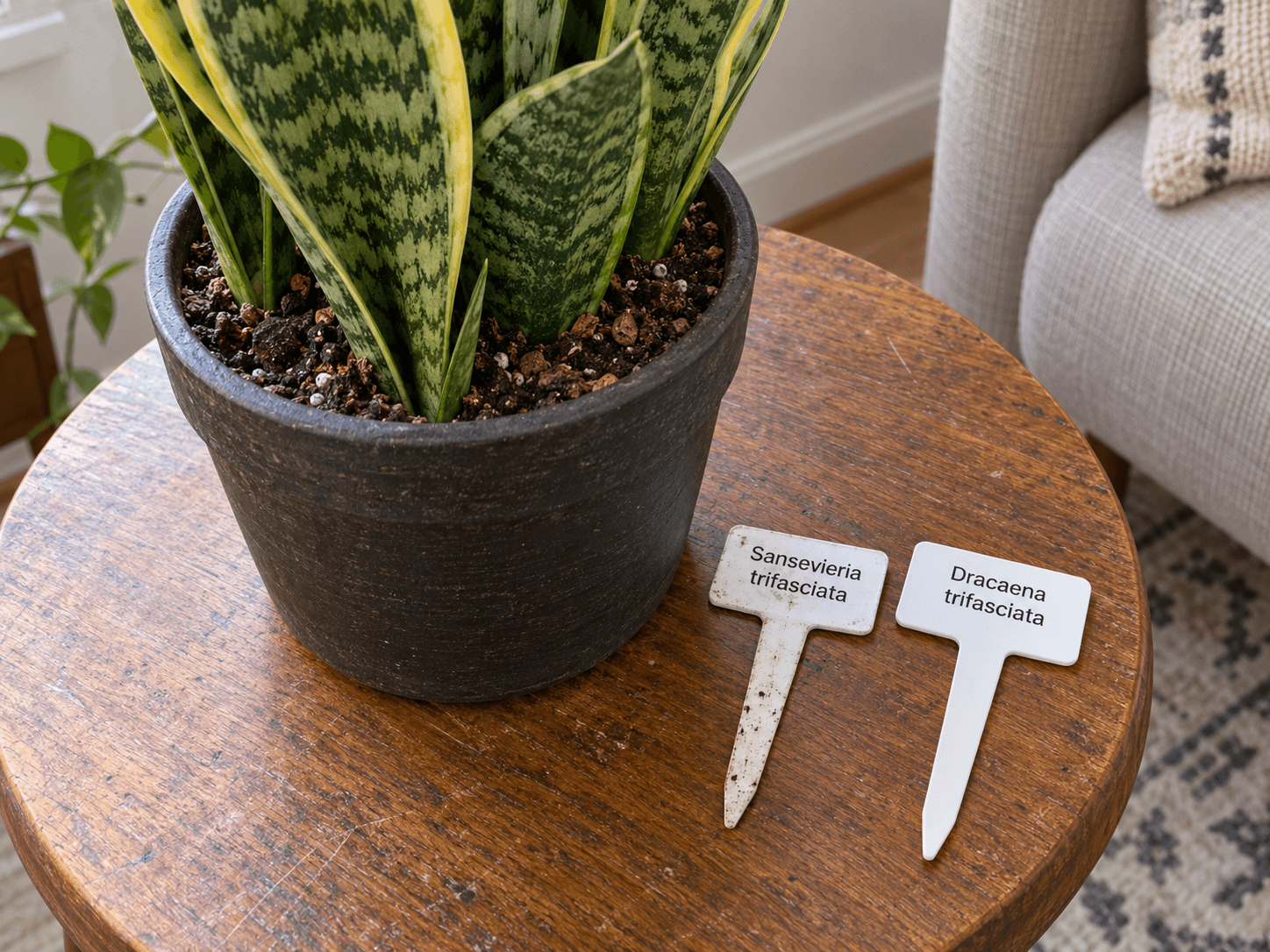
Botanical classification changes, and retail names do not all change at once. An older label does not necessarily mean a different plant or poor care information. Check the synonyms or "previously known as" section of a reputable botanical profile. The NC State snake-plant profile, for example, connects these two names explicitly.
Record both when that helps you search: the current name first, with the name on your label alongside it. A colour description or an attractive selling name may not be enough to establish a precise cultivar. Leave that detail unresolved when the evidence is incomplete.
Compare Calathea and Goeppertia on an orbifolia labelAsk before making an important assumption
When the name and plant do not seem to match, photograph the whole plant, leaves and label and ask the supplier. Use a botanical garden or extension profile to compare growth habit as well as colour. Do not rely on a generic "pet friendly" shelf sign to identify an unknown plant.
Find a related guide below.
Back to the beginningSources & notes
Care guidance checked against these horticultural references on October 27, 2026.
- Oregon State Extension: Useful definitions for reading plant labelsScientific names, named cultivars and hybrid cultivar label conventions.
- VBN / FloraHolland: Uniform pot-plant care symbolsA defined pot-plant label system: sun warnings, watering and immersion, temperature ranges and plant-food symbols; read symbols with their accompanying text.
- The Home Depot: How to read a plant tagRetail examples of shaded-sun and water-drop symbols, and mature height and spread. Outdoor sun-hour categories are not used as an indoor placement rule.
- NC State Extension: Dracaena trifasciataCurrent botanical name, dry-down and root-rot risk.
- NC State Extension: Ficus elasticaLight, drafts, leaf care, pruning and sap.
- University of Minnesota Extension: Lighting for indoor plantsWindow exposures, low-light limits and supplemental lighting.
- University of Maryland Extension: Watering indoor plantsMoisture and pot-weight checks; top and bottom watering.