Water when the pot is ready
Use pot weight, moisture and species needs to decide when to water, then wet the root ball and drain it properly.
The short answer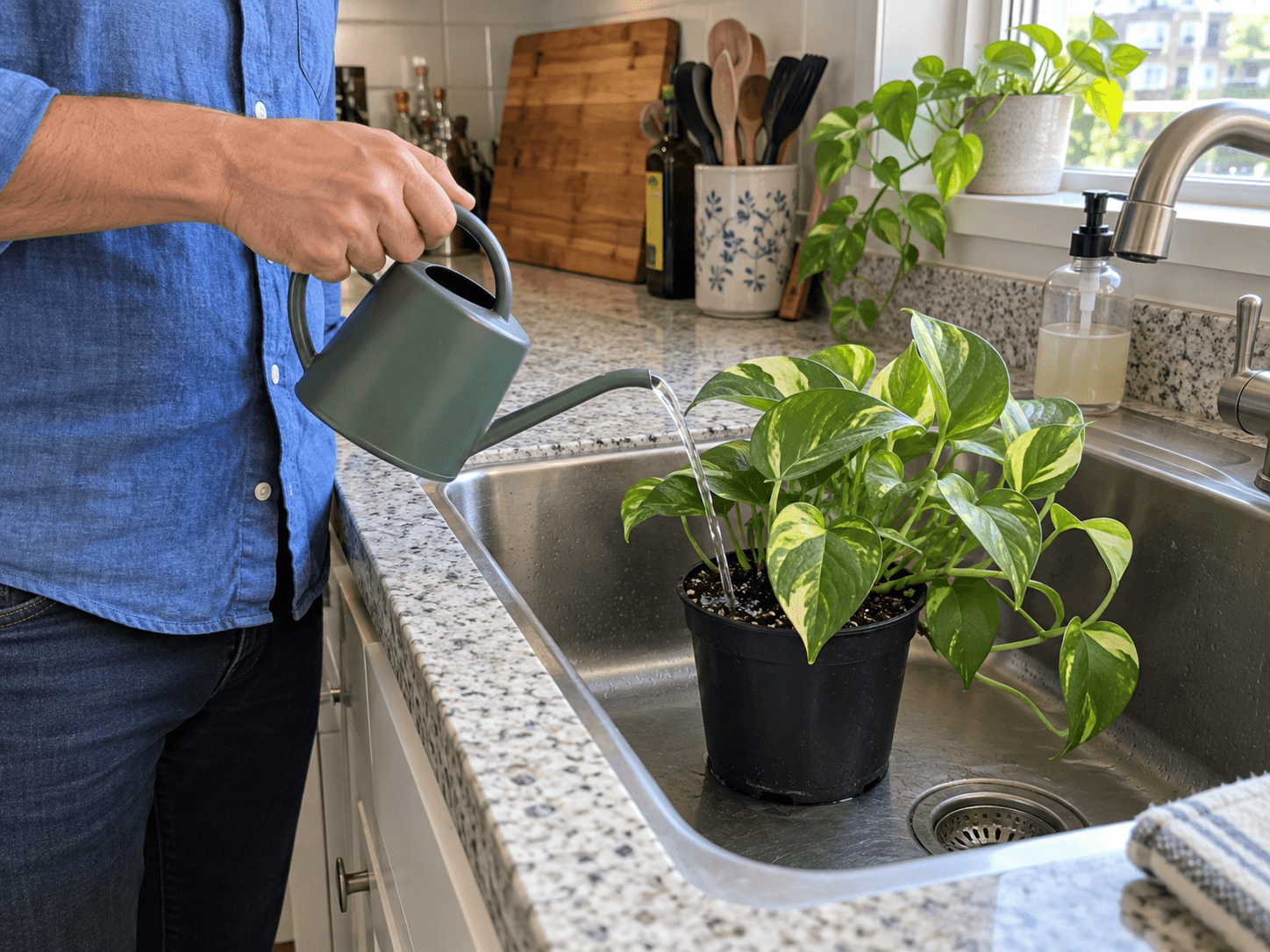
Make two checks before picking up the can
Feel the mix to a depth appropriate to the plant and pot, then lift the container if it is manageable. A watered pot is usually heavier than the same pot after drying. Learn that difference while the plant is healthy. One finger in the surface of a large pot cannot tell you everything about its lower half.
| Plant group | Before watering |
|---|---|
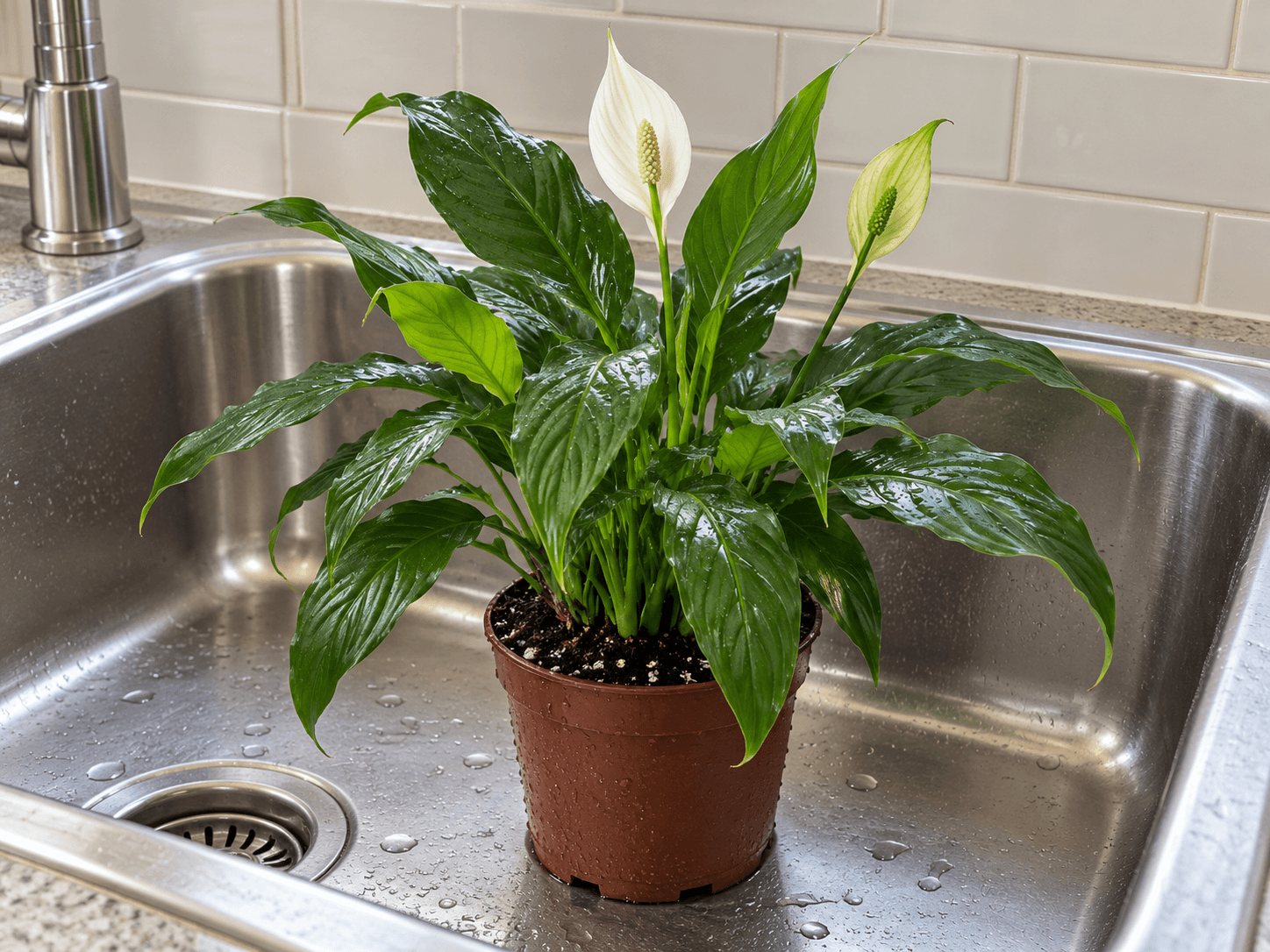
| Peace lily and other moisture-loving foliage | Upper mix beginning to dry; avoid prolonged saturation. |
| Pothos | Let the mix dry between waterings; compare moisture below the surface with pot weight. |
| Monstera deliciosa | Let the upper quarter to third of the mix dry; a large pot still needs a deeper moisture check. |
| Snake plant, ZZ and jade | Allow the mix to dry more fully. |
| Moth orchid in bark | Check the medium and roots; a soil rule does not translate neatly. |
A cheap moisture meter can be a supplementary clue, but it is not a substitute for understanding the medium. Dense soil, salts and poor contact can affect readings.
Wet the root ball, not just one patch
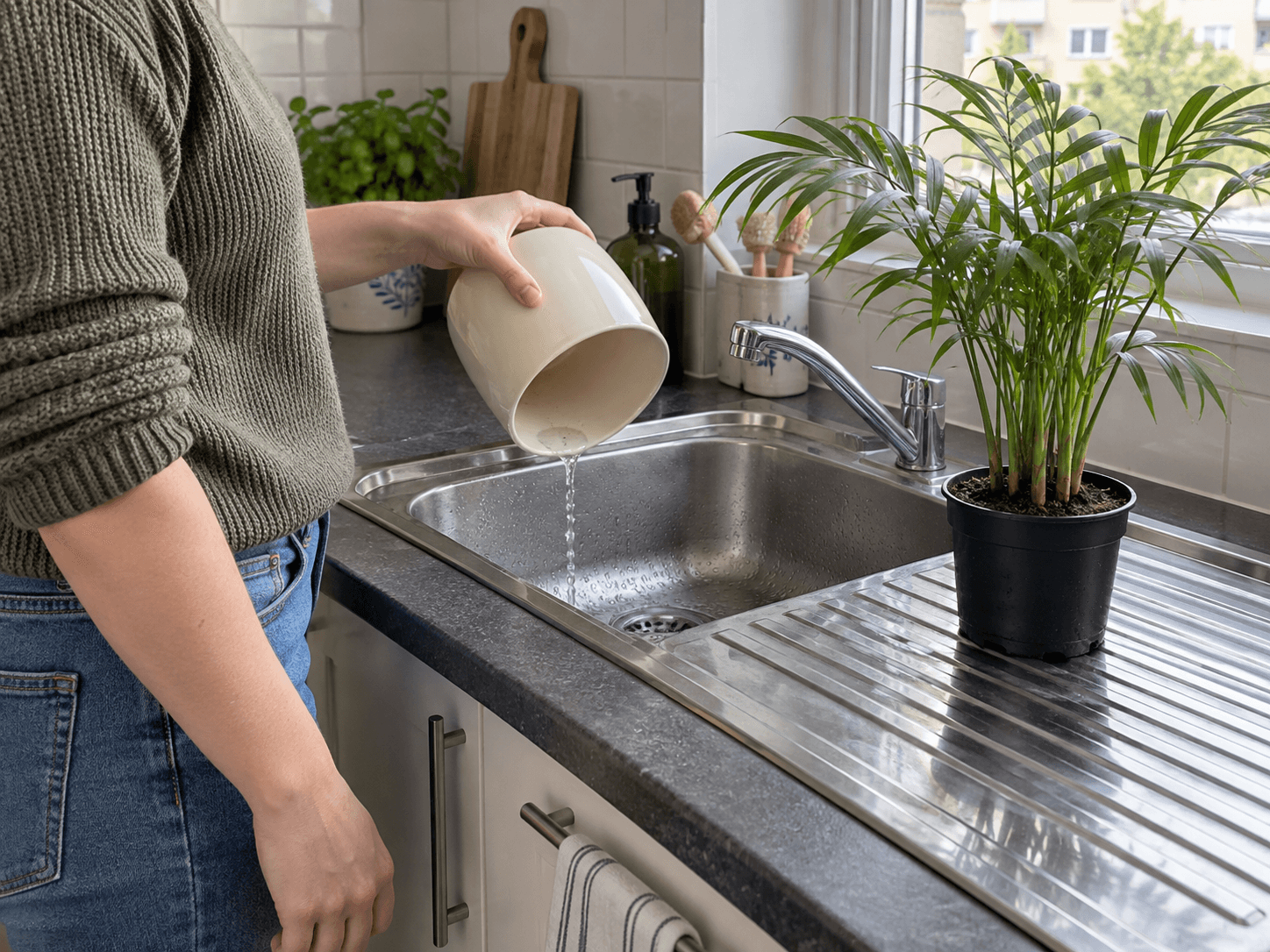
- Take the growing pot to a sink or a place where runoff can be collected safely.
- Apply water slowly across the surface, avoiding leaves and crowns that trap it.
- Let excess water leave the drainage holes.
- Return the pot only after draining, then empty any remaining water from the saucer or cover.
If water rushes down the sides of a very dry root ball while the centre stays dry, a quick pour is not doing the job. Wet gradually and check absorption. Temporary bottom watering can help some mixes rehydrate, but the pot must still be lifted out and drained.
Bottom watering is a method, not a storage system
Set a draining pot in shallow water so the medium can absorb it, then remove and drain it when sufficiently moistened. Do not leave it indefinitely in a bowl. This method is unsuitable as a blanket fix for every plant and can make it harder to notice salt buildup if you never water from the top.
For a plant with a persistently wet core, soaking is not the next step. Investigate drainage, light, pot size and roots. More water cannot repair roots damaged by prolonged saturation.
Put the observation in your reminder
A useful reminder says "check the pothos", not "water every Sunday". Note whether it was ready and what changed. Heating, a brighter window, a repot or shorter days can all alter the interval. The amount of time between waterings is an outcome of those conditions.
Find a related guide below.
Back to the beginningSources & notes
Care guidance checked against these horticultural references on 20 October 2026.
- University of Maryland Extension: Watering indoor plantsMoisture and pot-weight checks; top and bottom watering.
- NC State Extension: Plants grown in containersContainer materials, potting media, nutrition and indoor care.
- Royal Horticultural Society: Growing houseplantsIndoor conditions, seasonal care, humidity and holiday planning.
- NC State Extension: PhalaenopsisHybrid identity, bark media, roots and indoor culture.
- NC State Extension: Epipremnum aureumIdentity, light, pruning, rooting and ingestion risk.
- NC State Extension: Monstera deliciosaIdentity, climbing habit, light, watering and sap irritation.