The rubber plant stays here
Ficus elastica
Find a steady home for a rubber plant, clean its broad leaves and separate ordinary leaf ageing from a change worth investigating.
The short answer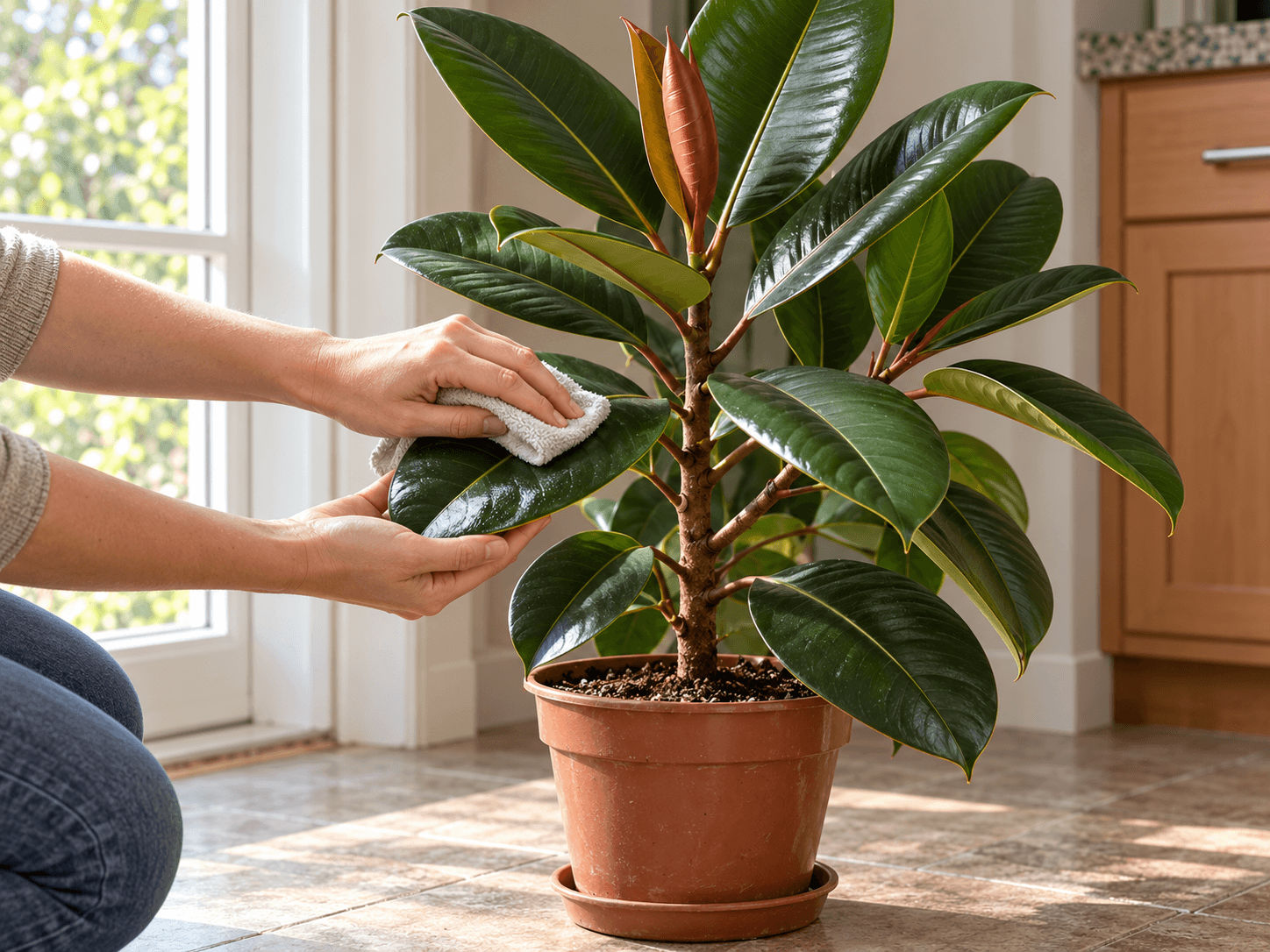
Give it a lasting address
A rubber plant has enough presence to anchor a room, but the chosen place needs to work for the plant too. Look for bright daylight without a sudden blast of strong afternoon sun. Keep it out of the path of an opening winter door and away from direct heater airflow.
Imagine the next year of growth before choosing the pot. Can you reach behind the leaves? Will a branch cross the walkway? Is there a stable saucer beneath the container? These ordinary questions are more useful than matching the pot exactly to a chair.
Clean without adding a coating
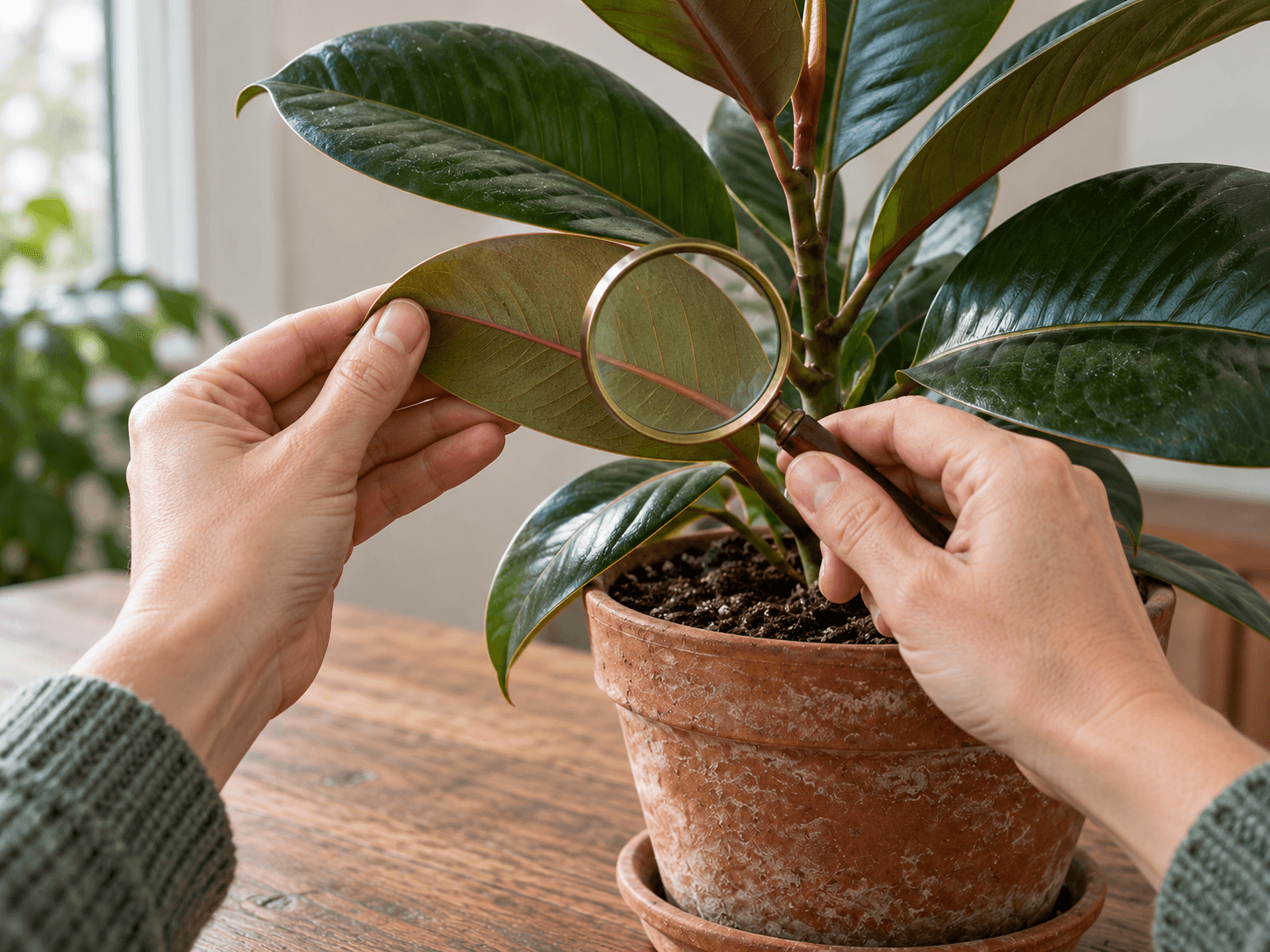
Support a leaf from below and wipe its upper surface with a soft damp cloth. Rinse the cloth as it gets dirty. The broad leaves are easy to inspect, and cleaning is a good opportunity to check undersides, leaf joints and stems for pests.
Use plain water rather than oils, milk or leaf-shine products. The point is to remove dust and see the surface clearly. A new leaf emerges from a pointed sheath; give it room to open without pulling at it.
Keep a record of changes
Check the upper potting mix and weight before watering. Wet the root ball and allow drainage, then empty the cover. In a cooler, darker season it may take longer to reach the same dry-down. Keep the position and watering observations together in your notes.
| Recent change | Useful check |
|---|---|
| Moved to a new room | Has the light or temperature changed? |
| Heating started | Is hot air blowing across the foliage? |
| Watered more often | Is the lower pot staying wet? |
| One oldest leaf yellowed | Is the rest of the plant firm and producing healthy growth? |
The table is a way to organize observations, not a diagnosis. If leaves keep dropping despite a stable environment, inspect the roots and look carefully for pests.
Prune with a destination in mind
Leaving the main stem intact encourages a taller outline. Pruning can encourage branching, but first decide where you want the canopy to sit. Use clean tools and protect surfaces from the milky sap. Wear gloves, avoid eye contact and keep cut pieces away from children and pets.
Do not combine a major prune, a large repot and a move into strong sunlight simply because the plant looks untidy. A measured change is easier to understand. For a healthy plant that has outgrown its pot, a modest repot during active growth is a sensible next job.
Find a related guide below.
Back to the beginningSources & notes
Care guidance checked against these horticultural references on 20 October 2026.
- NC State Extension: Ficus elasticaLight, drafts, leaf care, pruning and sap.
- University of Maryland Extension: Watering indoor plantsMoisture and pot-weight checks; top and bottom watering.
- University of Minnesota Extension: Managing insects on indoor plantsInspection, isolation, pest signs and integrated management.
- University of Maryland Extension: Diagnose indoor plant problemsOverlapping causes of wilt, yellowing, poor growth and root damage.