The unhurried snake plant
Dracaena trifasciata
A snake-plant care guide that makes room for slow growth and explains why a dry surface is not the whole watering test.
The short answer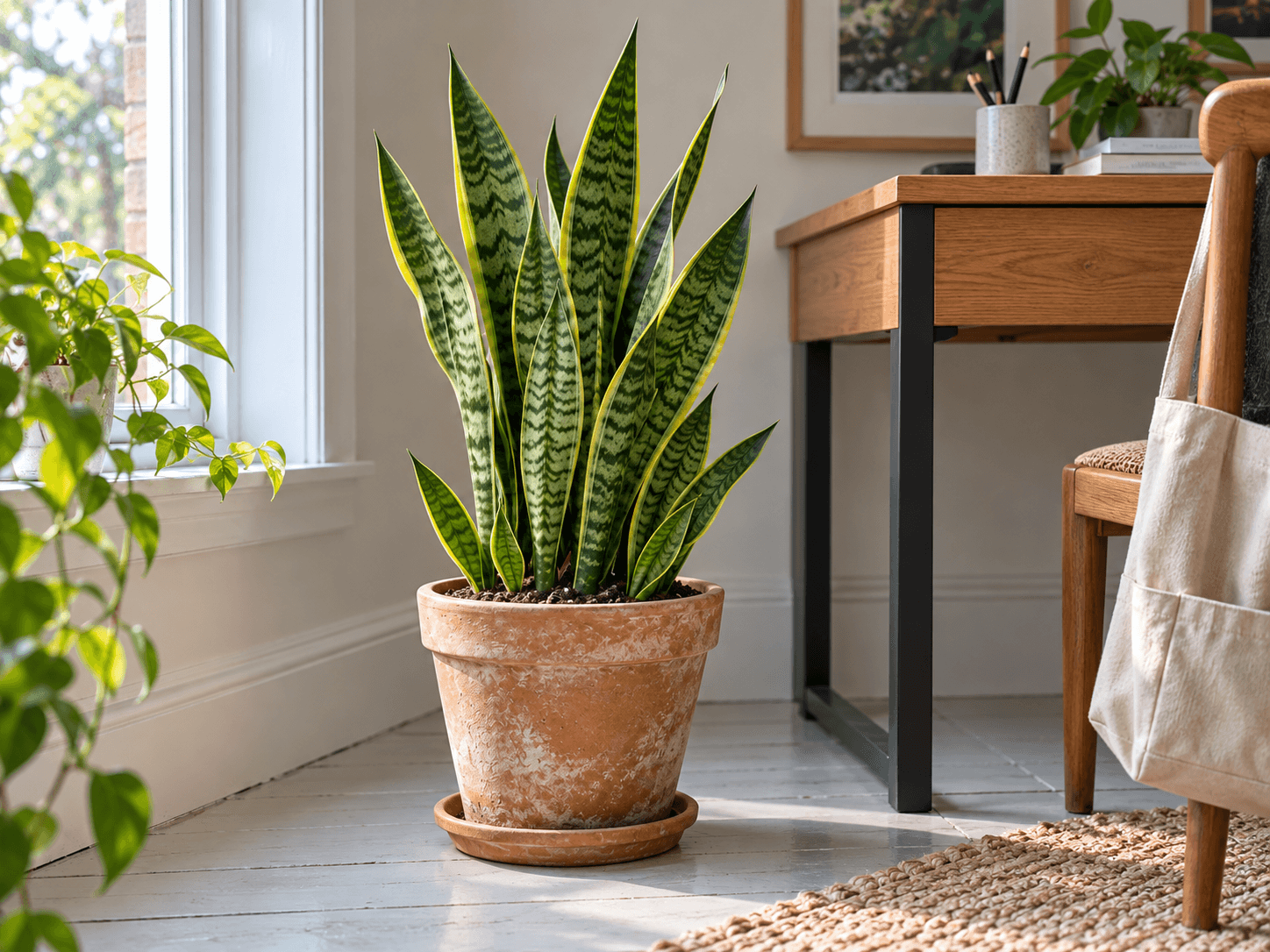
The plant on the old label
You may still see Sansevieria trifasciata on shop labels. The current name used here is Dracaena trifasciata. Cultivars vary from short rosettes to tall, banded blades; choose the eventual shape as well as the colour. A narrow upright plant is useful in a small room, provided the pot is stable.
Before bringing one home, look closely at the base of each leaf. A dry brown tip is different from a soft, collapsing base. Avoid choosing a plant solely because the foliage looks tall and symmetrical from across the shop.
Low light is a tolerance
A bright position supports more active growth than a dark corridor. Some direct sun can be suitable, but move a shade-grown plant gradually. Observe the actual window exposure rather than relying on the phrase "low-light plant". A windowless room needs suitable artificial plant lighting.
Place the pot where it is easy to examine without lifting it over furniture. The sculptural outline can work beside a cabinet or chair; it does not need to be pushed into the least usable corner of the room.
Let the whole pot inform you
Snake plants store water and are vulnerable to overwatering. A gritty, freely draining potting mix and drainage holes make the routine easier. Check that the mix has dried, using pot weight and a deeper check where accessible. Do not apply a monthly calendar as a rule: a hot bright window and a cool winter hall are different environments.
- Check the inner pot, not just the decorative cover.
- Wait if the lower mix is still damp or the pot feels heavy.
- Water the root ball evenly when dry, then let it drain and empty the saucer.
If drying takes an unusually long time, investigate the pot size, light and mix before adding another drink. A handful of gravel at the bottom will not solve this.
Pups, divisions and damaged leaves
New shoots can emerge from the rhizome at the base. Crowding alone is not an emergency; inspect whether roots and rhizomes genuinely fill the pot. Division is useful when there is a healthy rooted section to separate. Leaf cuttings take patience, and some variegated forms do not reproduce their markings that way.
A torn or browned leaf tip will not become green again. Judge recovery by firm bases and healthy new growth. Keep the plant away from chewing pets and children; it is not an edible plant. If several leaves soften in wet soil, inspect roots rather than trimming the visible damage and continuing the same watering routine.
Find a related guide below.
Back to the beginningSources & notes
Care guidance checked against these horticultural references on 20 October 2026.
- NC State Extension: Dracaena trifasciataCurrent botanical name, dry-down and root-rot risk.
- University of Maryland Extension: Potting and repottingRoot-ball placement, aeration and why not to add gravel.
- Iowa State University Extension: Propagating houseplantsSpecies-appropriate stem cuttings, divisions and plantlets.
- University of Minnesota Extension: Lighting for indoor plantsWindow exposures, low-light limits and supplemental lighting.