Keep the notes you will actually use
Record what you saw and what you did, with enough context to understand a change later. A few clear entries beat a complicated tracking system.
The short answer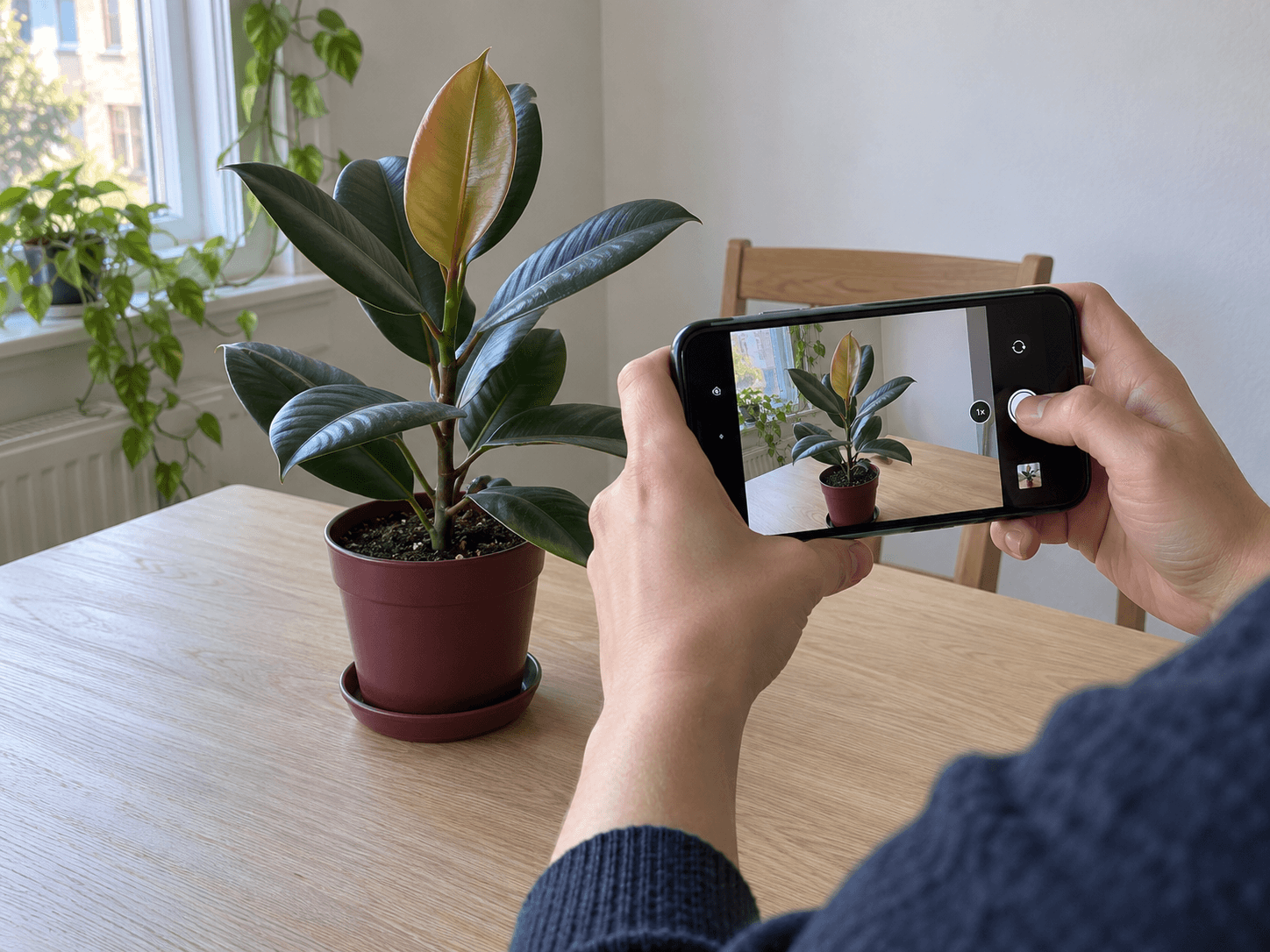
Start with one plant and one place for the notes
Choose the plant you find hardest to read. A phone note, a paper page or a small spreadsheet can all work. Use a name that distinguishes this pot from the other one: "rubber plant by the dining window" is more helpful than "large plant". Add its botanical name if known.
Record the pot type, whether it drains and where the plant normally stands. Note the window direction if you know it, but also the curtain, building or shelf that changes the light. This starting description makes a later move meaningful. You do not need to catalogue every leaf before beginning.
Separate a check from an action
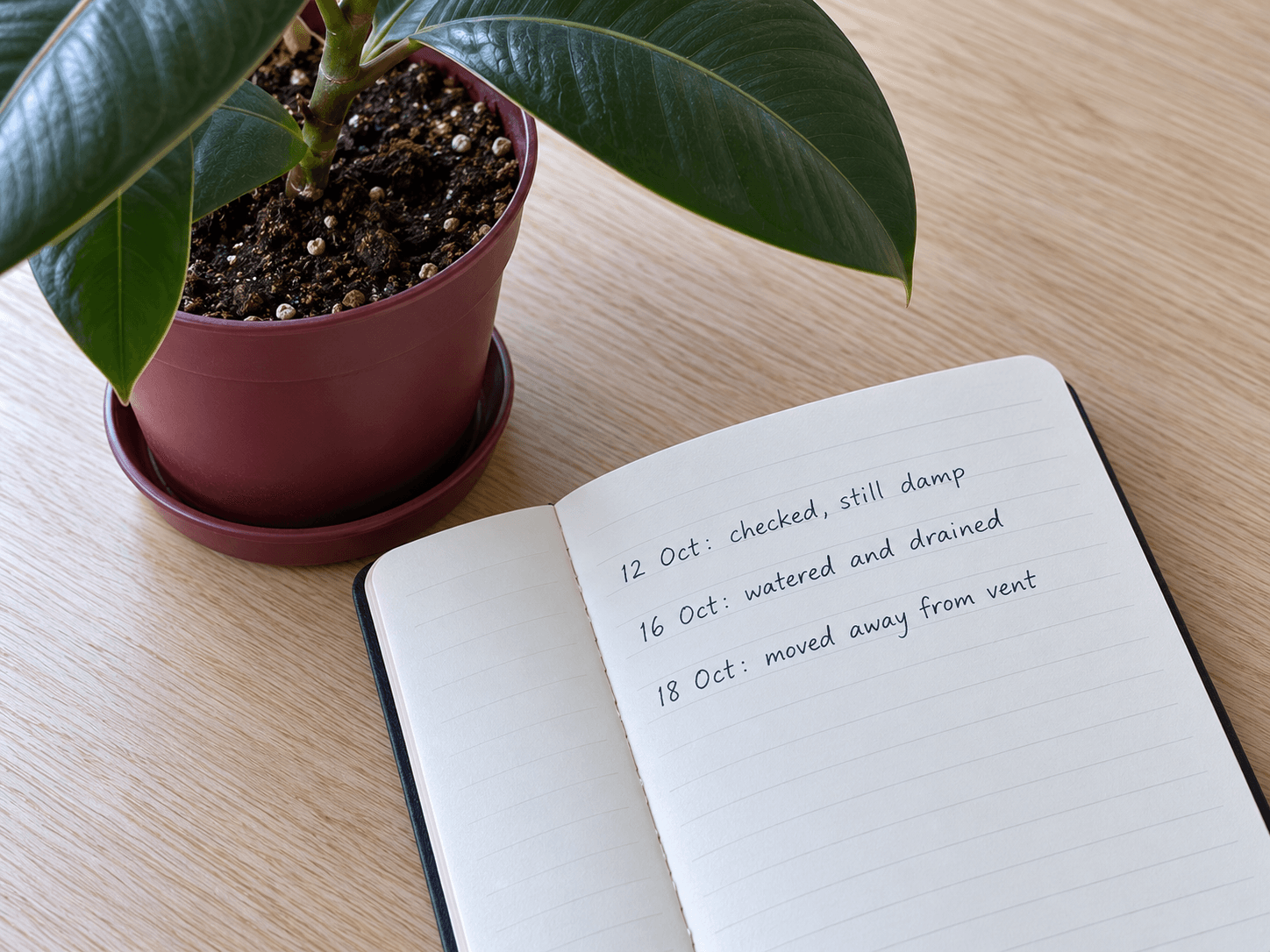
| Field | Example |
|---|---|
| Date and observation | 12 October: mix still damp; pot feels heavy. |
| Action | No water added. |
| Change worth following | One lower leaf yellowing; took a photo. |
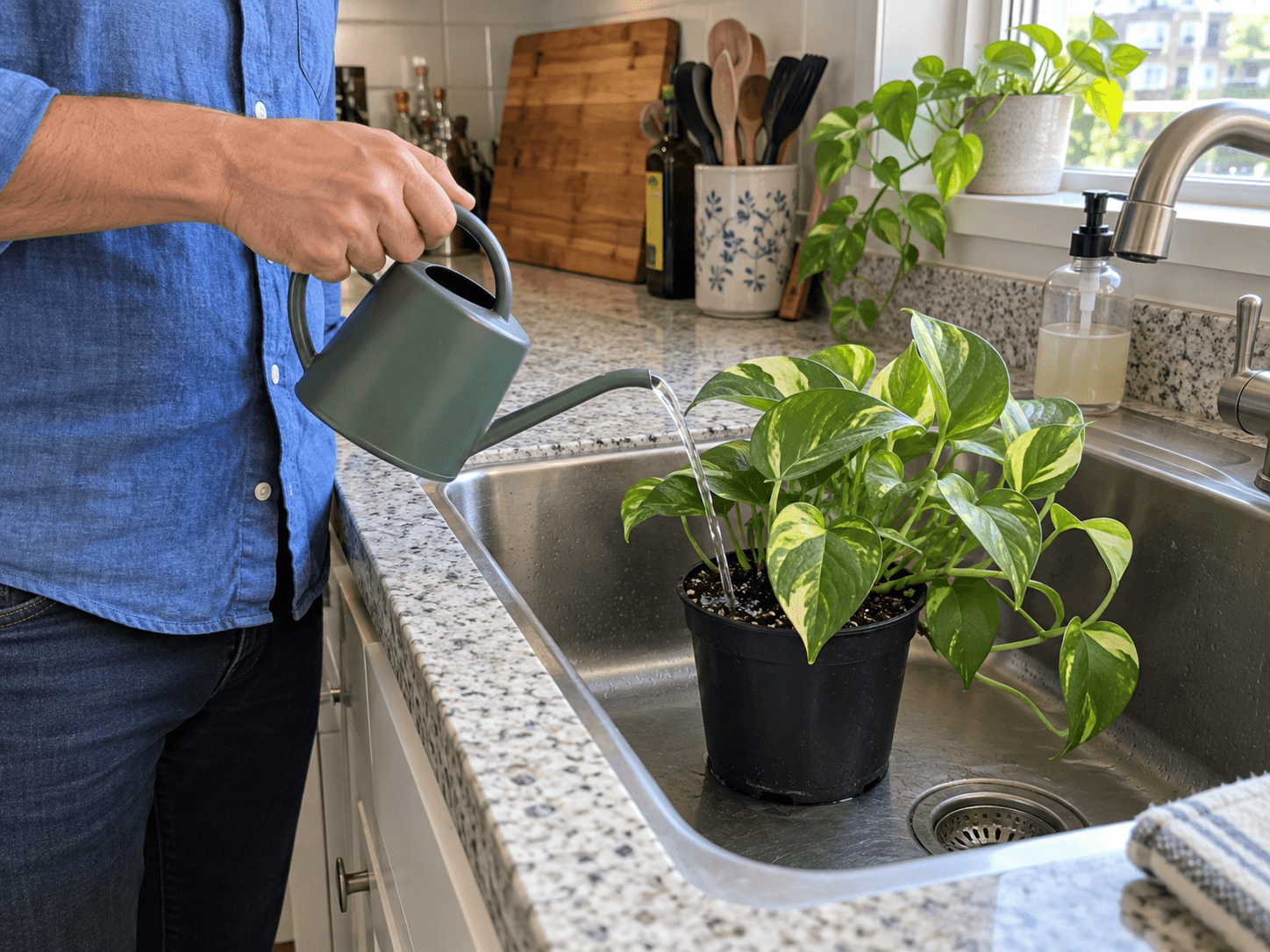
When you water, record that it happened and that runoff was removed. Add repotting, feeding, a move, a new grow-light setting or a pest treatment when relevant. Keep product details with any treatment record. You can then distinguish a period of regular checks from a period when nobody looked.
Make the next photograph comparable
- Take one view of the entire plant, pot and growing position.
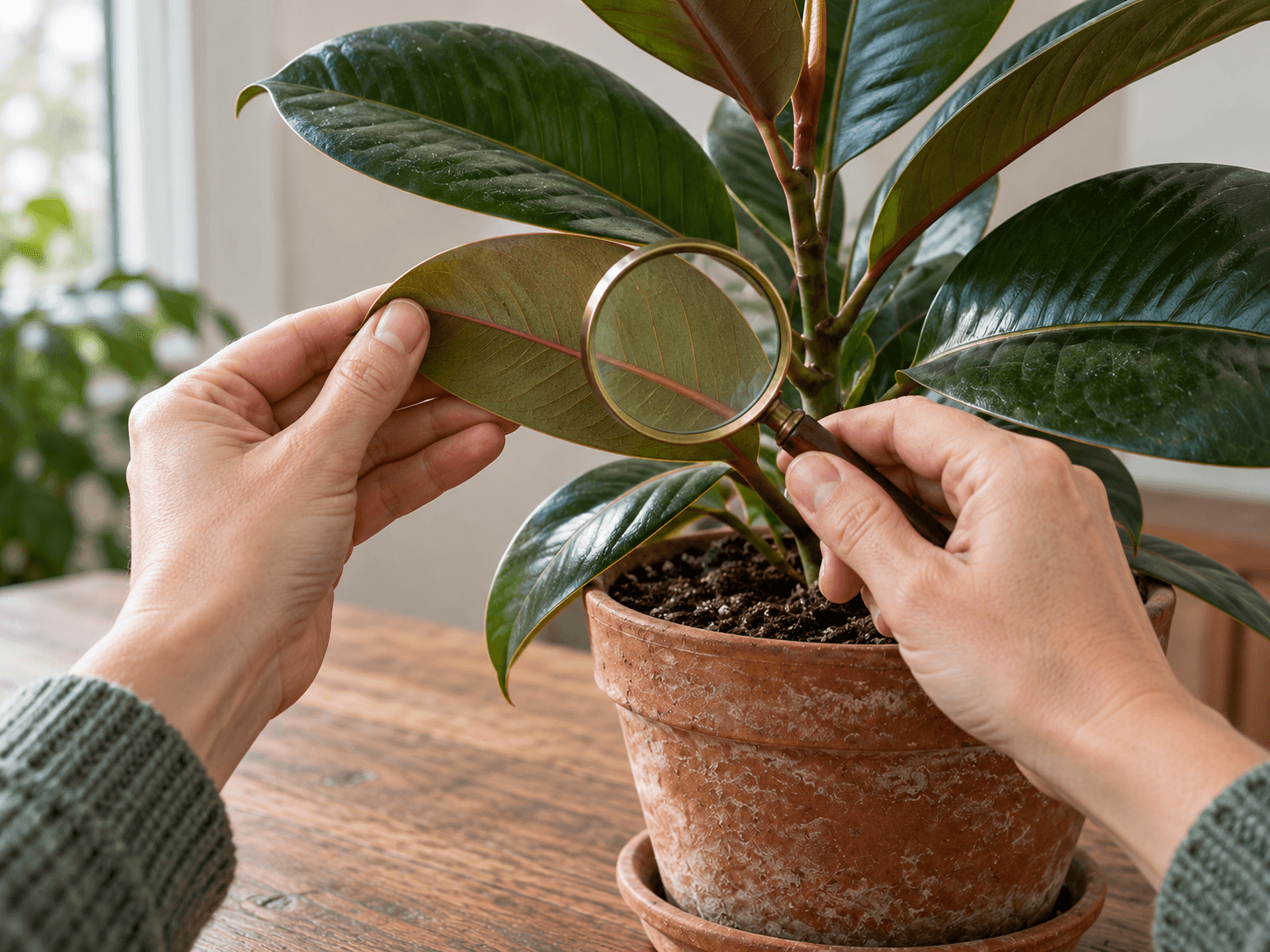
- For a changing mark, add a clear close view of the same leaf surface. Include the underside when useful.
- Use similar light and distance next time. Avoid colour filters that make ordinary green look yellow.
- Keep the date with the image and describe what changed. Do not rely on memory to identify which of several similar leaves you photographed.
A close photograph can miss wet roots, a cold window or another affected plant nearby. Use pictures alongside the care history. If asking someone for help, send the whole-plant view and the recent changes as well as the damaged patch.
Read the pattern before changing the routine
Look back when the plant behaves differently. Has the pot stayed wet longer since moving away from the window? Did several changes happen together? Those are questions to investigate, not proof of a single cause. Match the conditions to the species and inspect the plant before choosing a response.
Find a related guide below.
Back to the beginningSources & notes
Care guidance checked against these horticultural references on 20 October 2026.
- Iowa State University Extension: Diagnosing houseplant problemsDistinguishing environmental damage, cultural problems, pests and disease.
- University of Maryland Extension: Watering indoor plantsMoisture and pot-weight checks; top and bottom watering.
- University of Minnesota Extension: Lighting for indoor plantsWindow exposures, low-light limits and supplemental lighting.