Leave room for the next round leaf
Goeppertia orbifolia
Orbifolia needs room for its broad leaves and access to the pot beneath them. Watch new growth while checking moisture and the surrounding air.
The short answer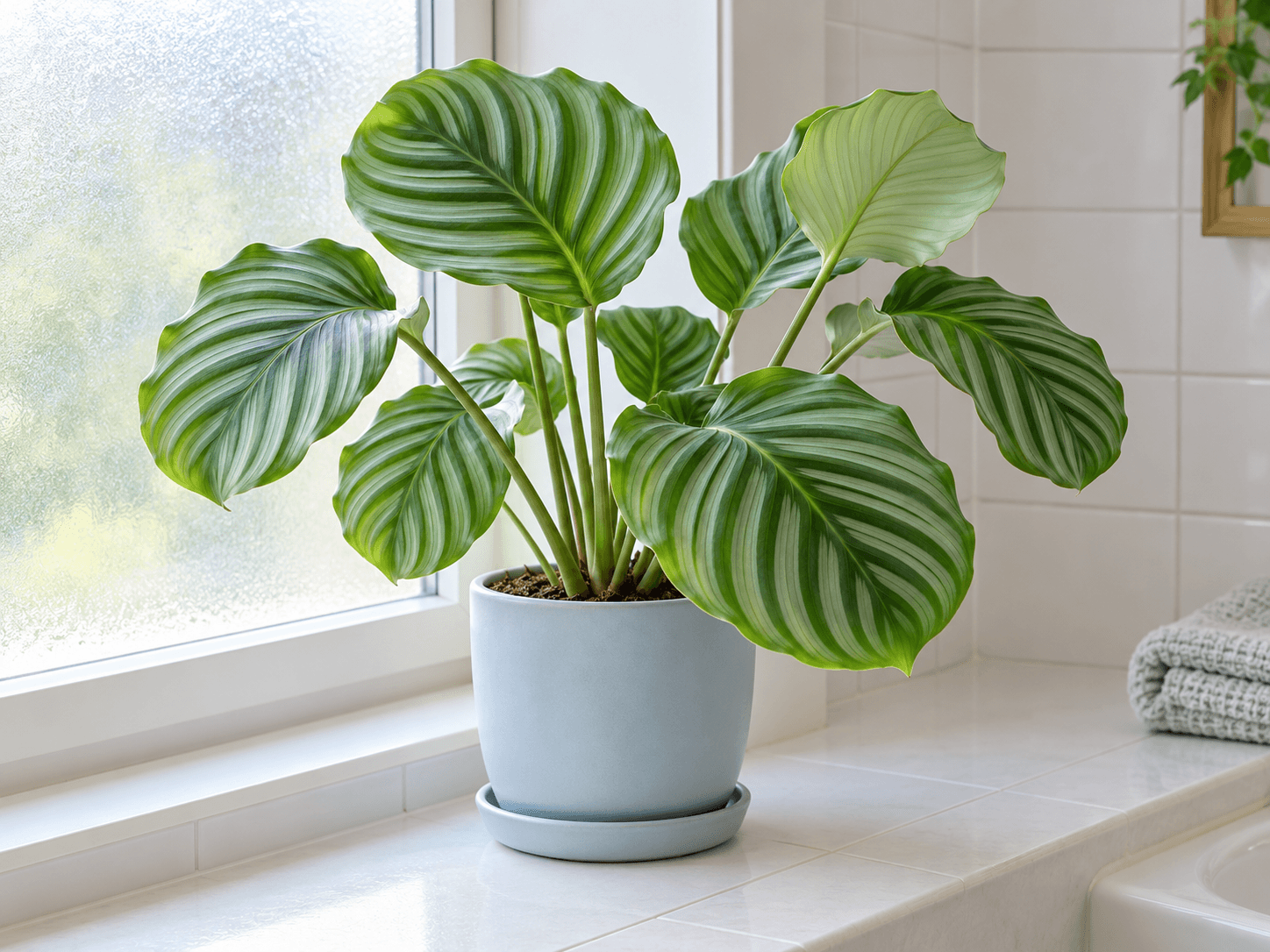
Measure the leaves, not just the pot
A small orbifolia can fill a shelf surprisingly quickly. Its rounded leaves spread on individual stalks, often well beyond the container. Before choosing a place, check whether the next leaf will hit a curtain, a cupboard door or another plant. Leave a route to reach the mix without bending the outer leaves.
The familiar nursery name is Calathea orbifolia; Goeppertia orbifolia is the current name used by the RHS and NParks. Broad silver-green bands and pale undersides distinguish it from many purple-backed relatives. Keep the label with your care notes, especially if several plants arrived under the general name calathea.
Let a new leaf open itself
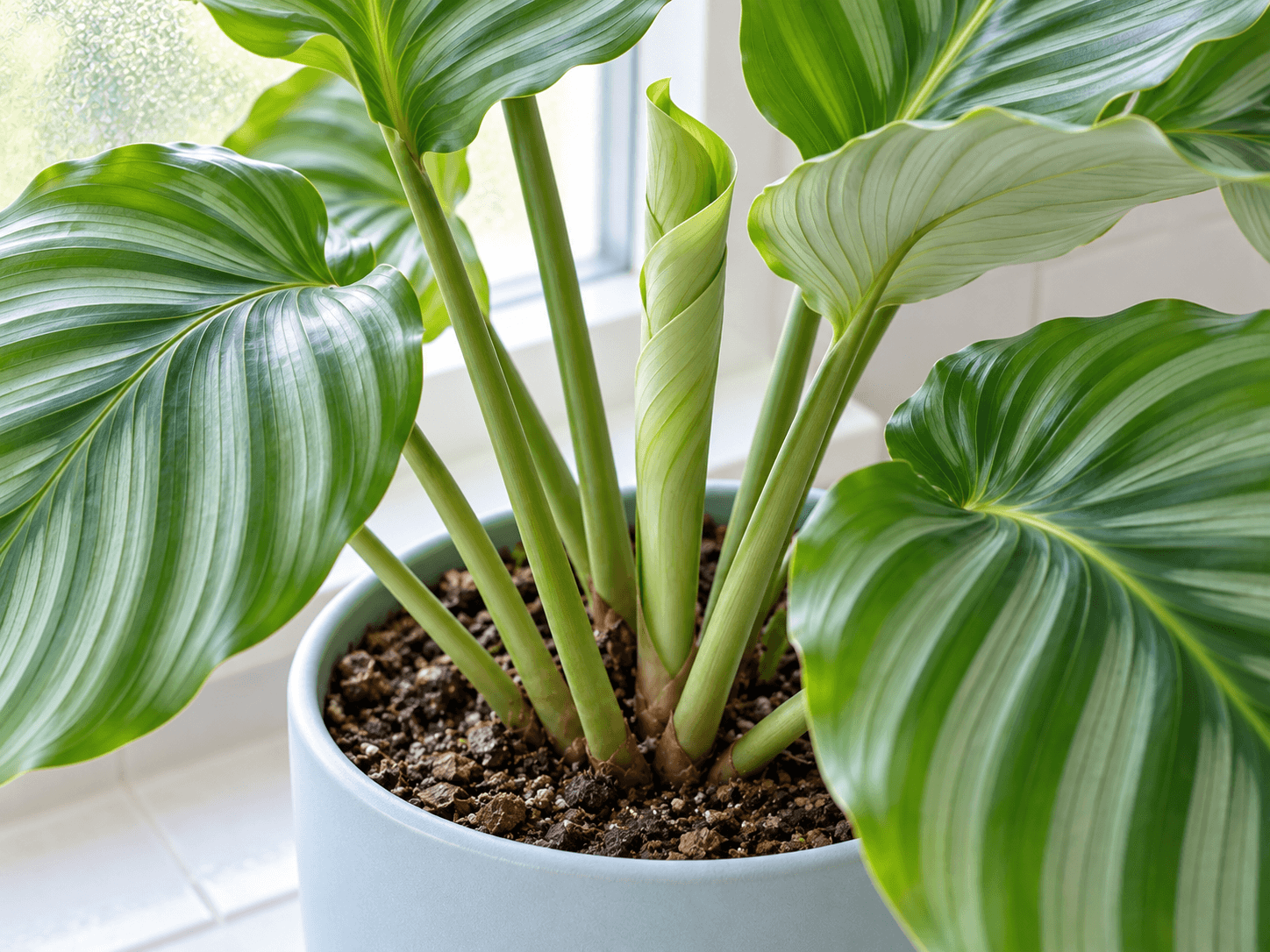
A new leaf begins tightly rolled. Photograph it from the same angle every few days if you want to follow its progress. Pulling on the edge can tear a leaf that was developing normally. Keep the growing point clear of a curtain or shelf above it rather than trying to speed the process by hand.
New leaf
A separate rolled spear is developing. Give it space; do not pull it open.
Daily movement
A prayer-plant leaf changes its angle between day and night. The blade still opens.
Persistent curl
An older blade stays rolled. Check the mix, roots, light and airflow before adding water.
Simplified prayer-plant shapes. Posture is a clue, not a diagnosis. Compare at the same time of day.
Compare that new growth with the established leaves. If older blades suddenly curl too, check the mix and recent changes in sun, heat or drafts. The posture alone cannot tell you whether to add water.
Check the whole position
Use bright indirect light and a consistently warm place, at least about 16 C. Keep the plant away from direct heater airflow and a window opened in winter. A bathroom is useful only if its light, temperature and available ledge also suit the plant between showers.
Keep the root zone lightly moist during growth, allowing excess water to drain. Check beneath the top surface if the pot seems slow to dry. As growth slows, water less often while avoiding a completely dry root ball. A hidden puddle in the outer pot is easy to miss under a wide canopy.
Measure the air before reaching for a mister
Orbifolia prefers humid air. Use a hygrometer beside the foliage to understand the room, especially when the heating comes on. A quick mist does not create lasting humidity. A room humidifier can help, but do not keep raising the setting if windows collect condensation; choose a position that suits both the plant and the home.
Compare practical ways to raise humidity at homeFollow the checks for a mature leaf that stays curledUse new leaves to judge an adjustment
If edges brown, record which leaves are affected and what changed recently. Check watering, root condition, dry airflow and fertilizer use before changing several things together. Existing brown tissue will remain brown, so compare subsequent growth rather than repeatedly trimming the same edge.
Find a related guide below.
Back to the beginningSources & notes
Care guidance checked against these horticultural references on October 27, 2026.
- RHS: Goeppertia orbifoliaRound striped leaves, pale undersides, warmth, moisture and division.
- Singapore NParks: Goeppertia orbifoliaBotanical identity, Calathea synonyms and silver-green foliage.
- RHS: How to grow calatheasLeaf movement, filtered light, warmth and moisture for related genera.
- Iowa State Extension: Raising humidity for houseplantsHumidity preferences, humidifiers, local measures and the limits of misting.
- Health Canada: Cool-mist humidifiersHygrometer use, seasonal humidity guidance, reservoir cleaning and emptying.
- University of Maryland Extension: Watering indoor plantsMoisture and pot-weight checks; top and bottom watering.
- University of Maryland Extension: Diagnose indoor plant problemsOverlapping causes of wilt, yellowing, poor growth and root damage.