What does your window offer?
Read direct and indirect light in a real apartment, account for obstructions and choose a better position without guessing from compass direction alone.
The short answer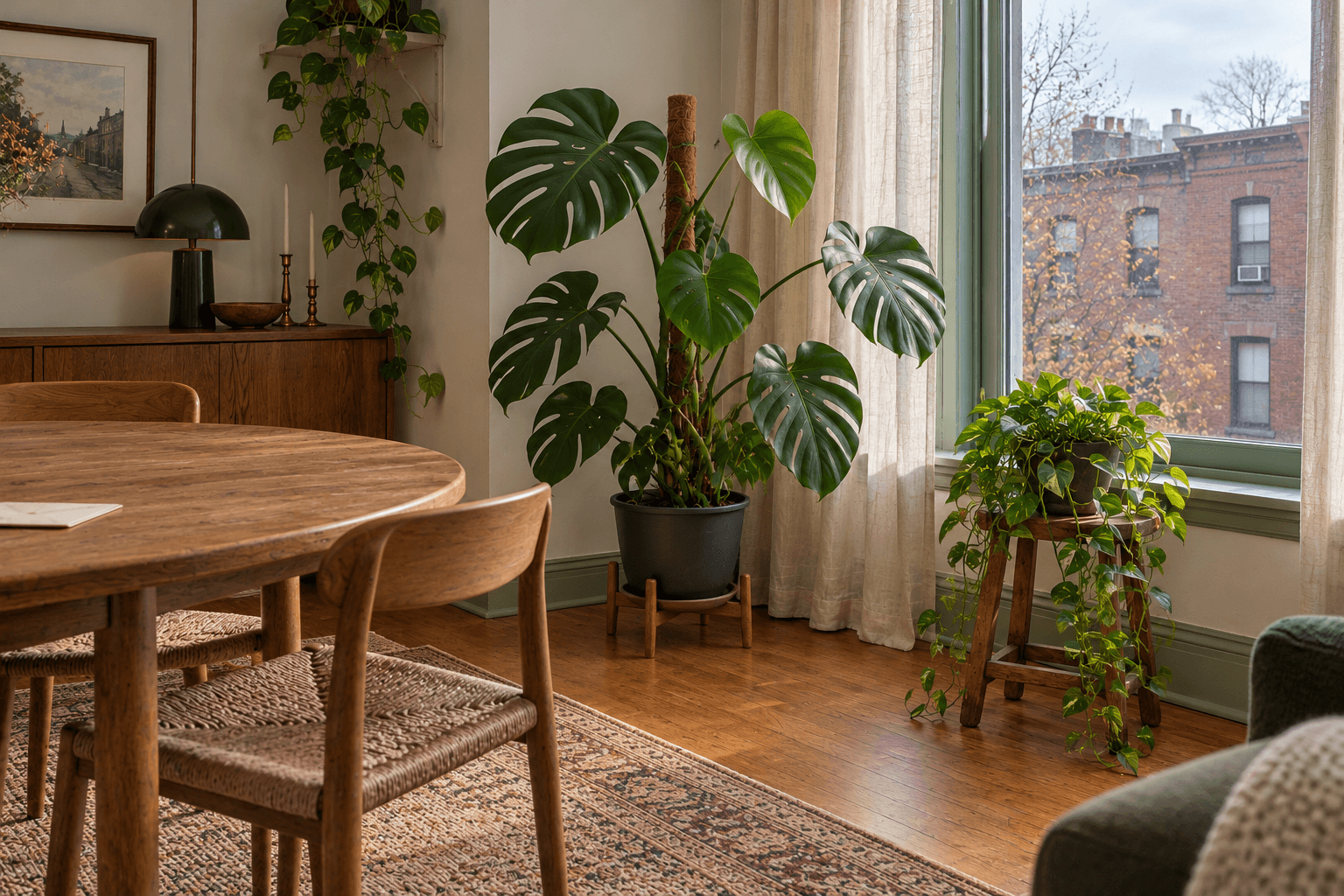
Stand where the plant stands
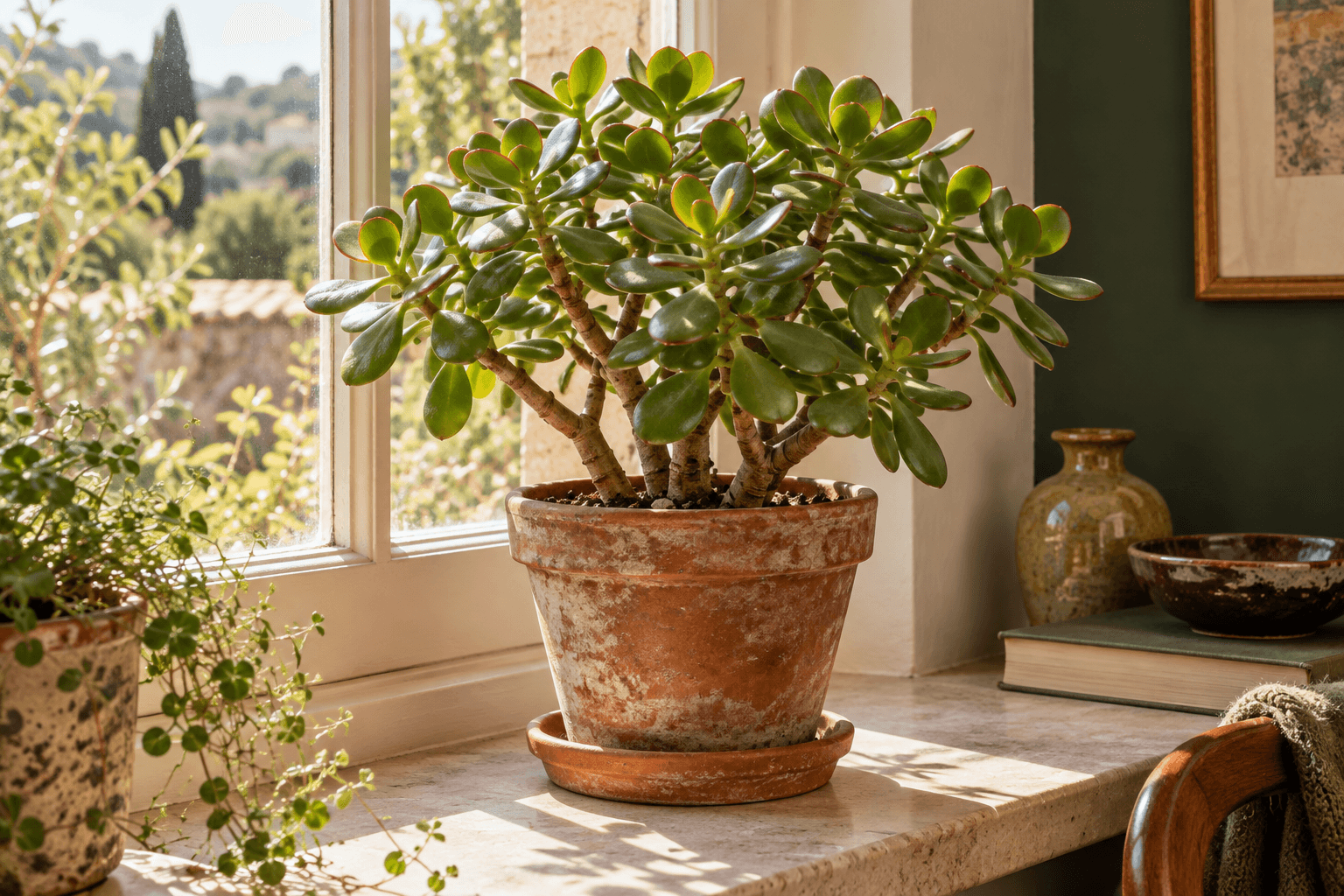
Look from leaf height toward the window. A view of open sky tells you more than the brightness of a ceiling or white wall. Then watch the spot at different times. Direct sun makes a distinct patch and sharper shadows; indirect daylight is softer. Both can be useful, depending on the plant and its acclimation.
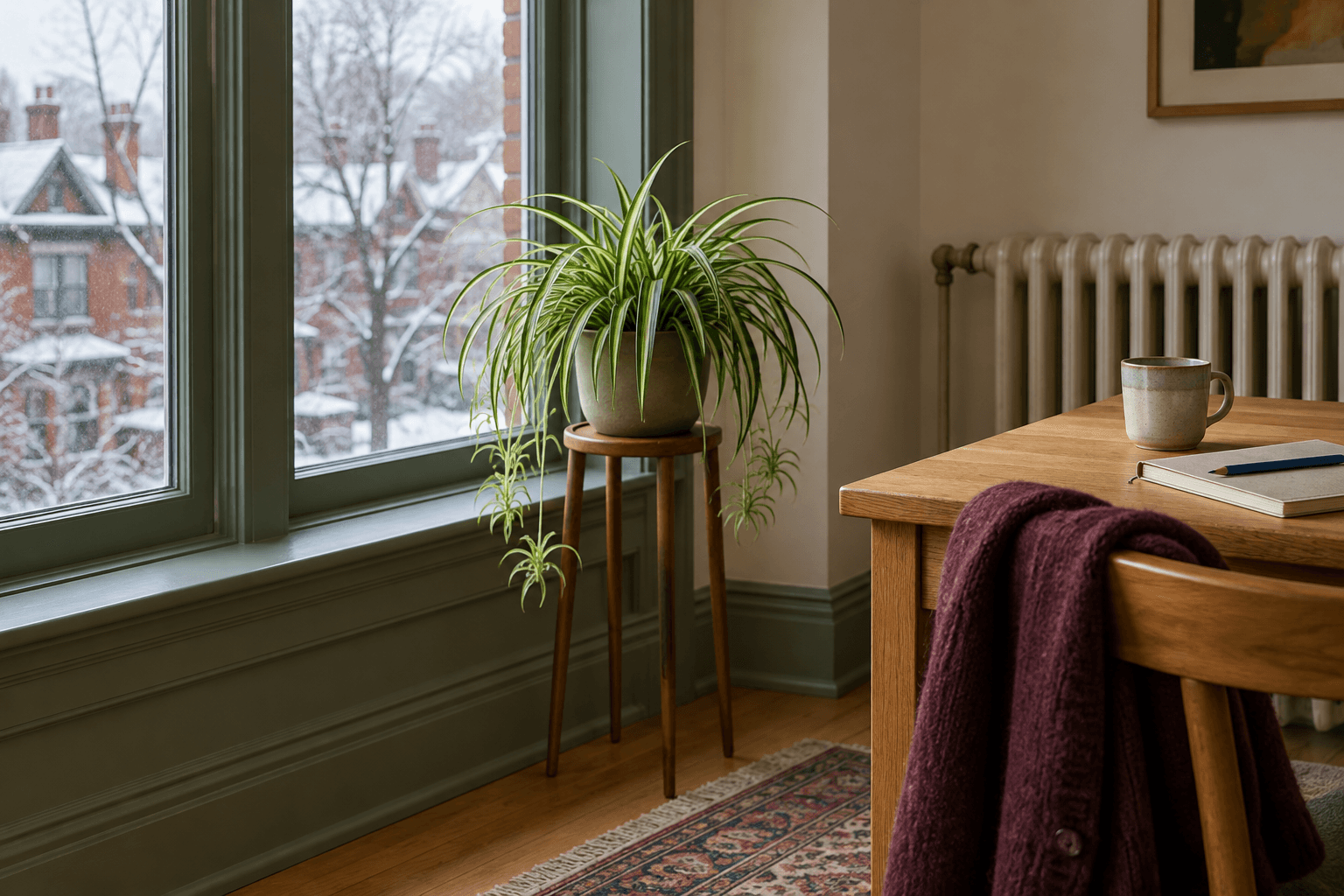
Keep a one-day note of when sun arrives and leaves. Repeat in a different season. Toronto winter days and the angle of the sun change the usable light, while a tree that shaded the window in summer may lose its leaves. The same sill is not the same growing environment all year.
Use direction as a first clue
| Window | Often offers | Check on site |
|---|---|---|
| North | Gentler light; little direct sun | Open sky or a nearby wall? |
| East | Morning sun | How long does it reach the leaves? |
| South | Potential for strong, long exposure | Overhangs, curtains and winter glass temperatures. |
| West | Stronger afternoon sun | Heat and harsh light on unacclimated leaves. |
Scroll to see all columns
Near the windowCheck direct sun, hot spots and cold glass.
Farther insideLess open sky usually means less useful light.
Conceptual only. No fixed distance suits every window or plant.
There is no universal safe distance from a window. Window size, glazing, obstructions and the plant itself matter. Move a little, observe, and avoid turning a useful guide into a fixed metre rule.
Change the position deliberately
When a plant has been in low light, introduce stronger sun gradually rather than moving it straight into a hot afternoon beam. A sheer curtain can give you an intermediate position. Keep the pot in one trial location long enough to observe new growth, unless visible damage or temperature extremes require a faster move.
Long spaces between leaves, growth leaning strongly toward the window, or a variegated plant becoming greener can prompt a light review. These signs are not exclusive to light problems; check roots and care history as well. Existing stretched stems will not become compact after relocation, so look at subsequent growth.
When the room needs another light source
A windowless room needs suitable artificial light for sustained plant growth. Choose a fixture intended for plants, follow its placement instructions and provide a regular dark period. Light output, distance and duration work together; a decorative desk bulb is not automatically enough.
Decide what a windowless room can offerFind a related guide below.
Back to the beginningSources & notes
Care guidance checked against these horticultural references on 20 October 2026.
- University of Minnesota Extension: Lighting for indoor plantsWindow exposures, low-light limits and supplemental lighting.
- Royal Horticultural Society: Growing houseplantsIndoor conditions, seasonal care, humidity and holiday planning.
- University of Maryland Extension: Diagnose indoor plant problemsOverlapping causes of wilt, yellowing, poor growth and root damage.