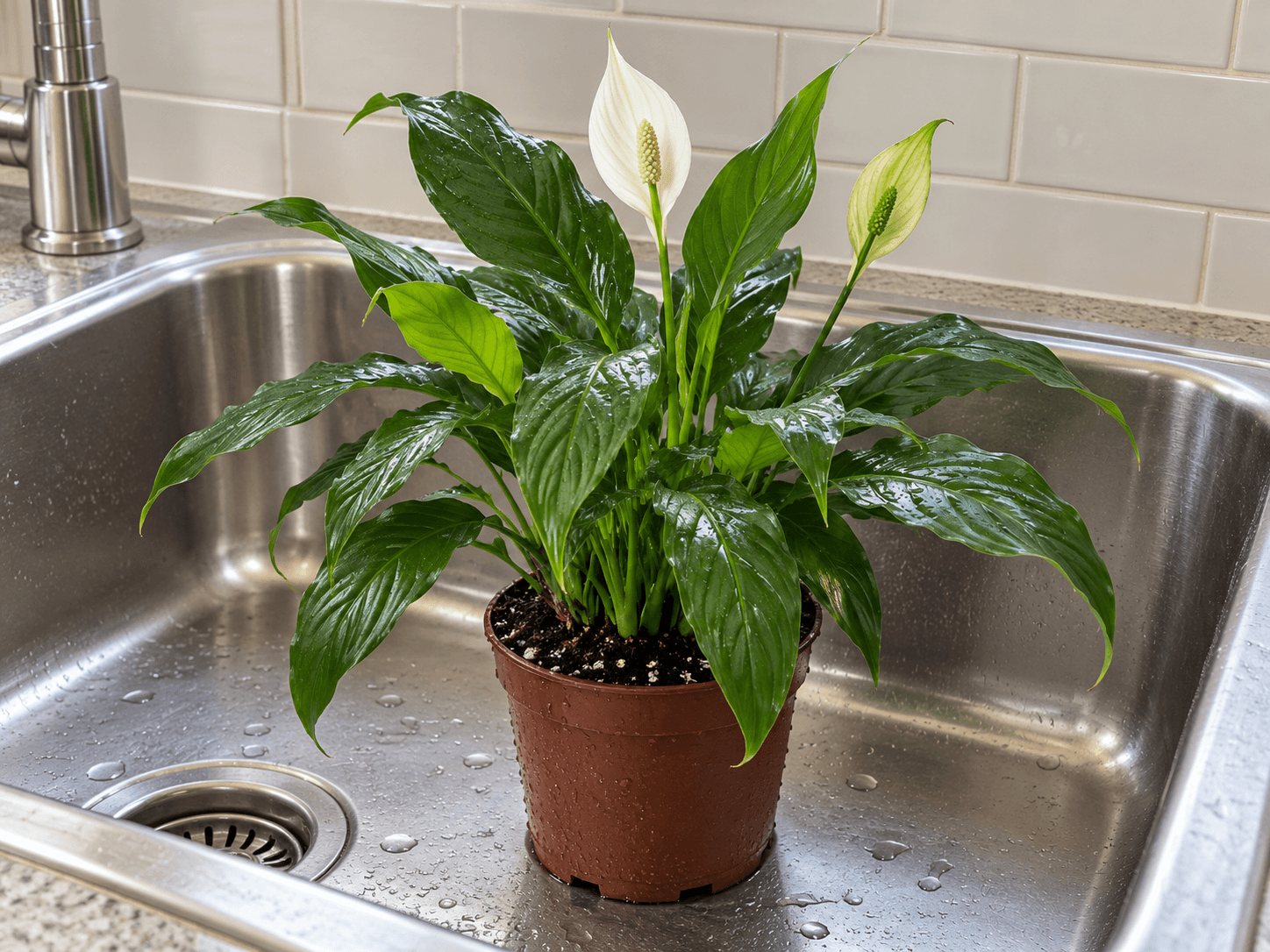
One yellow leaf. Several possibilities.
Use leaf position, soil moisture and recent changes to investigate yellowing without assuming every plant has been overwatered.
The short answer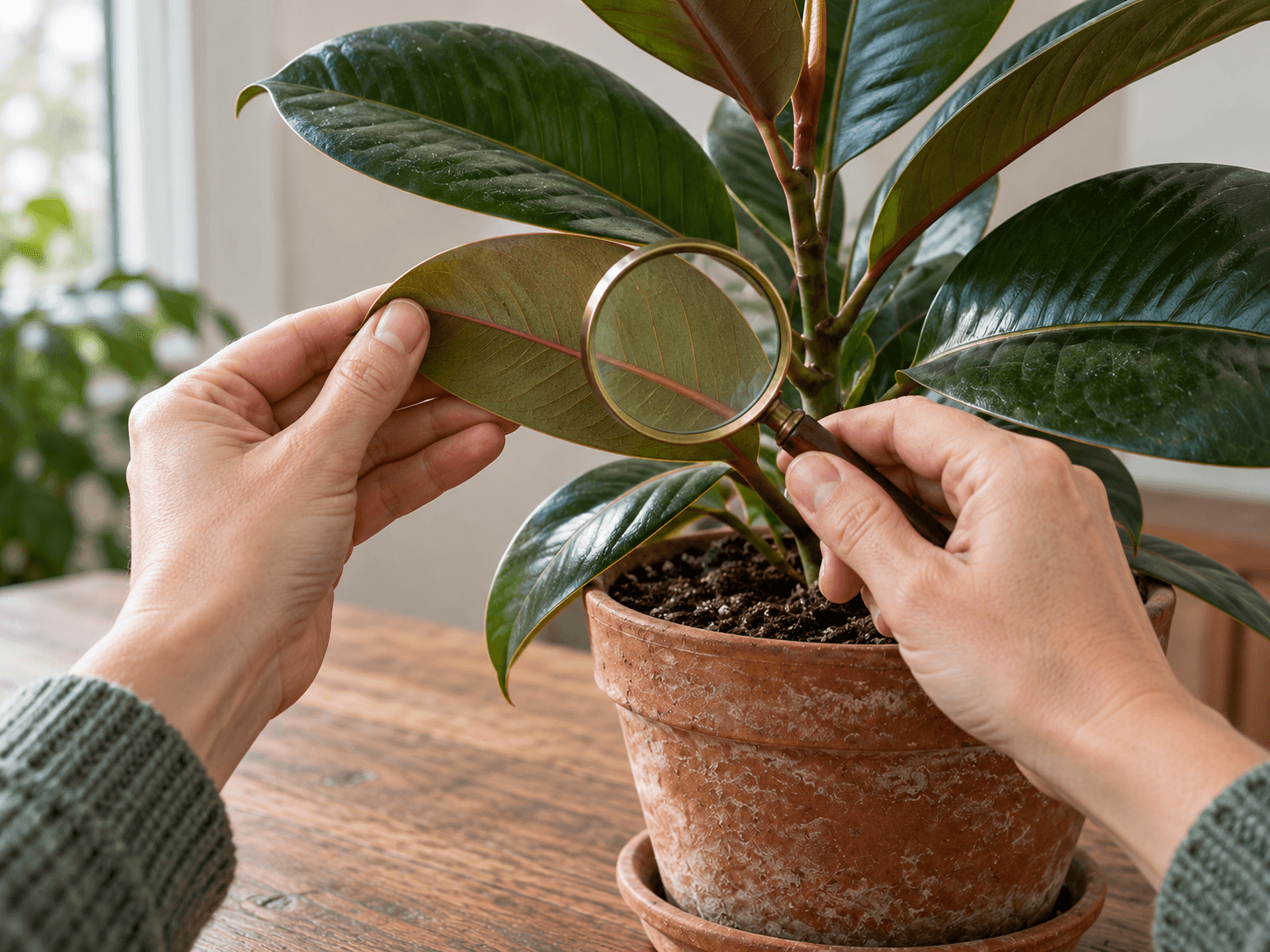
Describe the pattern first
Is it one oldest leaf near the base, several leaves across the plant or the newest growth? Did it begin after a move, a repot or the start of heating season? Write down what you can see without naming a cause. "Three lower leaves yellowed this week; pot still heavy" is more useful than "the plant has root rot".
An older leaf can yellow during normal turnover. A spreading pattern, soft stems or an overall loss of vigour deserves more attention. Take a photograph in consistent light so you can compare the actual change rather than remembering a greener plant.
Work through the ordinary causes
| Observation | Check next | Avoid doing automatically |
|---|---|---|
| Yellow leaves and wet mix | Drainage, cover-pot water, roots if decline continues | Adding another drink. |
| Yellowing with a very dry pot | Whether the root ball absorbs water evenly | A tiny daily splash. |
| New location or sudden sun | Light exposure and temperature changes | Moving it repeatedly every day. |
| Sticky leaves, speckling or webbing | Leaf undersides and joints with magnification | Treating before identifying the pest. |
| One oldest leaf only | Overall growth and recent pattern | Repotting an otherwise healthy plant. |
Scroll to see all columns
Several factors can overlap. Low light can slow drying; wet roots can then affect the leaves. Changing only the watering volume without understanding the location may leave the underlying problem in place.
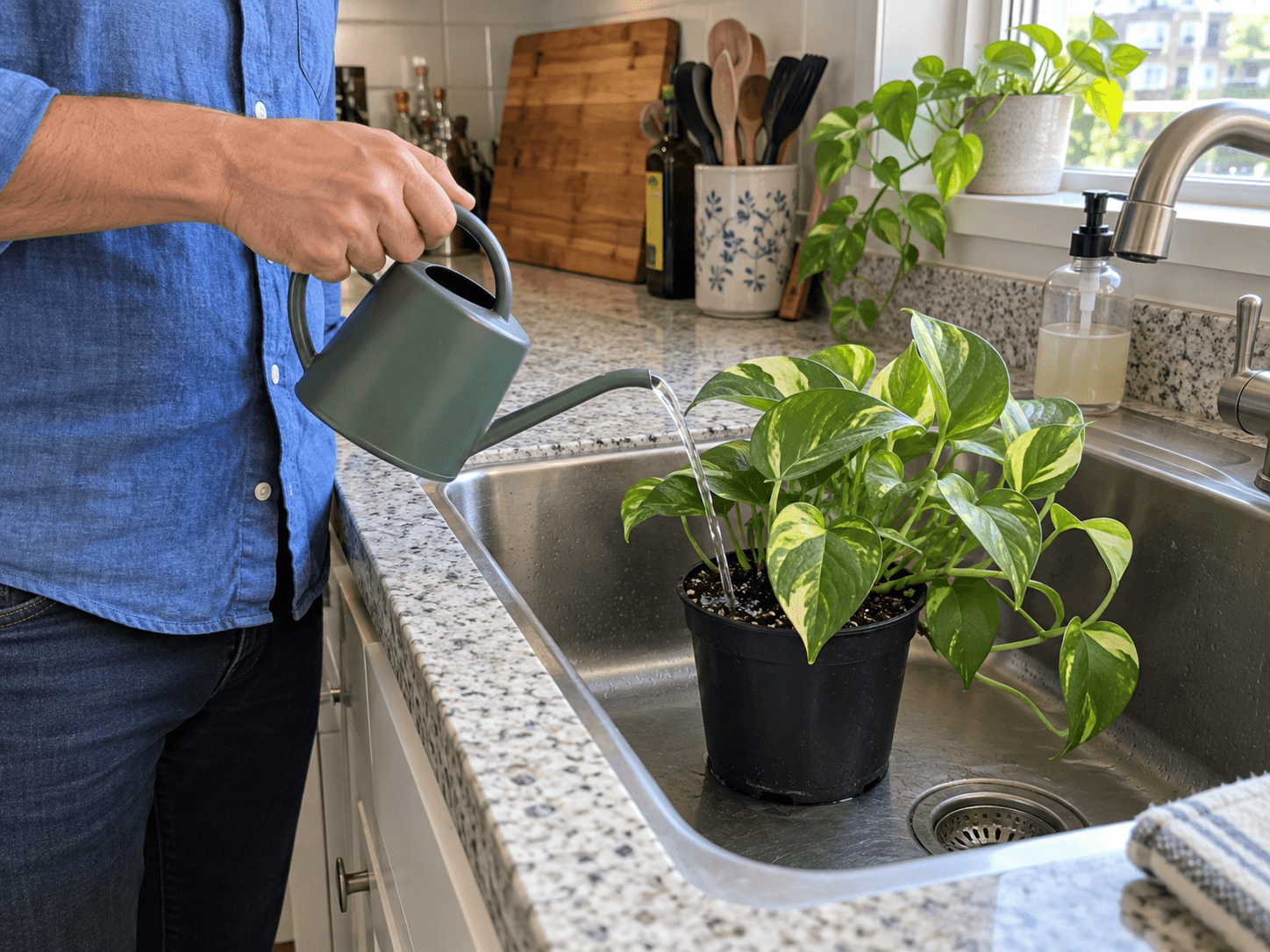
Compare moisture and pot weight before wateringWhen to look below the surface
If a wet pot accompanies persistent decline, gently inspect the root ball where practical. Firmness and structure matter; healthy root colour differs among plants. Soft, decaying roots and a collapsing base warrant attention. Avoid pulling a large plant apart repeatedly just to satisfy uncertainty.
If damage is extensive, a healthy cutting may be a better option than keeping the entire plant. Use a method suited to the species, keep suspect material separate and do not promise recovery from a photograph or a single symptom.
Inspect suspect roots and choose the next stepChoose one useful next action
Correct an obvious problem such as trapped runoff, then monitor. Improve unsuitable light gradually. Isolate a plant with suspected pests. Hold fertilizer until you understand the problem; feeding is not a general cure for yellow leaves.
A yellow leaf usually will not become green again. Judge progress by whether the change stops spreading and new growth looks healthy. Record what you changed and when. If decline continues or you cannot identify the cause, take clear whole-plant, leaf and root photographs to a knowledgeable local nursery or horticultural adviser.
Find a related guide below.
Back to the beginningSources & notes
Care guidance checked against these horticultural references on 20 October 2026.
- University of Maryland Extension: Diagnose indoor plant problemsOverlapping causes of wilt, yellowing, poor growth and root damage.
- University of Maryland Extension: Watering indoor plantsMoisture and pot-weight checks; top and bottom watering.
- University of Minnesota Extension: Managing insects on indoor plantsInspection, isolation, pest signs and integrated management.
- University of Minnesota Extension: Lighting for indoor plantsWindow exposures, low-light limits and supplemental lighting.