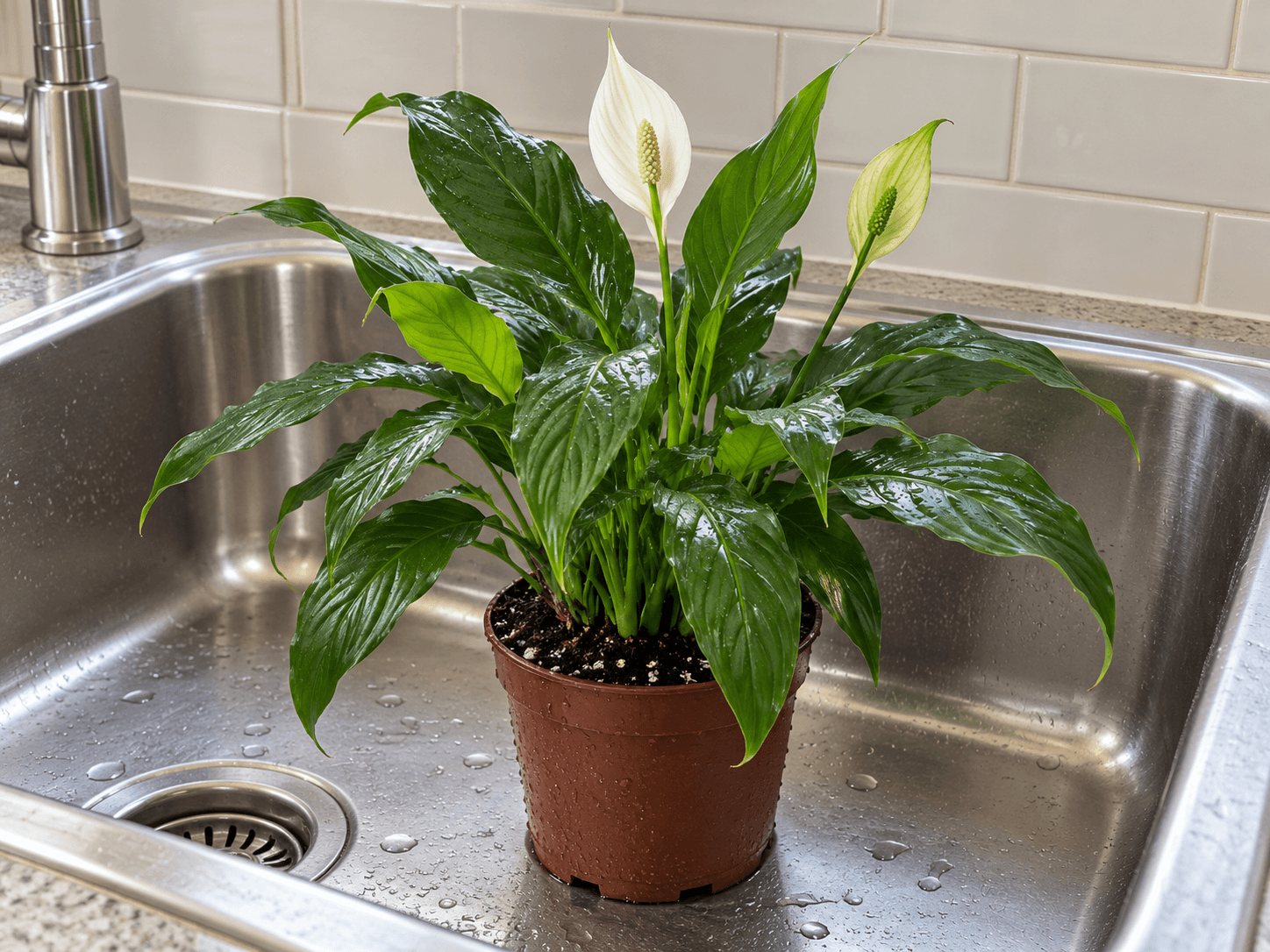
When wet roots stop working
A wilted plant in wet mix needs a closer look. Assess roots and drainage before adding another treatment.
The short answer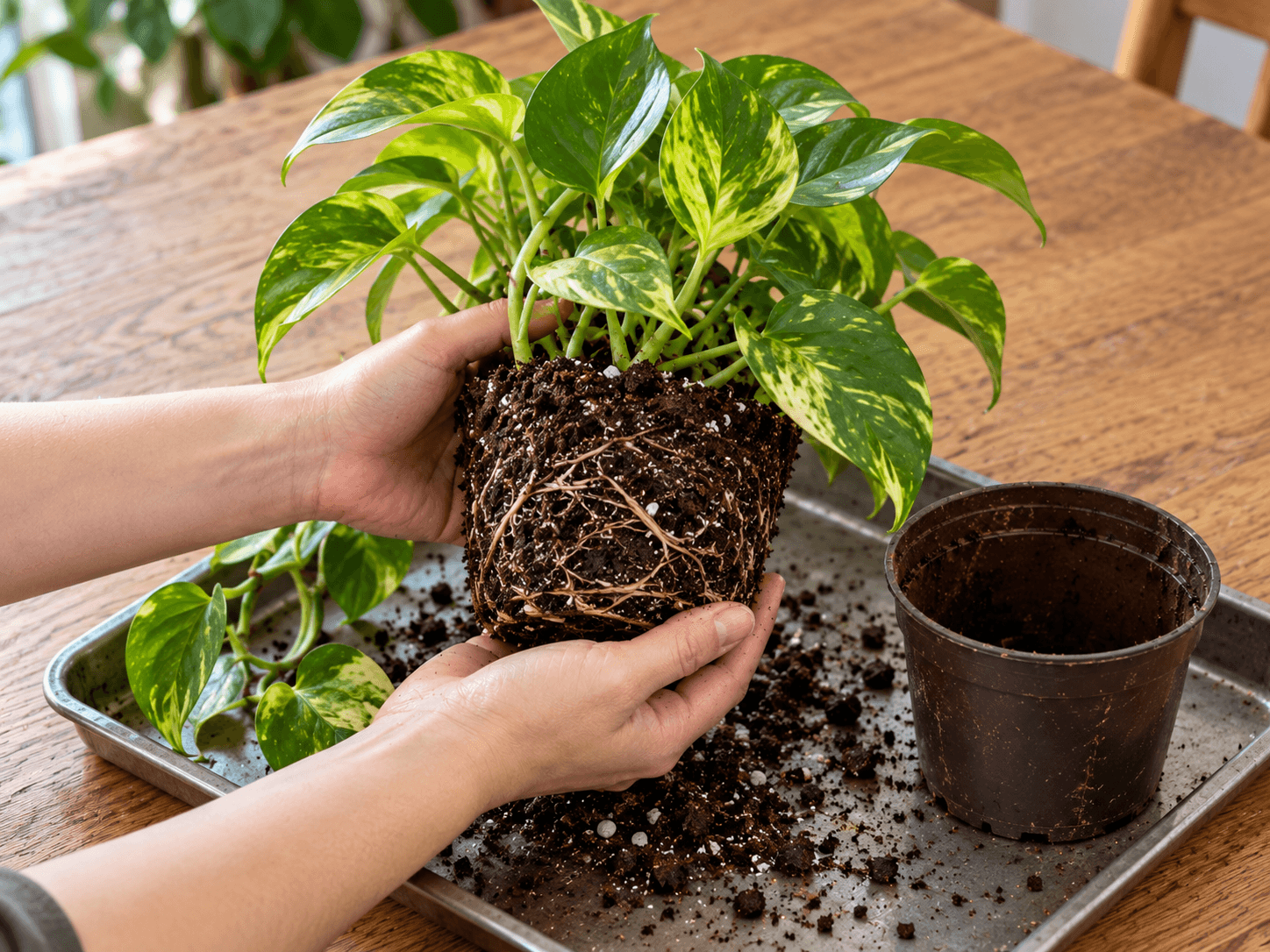
Begin with the recent history
Note the last watering, any standing water, a recent repot and changes in light or temperature. A plant can wilt because damaged roots no longer supply its leaves, even while the mix is wet. Do not add water just because the foliage hangs down. Check the container and drainage before deciding whether to unpot it.
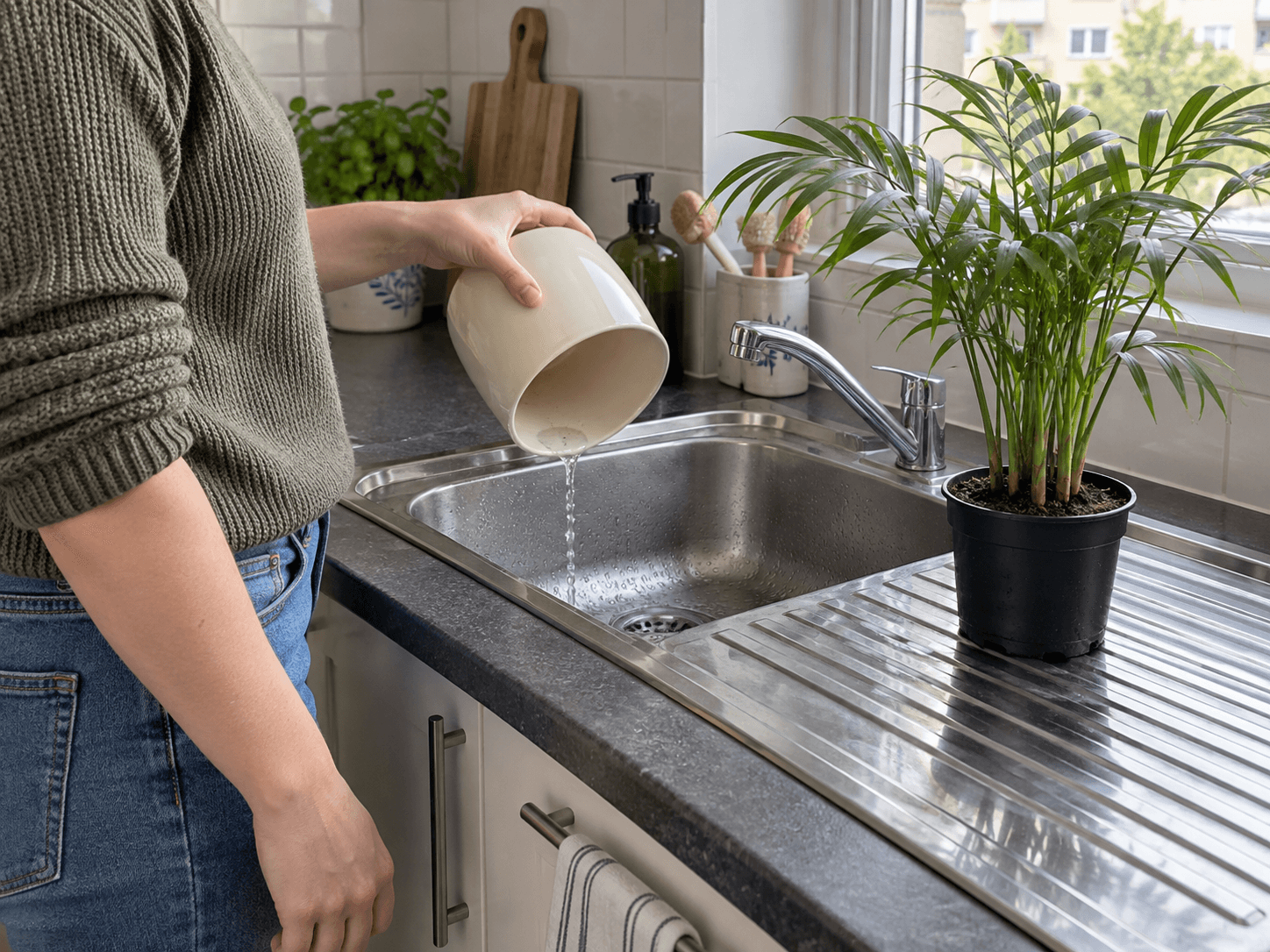
Empty trapped water first. Damp mix just after watering is expected; persistent wetness together with worsening wilt or yellowing gives you a reason to inspect the roots. Work away from healthy plants, with a washable tray and clean tools ready.
Compare texture, not colour alone
Support the root ball and remove the pot gently. Healthy root colours vary by species and medium; brown is not automatically rotten. Look for roots that are soft, collapsing or shedding their outer tissue, and assess how much firm root remains. A photograph of the whole root system can help a knowledgeable grower assess the situation.
Keep the intervention measured
| What you find | What to do |
|---|---|
| Firm roots and a firm stem base | Preserve sound tissue. Correct trapped water or poor drainage and reassess the light, temperature and watering routine. Do not cut roots simply because they are brown. |
| Some soft, collapsing roots; firm roots and base remain | Remove clearly dead tissue with clean tools. Replant the sound portion in fresh, suitable mix and a clean draining pot sized to the remaining roots. |
| Most roots have collapsed, or the base is extensively soft | Discard a badly rotted plant and its mix. A separate cutting is an option only if the species can grow from that cutting and you can take entirely healthy tissue. |
Avoid unverified chemical drenches or household peroxide recipes. A fresh pot does not cure the original problem if it still holds water around damaged roots. Keep any rescue cutting separate from the collection while it establishes.
Correct the conditions
Use the watering method for that species and medium, then check the pot before watering again. Do not automatically resume the old interval: fewer roots, a different pot and changed light can alter how quickly it dries. A Boston fern (Nephrolepis exaltata) still needs moist, draining mix; leaving it bone dry creates another problem.
Keep the plant separate and clean the work area and tools after handling it. Watch for further softening at the base, spreading yellowing or continuing collapse. Root appearance does not establish a laboratory diagnosis; seek experienced help for valuable plants or continuing decline, and accept that rescue is not always possible.
Find a related guide below.
Back to the beginningSources & notes
Care guidance checked against these horticultural references on 20 October 2026.
- Iowa State University Extension: Root rots of houseplantsWet poorly drained media, declining roots and moisture-based prevention.
- University of Maryland Extension: Root rots of indoor plantsSoft roots and crowns, separation, fresh medium, clean pots and taking cuttings only from healthy tissue.
- University of Maryland Extension: Diagnose indoor plant problemsOverlapping causes of wilt, yellowing, poor growth and root damage.
- University of Minnesota Extension: Clean tools and containersRemove debris before disinfection; prevent transfer between plants; follow product precautions.
- University of Maryland Extension: Watering indoor plantsMoisture and pot-weight checks; top and bottom watering.
- NC State Extension: Nephrolepis exaltataBoston fern moisture, humidity, fronds and spore structures.