Look under the leaf
Inspect cottony deposits, stippling and webbing, isolate a suspect plant and choose a measured response suitable for Canadian homes.
The short answer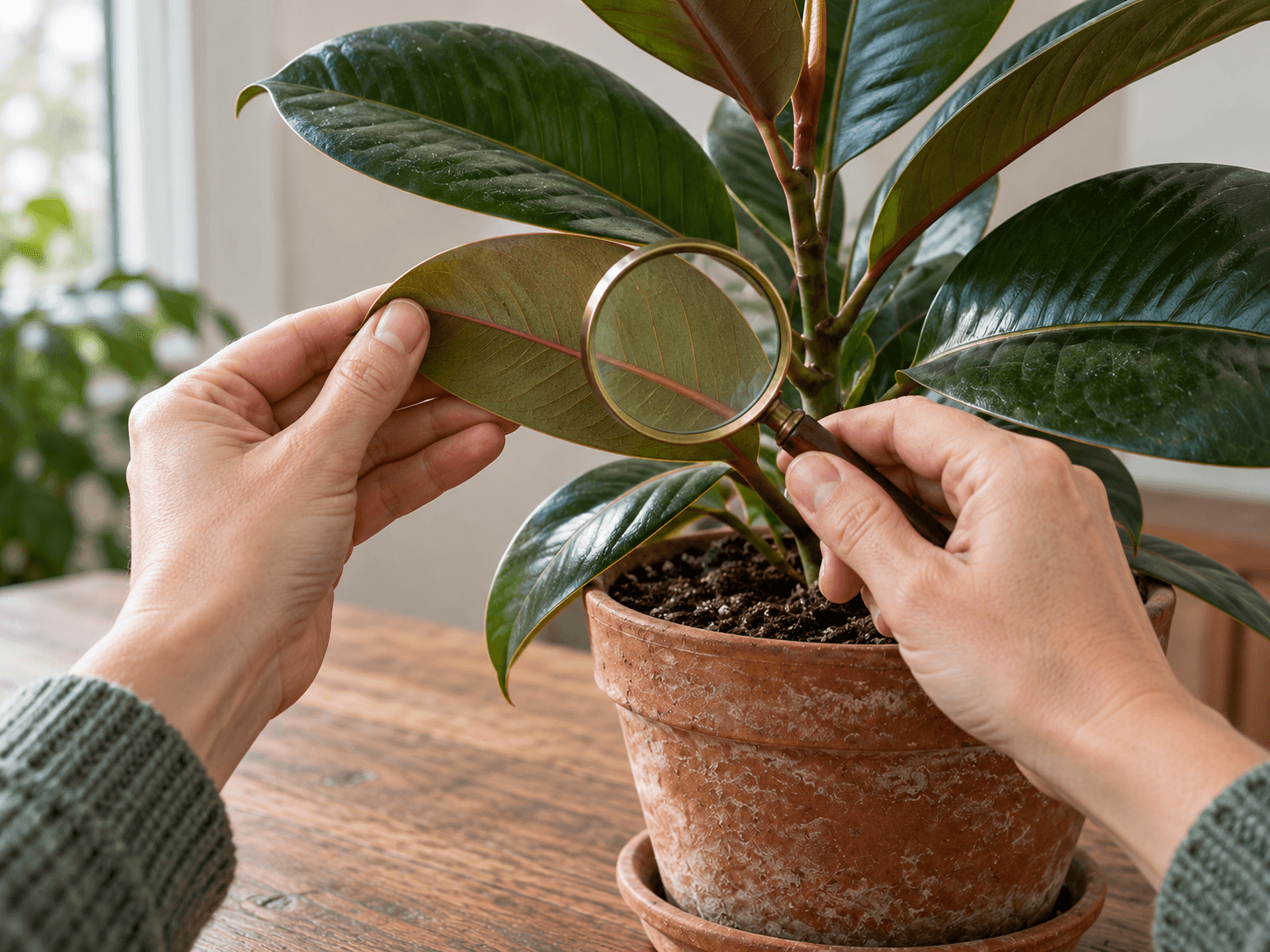
Take the plant to good light
Inspect the entire plant, not only the damaged leaf. Look at leaf axils, stems, pot rims and nearby surfaces. A magnifying lens helps you distinguish moving pests from dust, dried sap or normal plant hairs. Photograph what you find before wiping it away.
| Possible pest | Typical clues | Important limit |
|---|---|---|
| Mealybugs | White waxy or cottony clusters, often in sheltered joints; sticky residue may occur | Not every white mark is an insect. |
| Spider mites | Fine pale stippling, tiny moving specks and sometimes delicate webbing | Webbing can be absent early; ordinary spiders also make webs. |
| Other sap-feeding pests | Sticky residue, bumps or distorted growth | Scale, aphids and other pests need their own identification. |
Scroll to see all columns
For suspected spider mites, tap a stippled leaf over white paper and inspect any moving specks with a magnifier. Compare them with documented extension photographs and check the leaf undersides too; one empty test does not rule mites out. Inspect suspected mealybugs in place at sheltered leaf joints.
Reduce contact while you investigate
Move the suspect plant away from others without brushing foliage together. Inspect neighbouring plants and clean the surface where it stood. Keep tools and cloths separate or clean them between plants. A new arrival should spend a period apart from the collection so hidden problems have a chance to become visible.
For a few visible mealybugs, use tweezers or a damp disposable towel. Rinse both surfaces of mite-affected leaves if that foliage tolerates washing. Support delicate leaves, keep mix from washing out and change towels between plants. Remove heavily affected dead material and repeat inspections; hidden stages can remain.
Choose a response you can follow through
If you need a pesticide, identify the pest and consult the full current label. In Canada, use a product authorized for the pest, plant and indoor setting. Follow dilution, application, re-entry and repeat-treatment directions. A product described as natural still has instructions and can damage plants or expose people and pets if misused.
Do not substitute dish detergent, essential oils or a stronger homemade mixture for a labelled product. Avoid mixing treatments. Check the plant’s sensitivity and any test-application instructions before treating the entire specimen.
Inspect beyond the first clean leaf
Keep a record of what you found, the action taken and the next inspection date. A clean appearance immediately after washing is not proof that every life stage is gone. Continue checking the plant and its neighbours, following any product’s specified interval rather than inventing one.
The photograph here shows inspection tools and a healthy plant. Use the linked extension resources for documented pest images, or ask a local expert to identify your own close-up. Generated editorial pictures should never be used as a diagnosis standard.
Find a related guide below.
Back to the beginningSources & notes
Care guidance checked against these horticultural references on 20 October 2026.
- University of Minnesota Extension: Managing insects on indoor plantsInspection, isolation, pest signs and integrated management.
- University of Maryland Extension: Diagnose indoor plant problemsOverlapping causes of wilt, yellowing, poor growth and root damage.
- Health Canada: Use pesticides safelyCanadian authorization, indoor use and label directions.
- Health Canada: Pesticide label searchCheck current product registration and the complete label.