Before you add water
A practical wilt check that starts with the pot and separates a thirsty plant from a plant that cannot use the water it already has.
The short answer
Start below the leaves
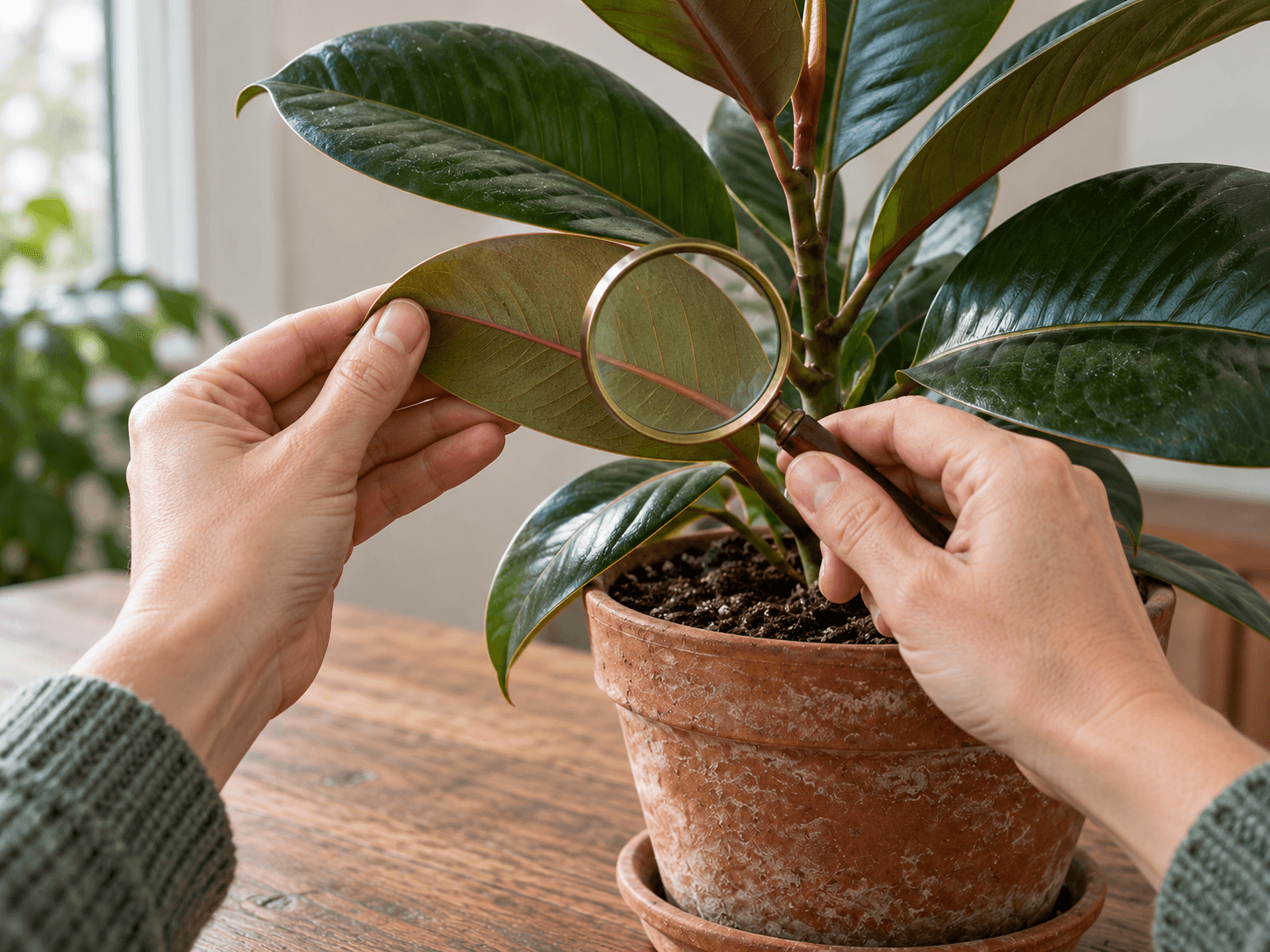
A dramatic wilt gets attention quickly. Pause long enough to check the container. Is it light and dry, or heavy and damp? Is there water hidden in the cover? Has the plant just moved into heat or direct sun? These observations separate very different situations that can produce a similar outline.
Look at the whole plant. A bent leaf stalk or a newly unfurling leaf is not the same as every stem losing firmness. Note whether the base is sound, whether leaves are discoloured and whether the change happened suddenly.
If the root ball is dry
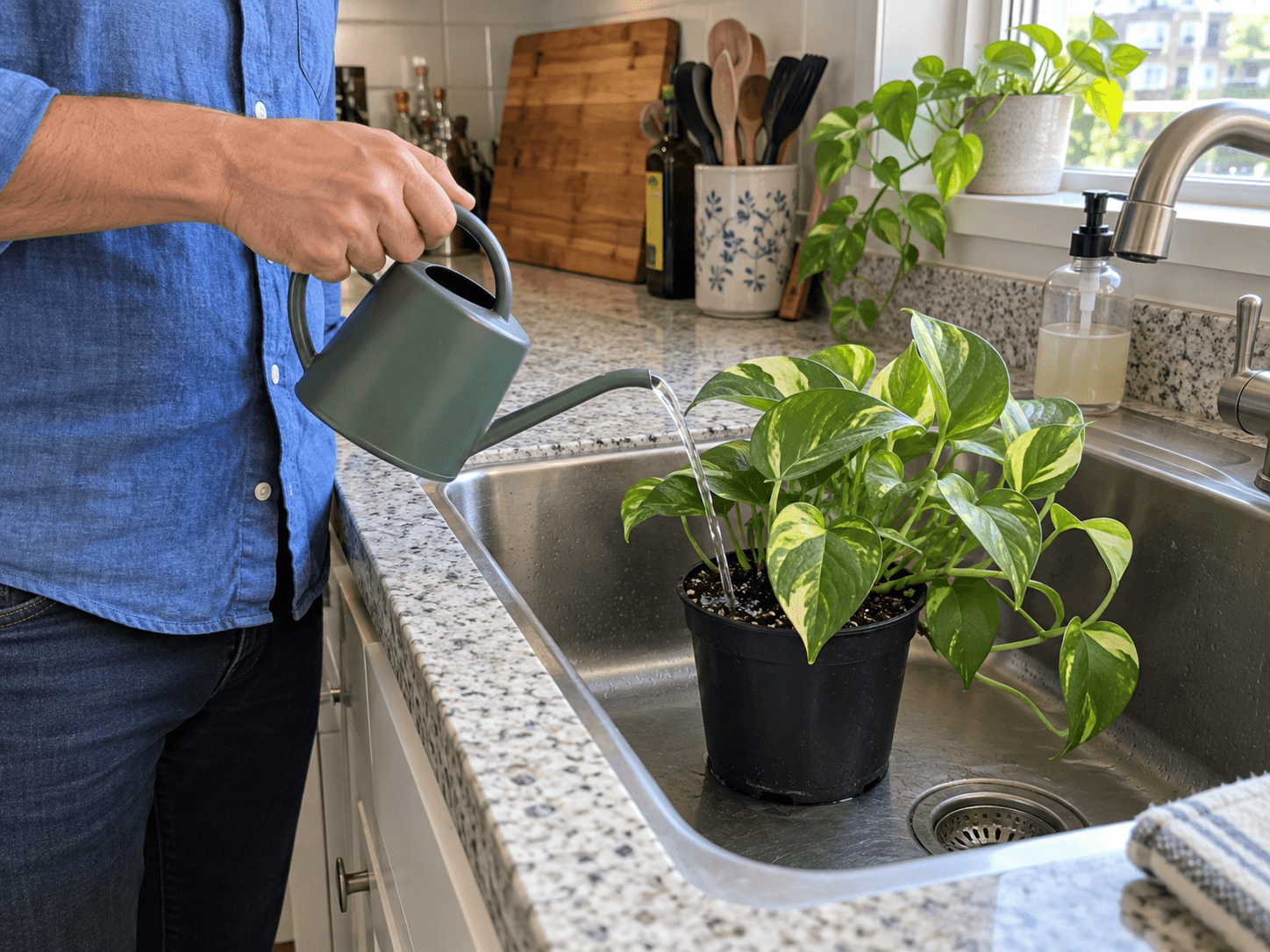
Water evenly and let the pot drain. If a very dry mix repels water or it runs down a gap at the pot edge, apply it gradually and check that the root ball actually takes it up. Temporary bottom watering can help some houseplant mixes, followed by complete drainage.
Give the plant time to respond in a suitable position. Do not keep adding water every few minutes because the leaves have not lifted yet. Repeated collapse is a reason to review your checking routine, root crowding and the heat at the plant’s location.
If the root ball is wet
Stop adding water. Empty trapped runoff and confirm that drainage holes are open. If wilt persists or the base is soft, inspect the roots gently. Prolonged saturation can damage roots, leaving the plant unable to use water even though plenty is present.
| Finding | Useful response |
|---|---|
| Wet mix; firm plant base | Correct standing water and review light and drying. |
| Soft, decayed roots | Assess healthy remaining tissue; use clean tools and suitable fresh medium if salvageable. |
| Severe collapse throughout | Seek a closer assessment; recovery may not be realistic. |
Do not move a struggling plant into harsh sun to "dry it out". That can add stress while the root problem remains.
If moisture does not explain it
Consider temperature extremes, a recent move, physical damage and pests. A plant touching cold winter glass can suffer despite a warm room thermostat. A heater can produce a much hotter, drier patch than the rest of the room. Move away from an obvious extreme and monitor.
Keep notes on the change and avoid stacking treatments. If the cause remains unclear, a whole-plant photograph plus the pot, roots and care history gives an adviser more to work with than a close-up of one limp leaf. Healthy new growth and a stable pattern are better recovery measures than a single afternoon’s posture.
Find a related guide below.
Back to the beginningSources & notes
Care guidance checked against these horticultural references on 20 October 2026.
- University of Maryland Extension: Diagnose indoor plant problemsOverlapping causes of wilt, yellowing, poor growth and root damage.
- University of Maryland Extension: Watering indoor plantsMoisture and pot-weight checks; top and bottom watering.
- Royal Horticultural Society: Growing houseplantsIndoor conditions, seasonal care, humidity and holiday planning.