The hallway has no window
Low-light tolerance has a limit. Decide whether a dark room needs a plant light, a different position or a different kind of decoration.
The short answer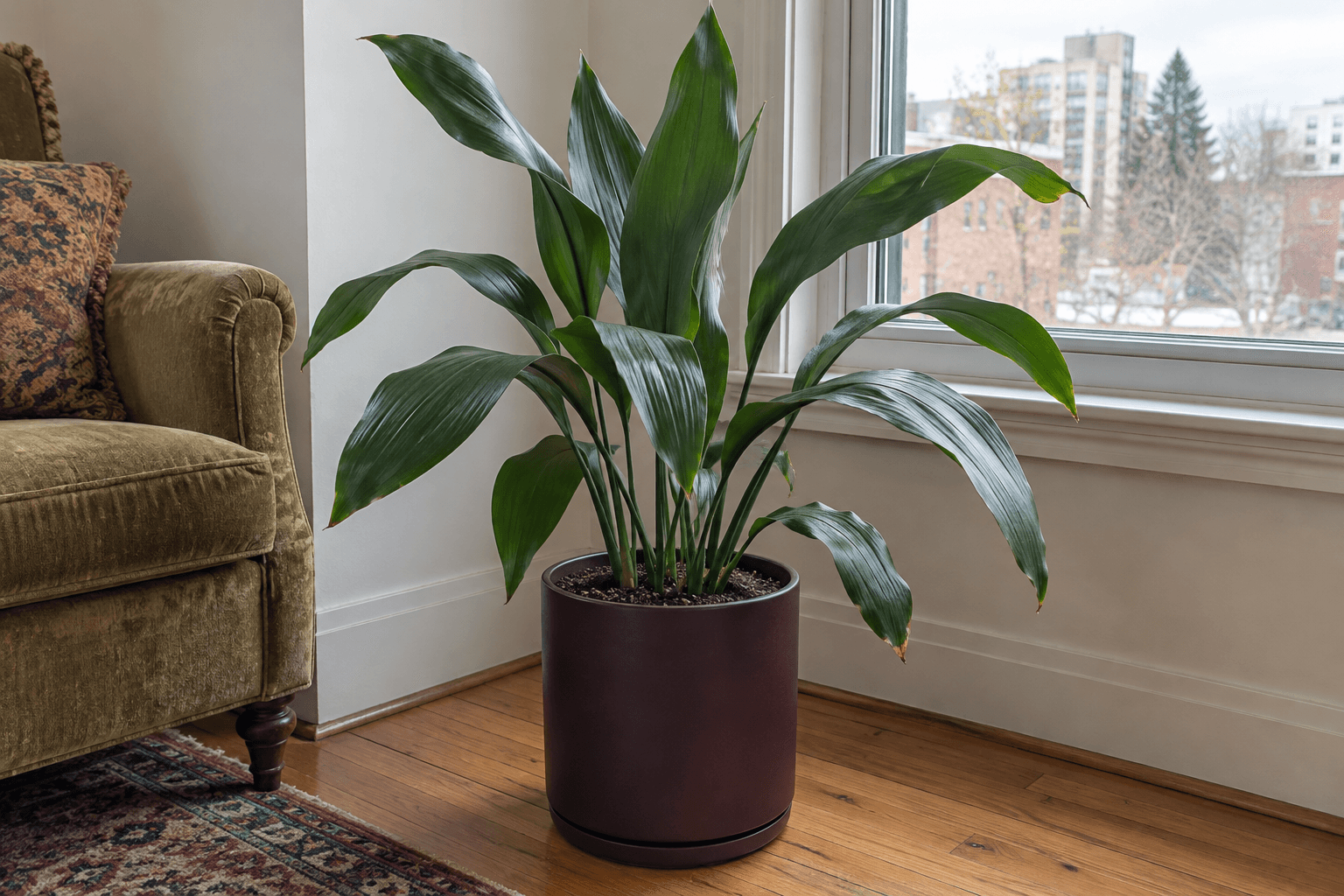
Count the hours that exist
A hallway light might be on for five minutes when you find your shoes. That is different from a sustained growing light. Note what reaches the proposed plant position during an ordinary weekday and weekend. Borrowed light through a distant doorway may be much weaker than the brightness you notice when walking through it.
| The actual position | What to do first |
|---|---|
| Some daylight reaches the leaves for much of the day | Assess it with the usual curtains and doors in place. A lower-light foliage plant may suit it, but growth and water use can be slower. |
| No daylight; a room light is switched on briefly | Choose another growing place or provide suitable plant lighting. A low-light label does not solve the missing light source. |
| A plant light runs every day | Check coverage at leaf height and follow the fixture guidance. For many foliage plants, 12 to 14 total light hours is a starting point, with darkness each day. |
Choose the setup before the species
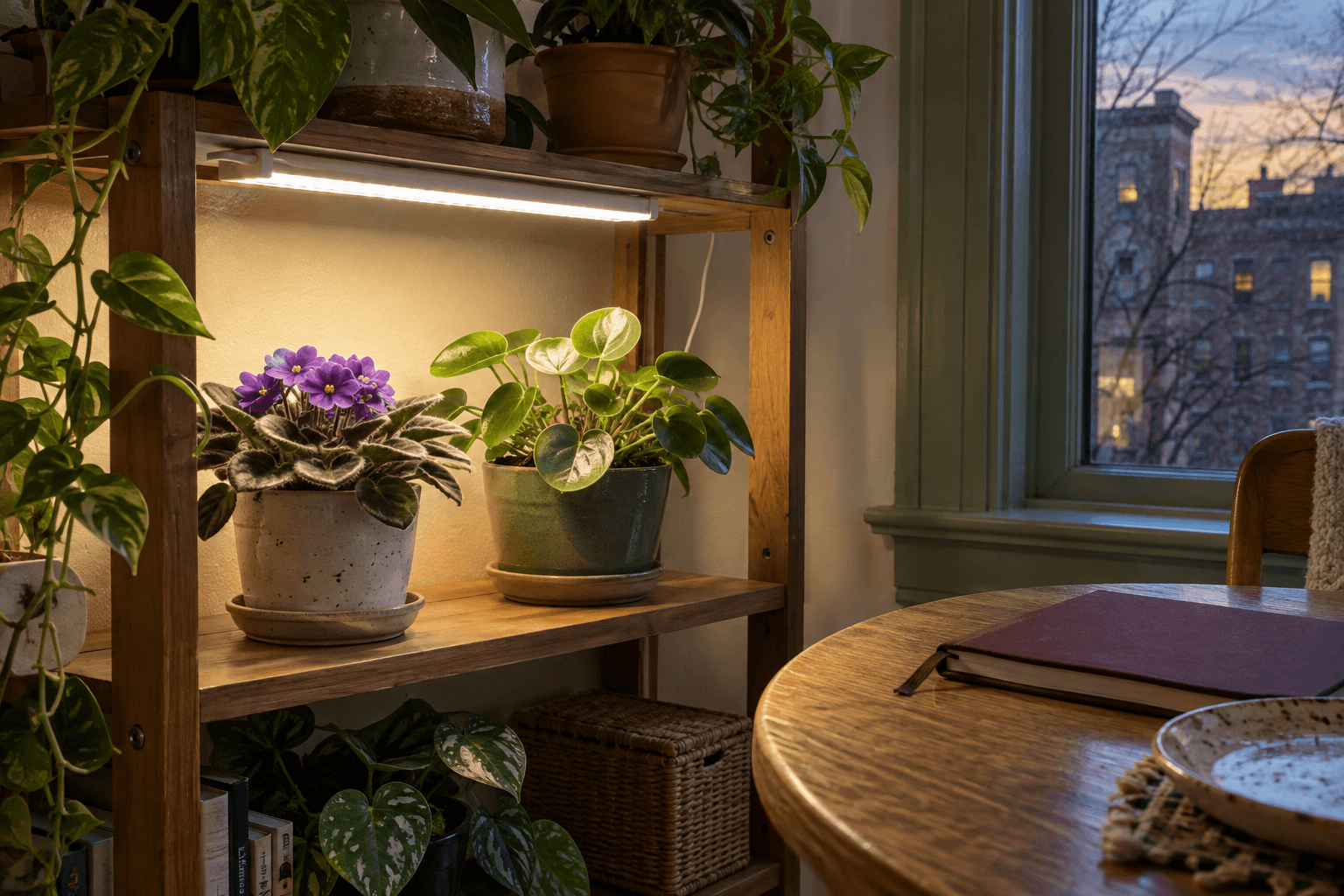
If you want a living plant there, plan a light with suitable coverage, mounting and daily duration. A tolerant plant such as aspidistra may be a sensible choice once that source exists. Do not buy several plants to test which one can endure the room longest; first decide whether you can supply their basic growing condition.
Plan a grow light for the space you actually haveMoving pots is not a simple fix
Rotating a declining plant to a bright window introduces changes in both light and water use. It can also make pest inspection harder if pots circulate through a collection. A permanent, suitable position is easier to understand. If you display a plant briefly for an occasion, return it to its established growing place afterwards.
Keep the room easy to use
A lamp cable across the floor or a heavy pot in a narrow passage is a poor solution. Check access, watering and household traffic before installing anything. It is reasonable to keep living plants by the window and use another object in the hallway. A room does not need a struggling plant to feel finished.
Find a related guide below.
Back to the beginningSources & notes
Care guidance checked against these horticultural references on October 23, 2026.
- University of Minnesota Extension: Lighting for indoor plantsWindow exposures, low-light limits and supplemental lighting.
- NC State Extension: Aspidistra elatiorRhizomatous growth, shade tolerance and leaf form.
- Royal Horticultural Society: Growing houseplantsIndoor conditions, seasonal care, humidity and holiday planning.