Start with the room
Match a first houseplant to your actual window, watering habits, available space and pets, with a useful comparison of six choices.
The short answer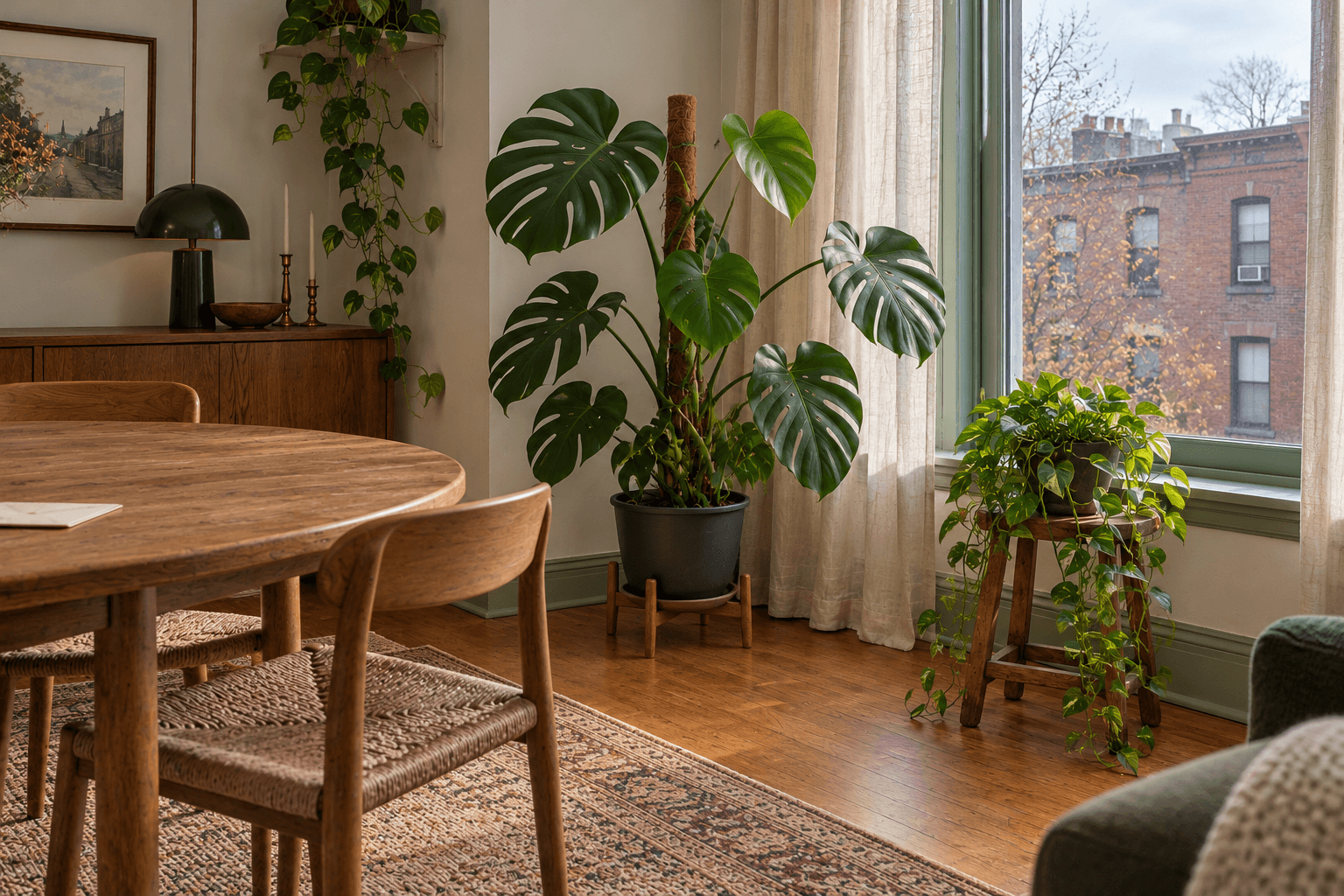
Make a small room survey
Pick the exact place the plant will live. Check it on an ordinary day at several times: can the leaves see open sky, does direct sun cross the spot, and is a radiator or vent nearby? A bright room does not give every shelf the same light. A north-facing window with open sky may be more useful than a south-facing one behind a brick wall.
Measure the usable surface and the space above it. Include room to lift the pot, turn it for inspection and carry it to a sink. If the only way to water is to reach over a laptop, revise the arrangement before you buy.
Match the plant to the habit
| Your situation | Consider | Keep in mind |
|---|---|---|
| Bright shelf; room for vines | Golden pothos | Keep trailing growth away from chewing pets. |
| Bright window; you tend to wait | Snake plant or ZZ | Check that the mix has dried; low light slows it further. |
| Sunny position | Jade | Acclimate to stronger sun and use a draining mix. |
| You enjoy regular moisture checks | Peace lily | Avoid repeated collapse or a constantly wet pot. |
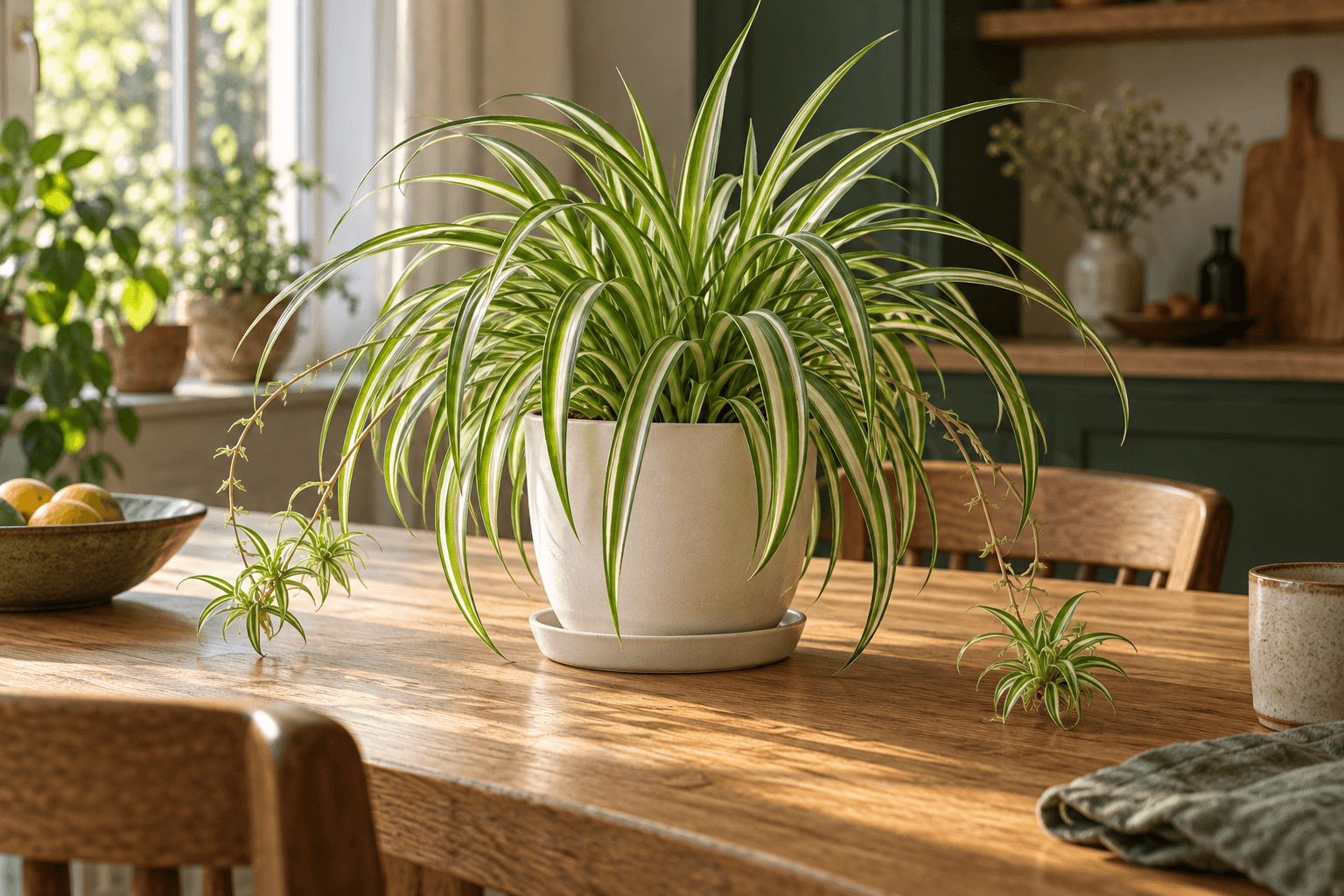
| Accessible display with cats or dogs | Spider plant or parlour palm | Confirm the botanical name and secure the pot. |
Scroll to see all columns
None of these plants solves a windowless corner by itself. For that setting, plan suitable plant lighting or choose a different place. A low-maintenance plant still needs observation.
Inspect before bringing it home
- Read and photograph the botanical label. Common names can be ambiguous.
- Look beneath leaves and around their joints for insects, webbing or sticky residue.
- Check the pot has a drainage route and is not sitting in water inside its sleeve.
- Choose firm growth and a manageable size over a bargain that needs immediate rescue.
Transport a tropical plant protected from cold and wind. In a Toronto winter, arrange a short trip from shop to heated transport rather than leaving it exposed while you run other errands.
The first weeks are for observation
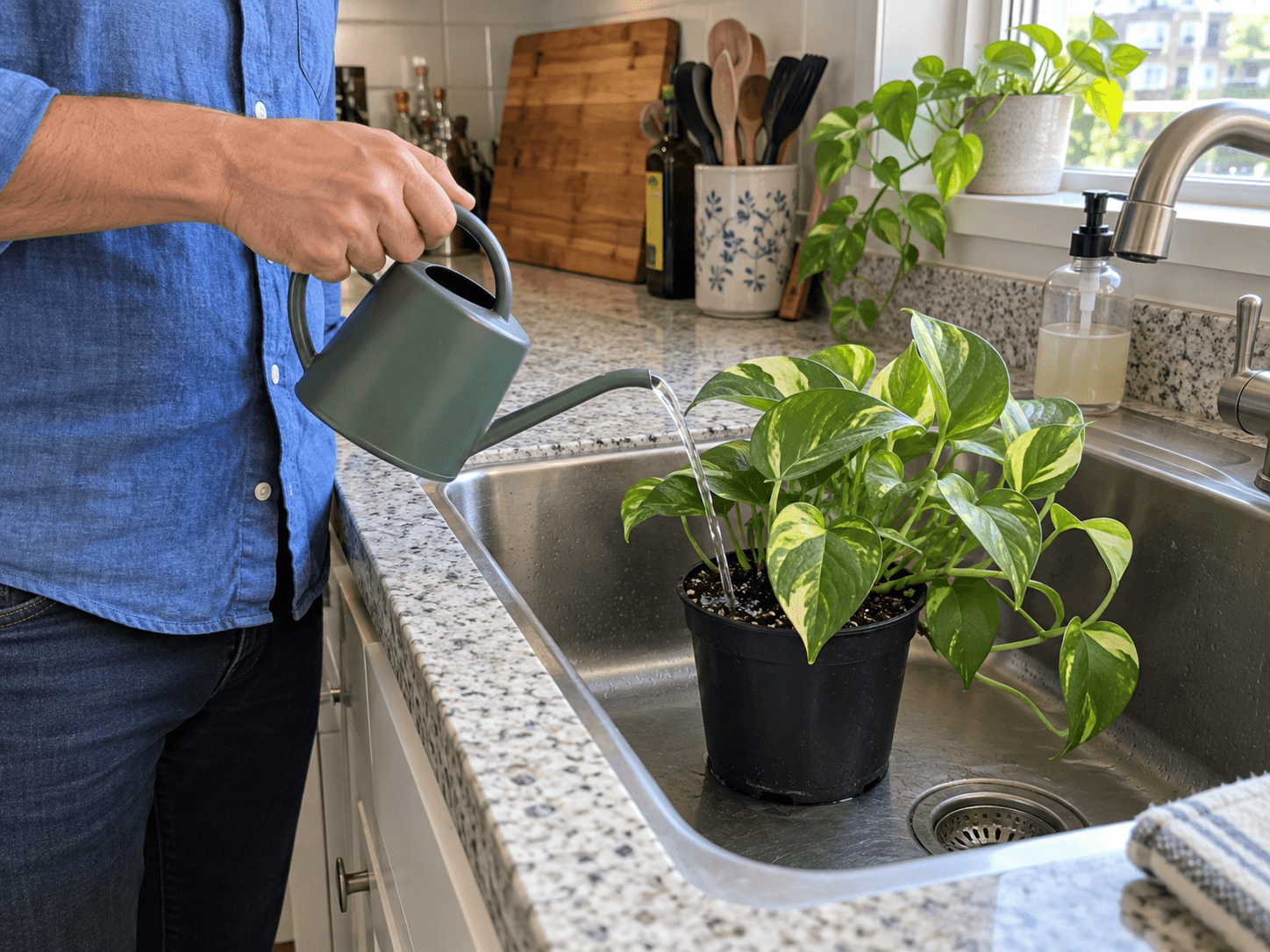
Keep the newcomer separate from existing plants while you inspect it over the next week or two. Give it a sensible light position and check moisture before watering. A nursery pot inside a decorative cover is a perfectly useful arrangement; there is no need to repot a healthy plant the moment it crosses the door.
Write down the first watering date and the conditions you observed. Your goal is to recognize the difference between a watered pot and one ready for another drink. That skill transfers to the next plant much better than memorizing a calendar.
Find a related guide below.
Back to the beginningSources & notes
Care guidance checked against these horticultural references on 20 October 2026.
- University of Minnesota Extension: Lighting for indoor plantsWindow exposures, low-light limits and supplemental lighting.
- University of Minnesota Extension: Managing insects on indoor plantsInspection, isolation, pest signs and integrated management.
- ASPCA: Pet-friendly plant choicesSpider plant and parlour palm choices for homes with cats and dogs.
- Royal Horticultural Society: Growing houseplantsIndoor conditions, seasonal care, humidity and holiday planning.