Light for one shelf
Match a small light to the leaves it must reach, then make the timing and watering routine easy to repeat.
The short answer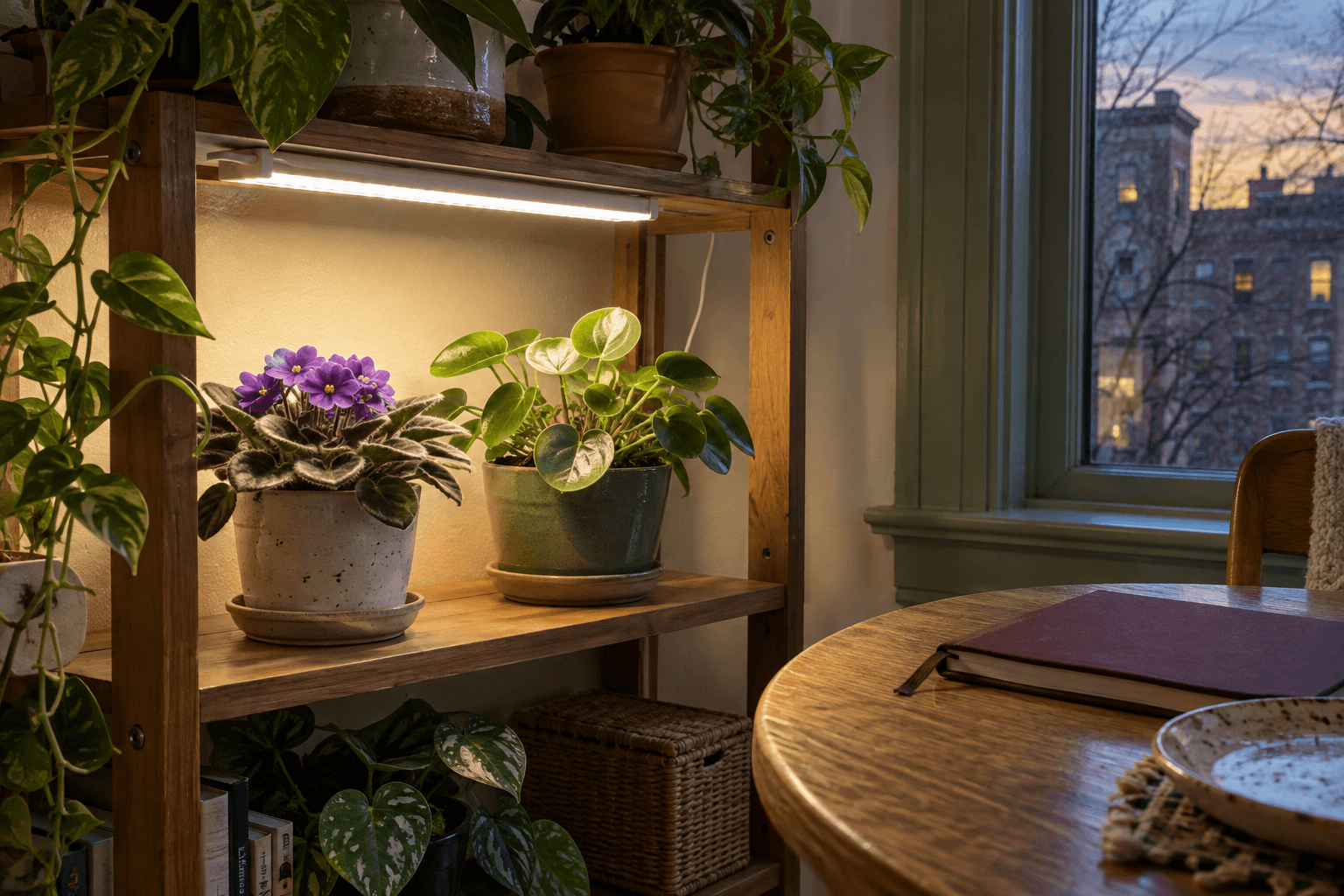
Measure the planted area
Set the pots where they will actually sit and measure the width and depth occupied by foliage. A narrow bar may light the back row while leaving the front leaves in shade. Check the manufacturer's coverage information at the proposed mounting distance. Include the height of future growth, not just today's smallest plant.
Start with the stated distance
Follow the light's recommended spacing rather than using a universal centimetre rule. Output and optics differ. Mount it securely, keeping water away from electrical parts, and check whether taller plants shade shorter ones. A bright-looking bulb aimed across the room may contribute little at leaf level. Look at the shelf with the room lights off.
Make darkness part of the plan
For many foliage plants, roughly 12 to 14 total hours of useful light is a starting point, adjusted for daylight and species. Use a timer rather than leaving a lamp on continuously. Plants with seasonal flowering responses need their own schedule; a holiday cactus does not benefit from the same long evening lighting as every foliage plant.
Check growth and the pot together
Photograph the newest leaves when the light goes up. Watch subsequent growth, leaf colour and moisture use. A better-lit plant may use water differently, but extra light is not a reason to water a wet pot. Adjust one variable at a time and keep the controls reachable. The shelf should remain easy to clean and inspect.
Find a related guide below.
Back to the beginningSources & notes
Care guidance checked against these horticultural references on 20 October 2026.
- University of Minnesota Extension: Lighting for indoor plantsWindow exposures, low-light limits and supplemental lighting.
- University of Maryland Extension: Watering indoor plantsMoisture and pot-weight checks; top and bottom watering.
- NC State Extension: Schlumbergera truncataForest cactus identity, stem segments, light and flowering response.