The patient cast-iron plant
Aspidistra elatior
Broad leaves and a slow pace suit a quieter corner, provided the corner still offers light and a pot that drains.
The short answer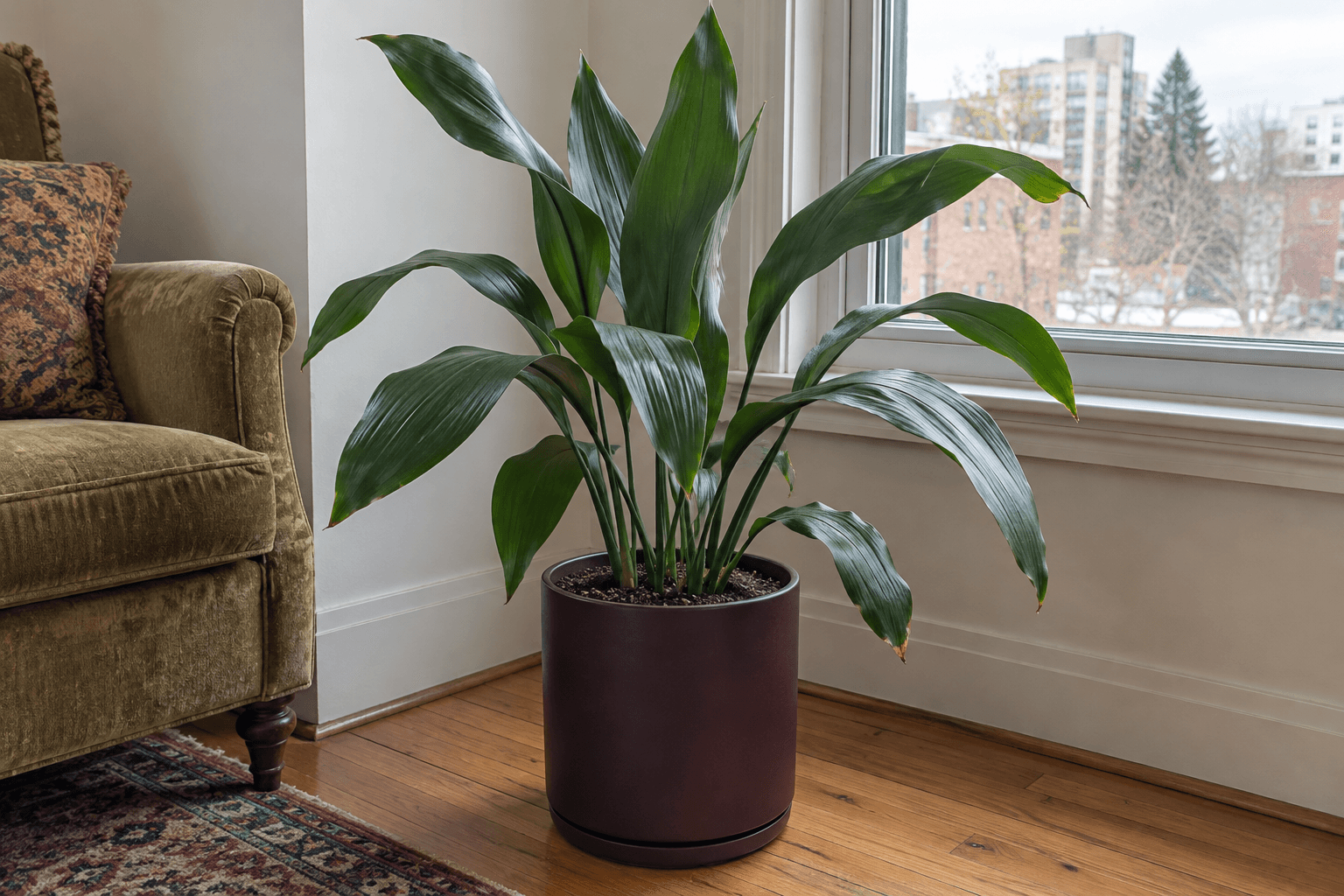
Leaves from the base
Aspidistra produces long individual leaf stalks from underground rhizomes. It will not form a branching trunk like a rubber plant. The broad blades make a useful floor-level shape beside a chair, but leave enough room that a bag or coat does not fold them every time someone enters the room.
Lower light still means light
Choose a shaded position with daylight rather than a windowless hall. Strong direct sun can damage foliage that is accustomed to gentler conditions. Because growth is slow, you may wait a while for visible evidence of a better position. Take a simple reference photograph instead of moving the pot every few days.
Match a slow pace
A plant using little light often uses water slowly too. Check the medium and pot weight, then water thoroughly when the upper mix has dried. A heavy decorative pot can conceal a wet inner container, so lift it out. Keep drainage holes clear and resist buying a much larger pot merely to balance a large leaf.
Keep the useful leaves
Dust is easy to see on the broad foliage. Support each leaf and wipe it gently with a damp soft cloth. Remove dead leaves at the base with clean tools. A damaged tip will not repair itself, but the remaining green blade still serves the plant. Look for new growth and stable roots rather than expecting a rapid makeover.
Find a related guide below.
Back to the beginningSources & notes
Care guidance checked against these horticultural references on 20 October 2026.
- NC State Extension: Aspidistra elatiorRhizomatous growth, shade tolerance and leaf form.
- University of Minnesota Extension: Lighting for indoor plantsWindow exposures, low-light limits and supplemental lighting.
- University of Maryland Extension: Watering indoor plantsMoisture and pot-weight checks; top and bottom watering.