
The pale fuzz on the surface
Surface growth can point to persistently damp conditions. Distinguish it from mineral crust and insects before acting.
The short answer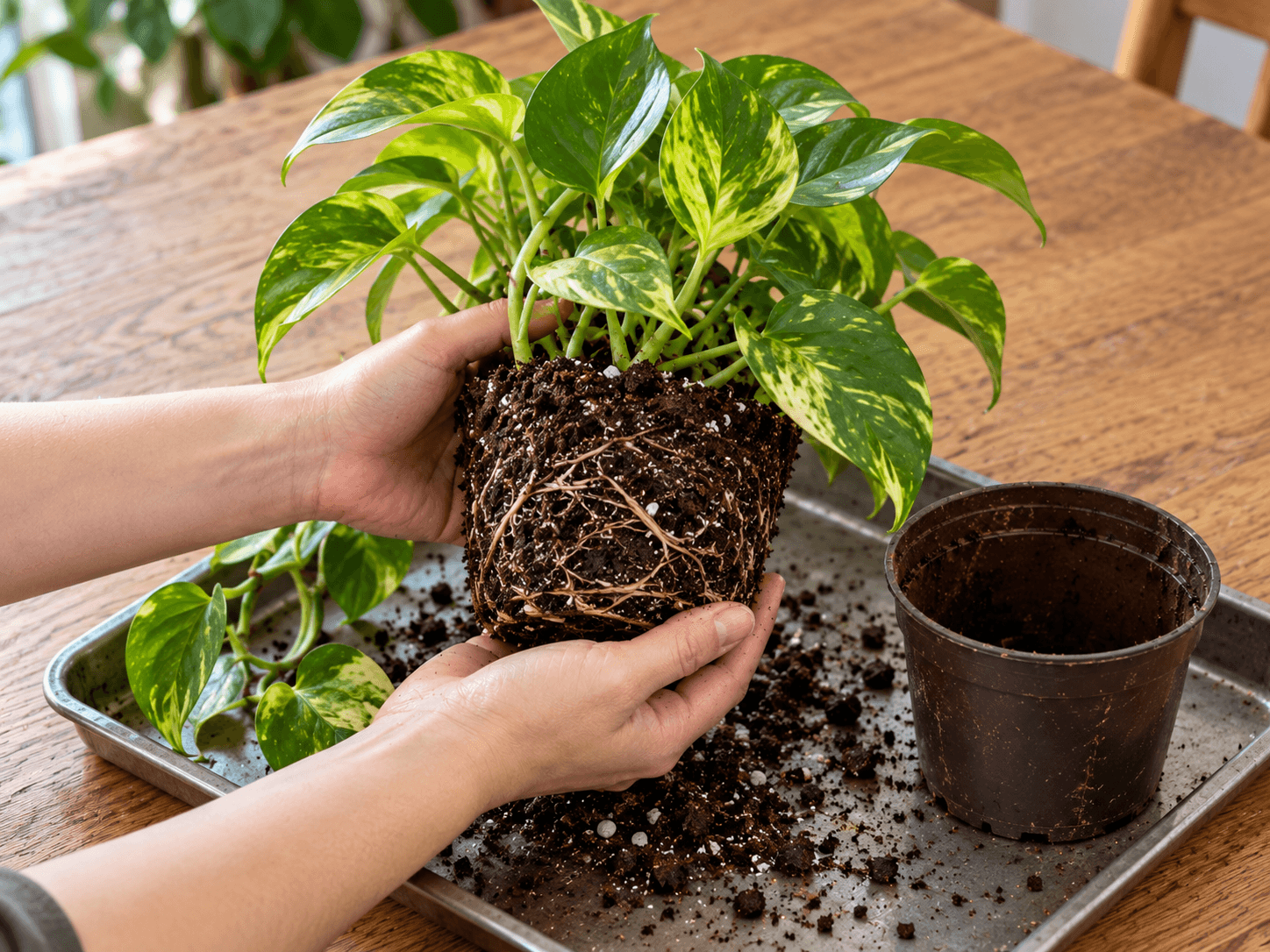
Look at where it grows
Is the pale material spread over the medium, attached to a fallen leaf, or clustered in plant joints? Those locations suggest different questions. Examine it in good light and compare with the university reference. Avoid disturbing it unnecessarily if airborne material bothers you. Keep children and pets away from the pot while you assess it.
Read the wetness pattern
Check whether the top stays wet between waterings and whether water remains inside the cover pot. Remove fallen leaves and other debris. A thick decorative topping may make the medium difficult to inspect. Adjust watering to the species instead of keeping the surface uniformly damp for appearance, and maintain normal air movement around the plant.
Check the plant separately
A healthy plant with surface growth is a different situation from one wilting in persistently wet mix. In the latter case, inspect drainage and consider root condition. Do not assume that removing visible fuzz has solved a root problem. Equally, do not strip a sound root ball simply because the surface looks untidy.
Avoid the cupboard experiment
Cinnamon, vinegar and peroxide recipes circulate widely, but an improvised treatment can obscure the problem or injure roots. Begin with the conditions that allowed the growth. If deterioration continues, seek identification and appropriate advice. Keep a photograph and note what changed so the next decision is based on the plant's response, not a succession of household remedies.
Find a related guide below.
Back to the beginningSources & notes
Care guidance checked against these horticultural references on 20 October 2026.
- University of Maryland Extension: Algae and fungal growth on soilSurface growth, moisture and organic matter.
- University of Maryland Extension: Diagnose indoor plant problemsOverlapping causes of wilt, yellowing, poor growth and root damage.
- University of Maryland Extension: Watering indoor plantsMoisture and pot-weight checks; top and bottom watering.