The white ring on the pot
Mineral deposits and fuzzy growth can look similar from across the room. Look closely before choosing a remedy.
The short answer
Look at the texture
A chalky ring on terracotta often appears where moisture evaporates. A crust on the medium may be harder and more granular than surface fungal growth. Examine the leaves and stems too: pale material clustered in joints could be a pest. Photograph the location and texture before removing it, especially if the plant is also declining.
Count what goes into the pot
Check the fertilizer label, dilution and frequency, including any feed already in the potting mix. Consider whether your water is salt-softened. More product is not a reliable way to encourage a slow plant. Brown tips and poor growth have several possible causes, so use the deposit as a clue rather than a complete diagnosis.
Let water leave the container
Flush only when the plant and mix are otherwise sound and water can drain freely. A sealed pot or waterlogged, failing medium needs its drainage problem addressed first. For an ordinary houseplant in potting mix, Maryland Extension recommends passing at least twice the pot volume of plain water through the medium.
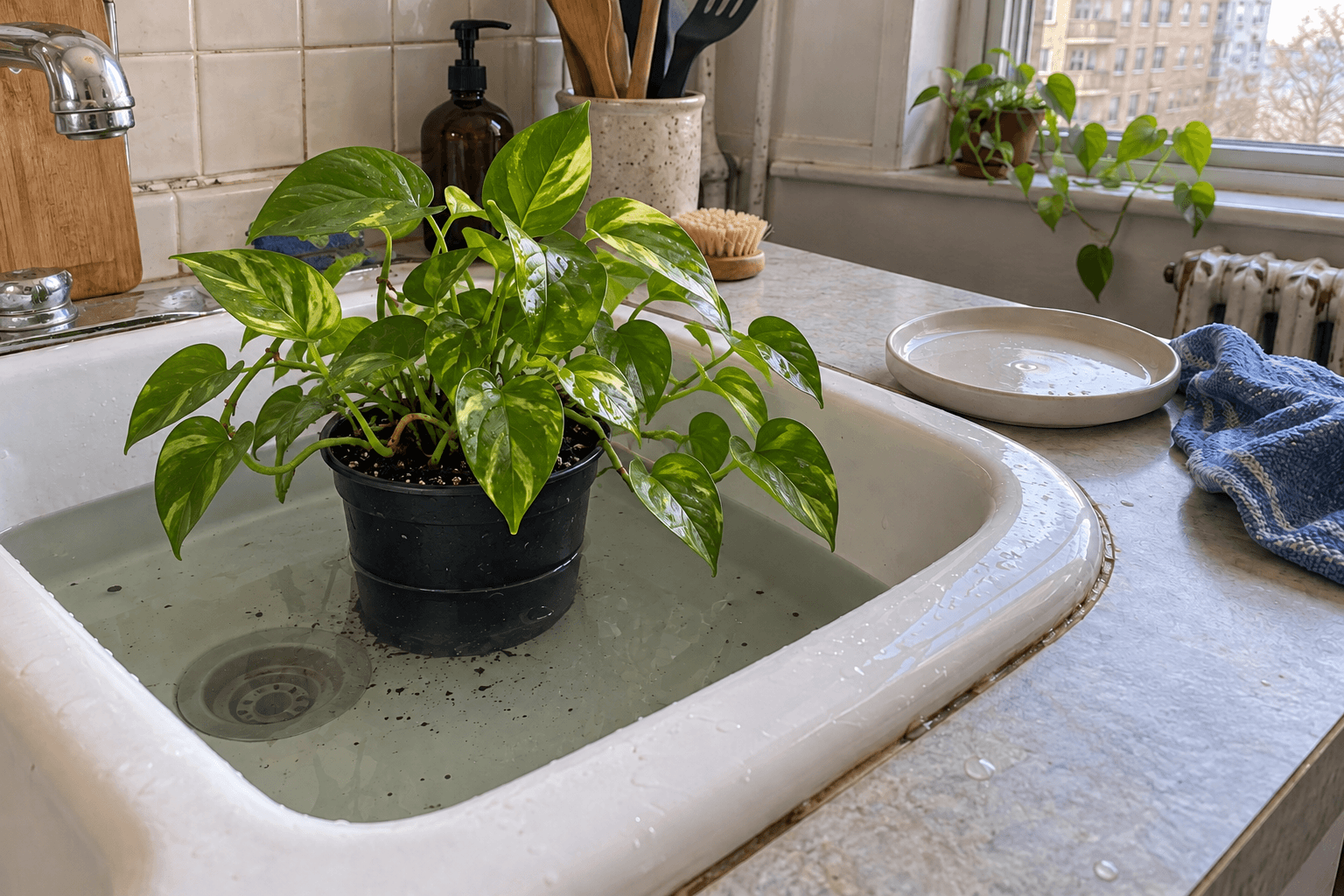
- Lift away loose surface crust without digging into roots. Take the draining pot to a sink or a place where all runoff can be collected.
- Pour plain water slowly across the surface, pausing if it pools. For a one-litre pot, the Maryland method uses at least two litres of water in total. Let it run out rather than collecting around the bottom of the pot.
- Allow the pot to drain completely and discard the runoff. If water stops draining, stop the flush and check the container and medium.
Adjust the routine
Resume watering according to the species and actual moisture. Do not immediately replace all the fertilizer you think was washed out. If deposits recur quickly, revisit the water source and feeding routine. Keep expectations realistic: cleaning the outside of a pot improves its appearance, but the important question is what conditions the roots experience inside.
Find a related guide below.
Back to the beginningSources & notes
Care guidance checked against these horticultural references on 20 October 2026.
- University of Maryland Extension: Watering indoor plantsMoisture and pot-weight checks; top and bottom watering.
- University of Maryland Extension: Potting and repottingRoot-ball placement, aeration and why not to add gravel.
- University of Maryland Extension: Algae and fungal growth on soilSurface growth, moisture and organic matter.