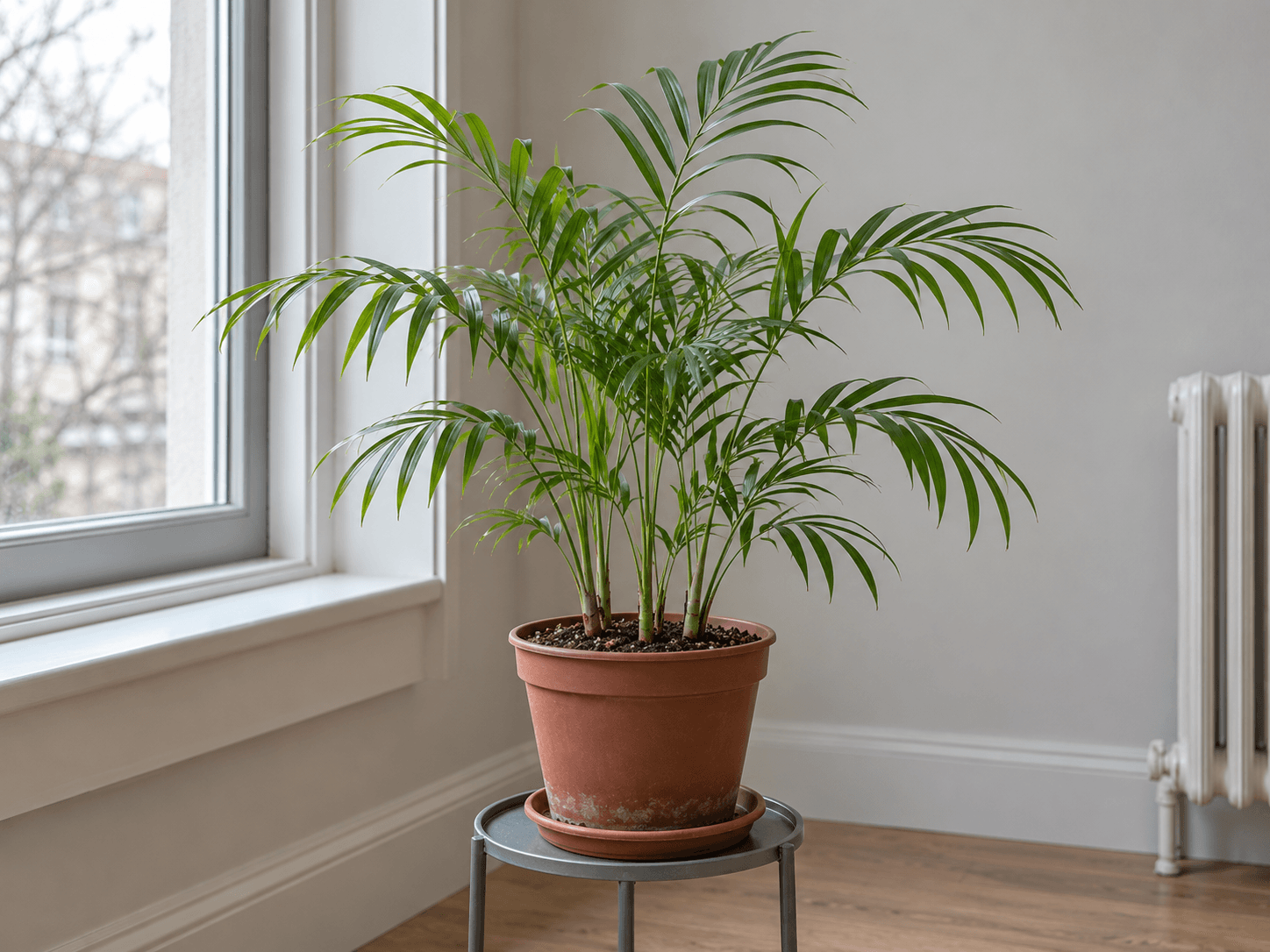
A mushroom appeared overnight
A small fruiting body can arrive without warning. Protect curious hands and paws while checking the growing conditions.
The short answer
Do not identify by colour alone
A yellow mushroom is commonly Leucocoprinus birnbaumii, but a casual photograph or colour match is not enough to establish that every mushroom is the same species. Do not taste it. Use the linked university photographs for context and keep the pot out of reach of anyone likely to handle or eat the growth.
The visible part is only part
A mushroom is a fruiting structure; fungal growth can remain in the medium after it is removed. Spores or fungal material may have arrived with the mix or through the environment. Its appearance does not mean that someone watered with contaminated water yesterday. Nor does removing one cap guarantee that another will not appear.
Check the plant's conditions
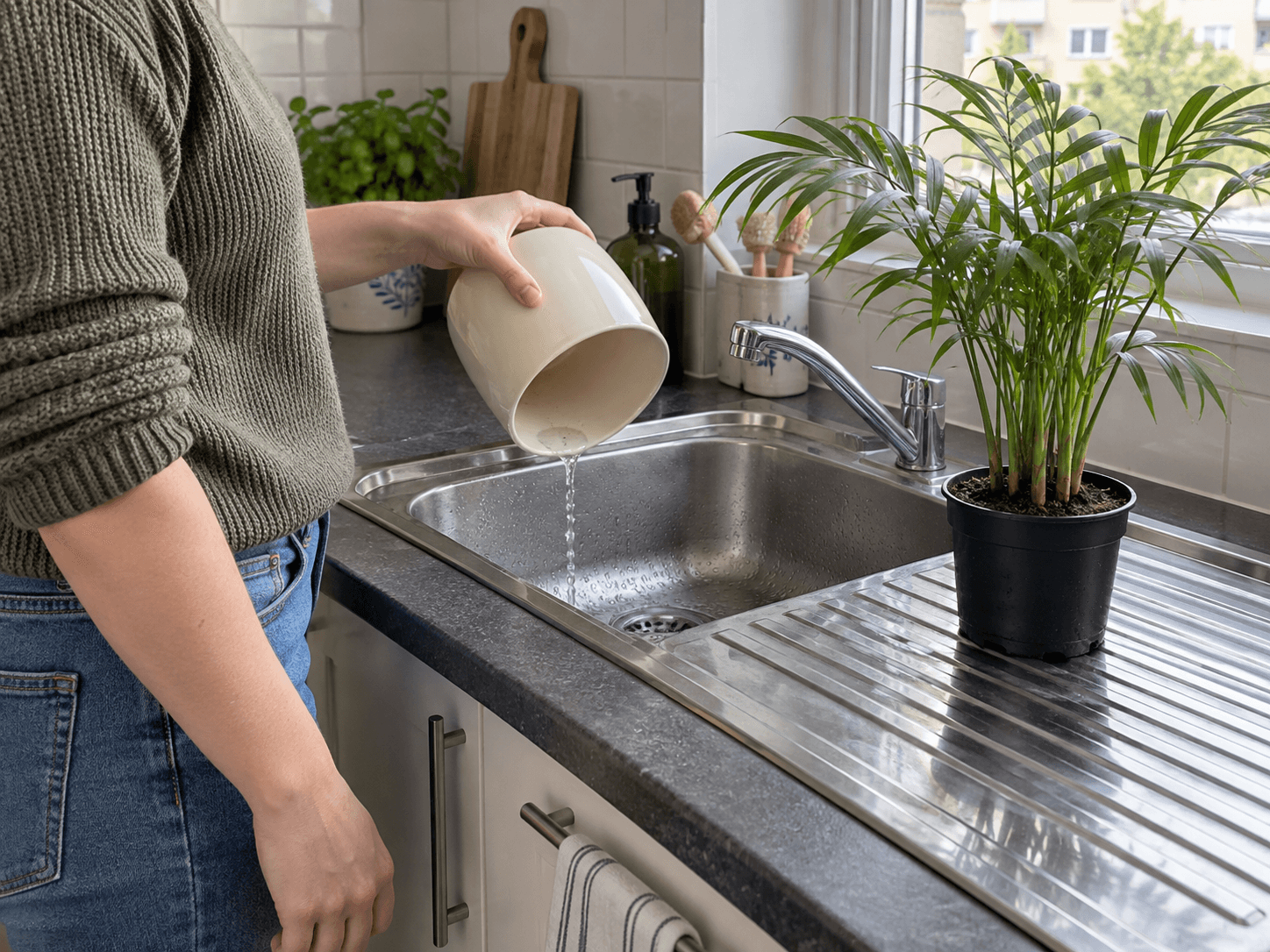
Examine drainage and the moisture routine. Decomposing organic material and damp conditions support many fungi, but the plant's own needs still govern watering. Do not dry a fern severely to discourage a mushroom. If foliage is declining, assess that separately rather than assuming the fruiting body caused every change in the pot.
Keep the response proportionate
Remove accessible mushrooms and keep the pot away from curious children and pets. Fungicides are not generally an effective way to eliminate this recurring problem. If ingestion is suspected, contact an appropriate poison service or veterinarian promptly and retain a photograph for identification. For an otherwise healthy plant, ordinary moisture management and household access are the practical priorities.
Find a related guide below.
Back to the beginningSources & notes
Care guidance checked against these horticultural references on 20 October 2026.
- Iowa State University Extension: Yellow mushrooms in houseplantsOrganic-matter decomposition, mushroom recurrence and ingestion risk.
- University of Maryland Extension: Algae and fungal growth on soilSurface growth, moisture and organic matter.
- University of Maryland Extension: Watering indoor plantsMoisture and pot-weight checks; top and bottom watering.