Look closely at the silver marks
Silvery scarring and distorted growth deserve an inspection. Find the insect before choosing the treatment.
The short answer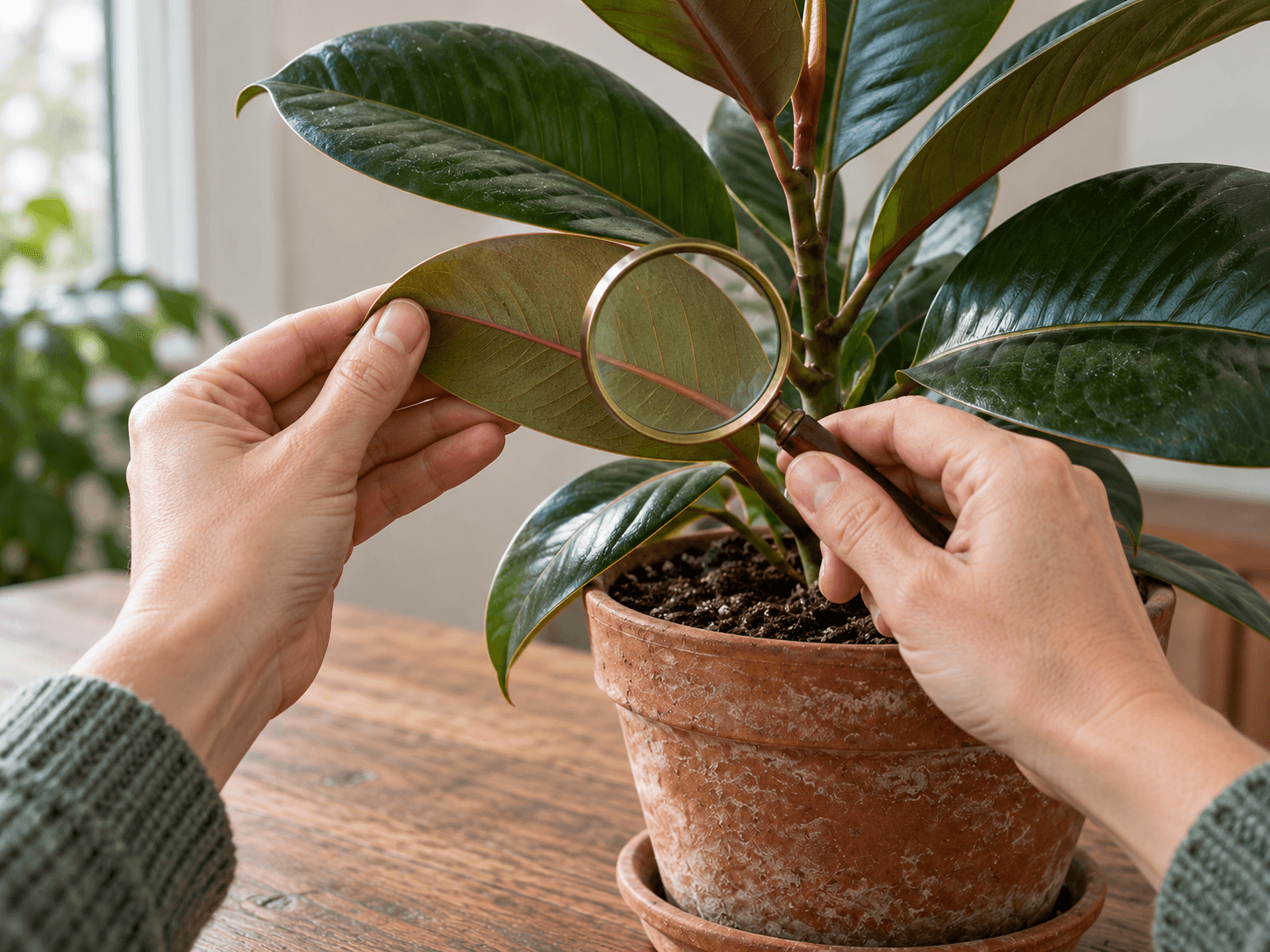
Look for a combination
A silvery patch alone is not proof of thrips. Examine new growth, flowers and leaf undersides with a magnifier. The insects are very small and may move quickly when disturbed. Use the linked university photographs to compare actual insects and damage, and take a clean close-up of your own leaves for a confident call.
- Hold plain white paper beneath an affected leaf or flower and tap it gently. Examine anything that falls with a magnifier.
- Look for narrow, moving insects, often around 1-2 mm long. Younger thrips can be pale; adults may be yellow, tan, brown or black. Colour alone is not an identification.
- Check the leaf for silvery feeding marks and dark specks, then compare the insects with the linked Iowa State photographs. If nothing falls, inspect protected growth and leaf undersides again; one empty paper test does not clear the plant.
Inspect the neighbouring pots
Move the suspect plant to a suitable separate position and inspect plants it touched or stood beside. Note the date, symptoms and places where insects were found. Sticky cards can help detect flying adults, but a clean card does not prove the plant is clear. Continue looking at the growing points themselves.
Plan repeated checks
For foliage that tolerates washing, rinse affected surfaces with water, supporting delicate leaves. This can remove exposed insects. Remove heavily infested flowers or leaves where the plant can spare them, clear fallen material and avoid sharing cuttings. Washing and pruning reduce the problem; they do not reach every hidden insect or egg.
Some thrips lay eggs inside plant tissue, so insects may appear after an apparently thorough cleanup. Repeat the same inspection of leaves, flowers and neighbouring pots, recording live insects and new damage. Sticky cards help with monitoring, but do not replace those checks.
If using a pesticide, follow the exact Canadian label for indoor ornamental use, the pest and plant, including the application interval. An inspection reminder is not a spraying schedule. Do not improvise a stronger concentration or add extra applications when results are slow.
Judge new damage
Old scars remain after the cause is controlled. Photograph a few leaves and watch newly developing growth for fresh injury. Keep the plant separate while the situation remains uncertain. If identification is unclear or damage continues, get help with clear close-ups and the care history rather than adding several products that may themselves injure the leaves.
Find a related guide below.
Back to the beginningSources & notes
Care guidance checked against these horticultural references on 20 October 2026.
- Iowa State University Extension: ThripsDocumented insect photographs, white-paper inspection, isolation, washing and removal of heavily infested material.
- University of California IPM: ThripsVariable appearance, protected life stages, monitoring and persistent scars after feeding stops.
- University of Minnesota Extension: Managing insects on indoor plantsInspection, isolation, pest signs and integrated management.
- Health Canada: Use pesticides safelyCanadian authorization, indoor use and label directions.
- Health Canada: Pesticide label searchCheck current product registration and the complete label.