Why is the shelf sticky?
Sticky deposits can be honeydew from sap-feeding insects, but some plants also produce sticky secretions. Inspect stems, leaf undersides and flowers before treating. Clean a small area and watch whether deposits return, recording where they appear.
Follow the mark back to the plant
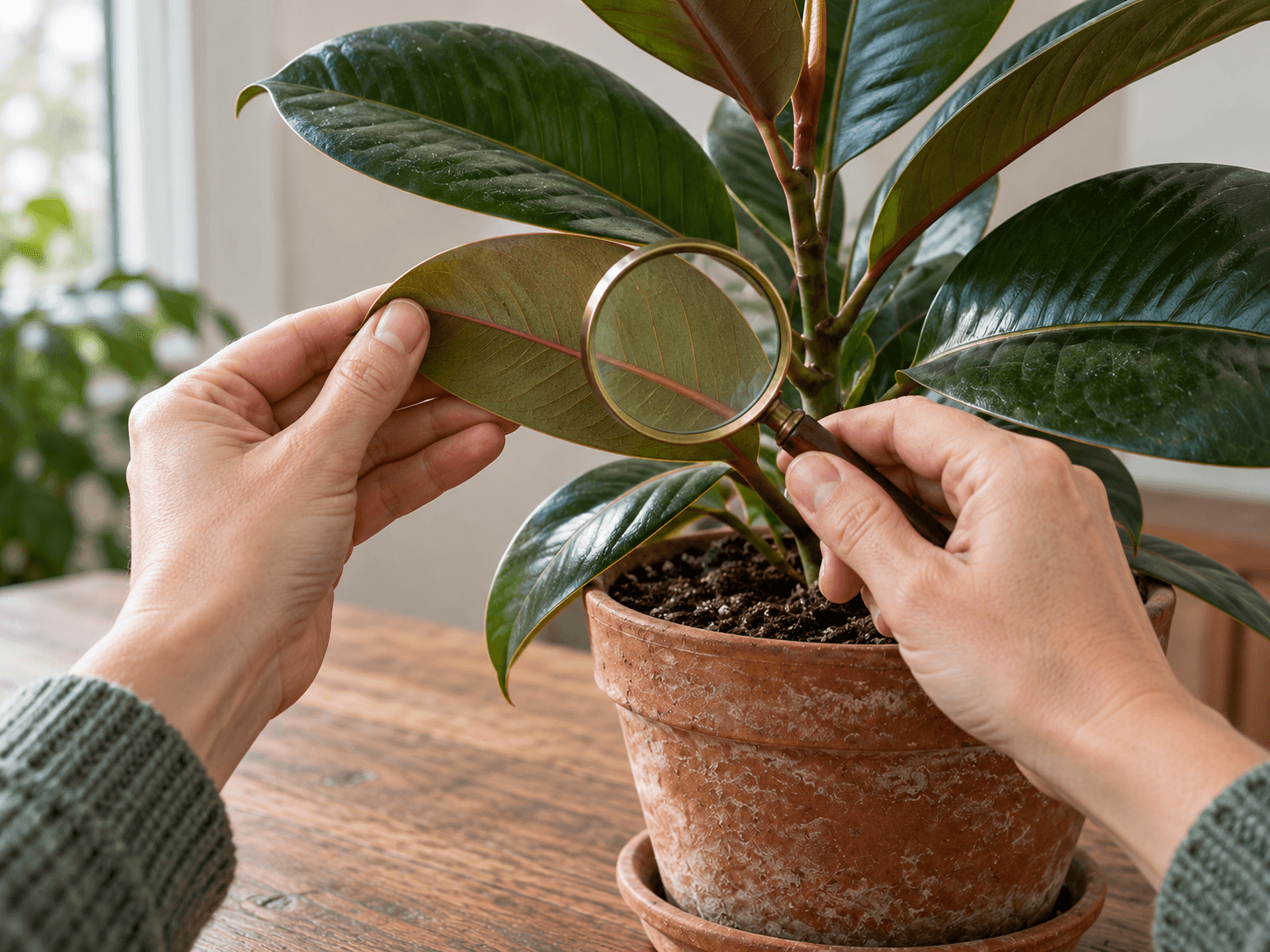
Start with the deposit you can see. Compare suspected insects with the documented reference images in the linked guide.
The sticky patch is below bumps on a stem
Scale is one possibility. Inspect stems and leaf undersides without scraping unidentified tissue from the plant. Separate a suspected infestation while you compare it with a reliable reference; choose treatment only after identifying the cause.
Compare the signs of scaleThere are cottony clusters in leaf joints
Mealybugs are a possibility. Look carefully at the leaf joints and sheltered growth, and inspect nearby pots too. Do not mistake one pale mark for an infestation or use a spray just to cover the residue.
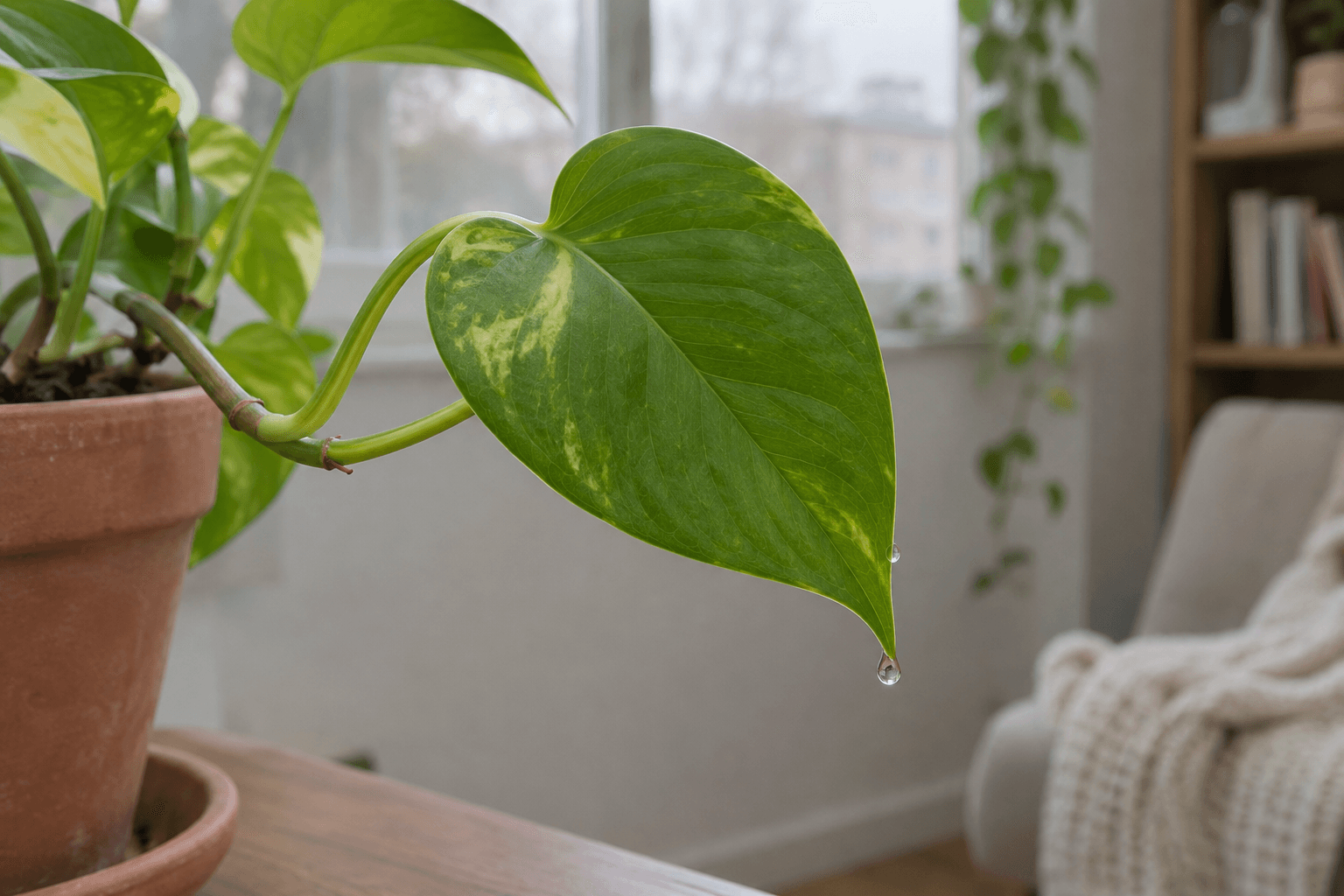
Check cottony clusters and other pest signsIt is one clear drop at a leaf tip
That can have a different explanation from widespread honeydew. Note whether it returns overnight and whether the medium is very moist. Check the droplet pattern and the pot before assuming a pest.
Check for possible guttationStart above the sticky patch
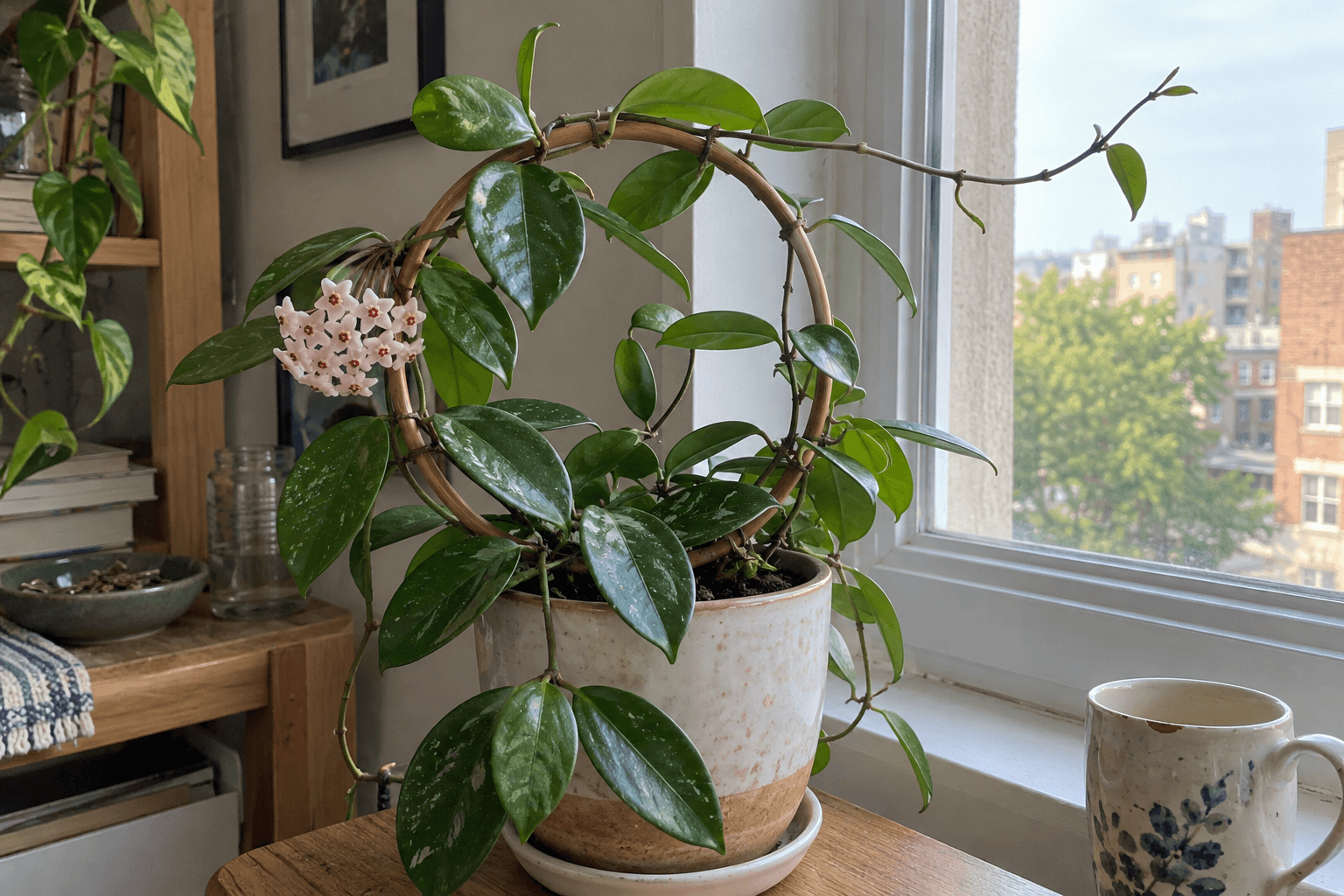
A mark on a lower leaf may have fallen from a stem or flower above it. Inspect that route, including the backs of leaves. Look for scale bumps, cottony mealybugs or other insects. Note whether the deposit is widespread or confined to a particular flower cluster; hoya flowers, for example, can produce sticky liquid.
Keep one useful photograph
Take a close photograph before cleaning and another of the whole plant. Compare suspected insects with documented reference images. A clear droplet at a leaf tip is not enough to name a pest, and a leaf-shine product or household spill can complicate the picture. The location and recurrence are more informative than stickiness by itself.
Clean gently and observe
Where suitable for the foliage, wipe a small affected area with a damp soft cloth, supporting the leaf. Clean the surface beneath the pot too. Avoid coating leaves with oil or detergent to hide the residue. If deposits return, inspect the source again. Cleaning improves observation, but it does not necessarily remove the underlying cause.
Treat the cause you found
Separate a plant with a suspected infestation and follow pest-specific guidance once identified. Check neighbouring pots. If a normal flower secretion explains the mark and the plant is otherwise healthy, protect the furniture and continue ordinary care. Do not spray an insecticide solely because the shelf needs wiping; the treatment should answer an identified problem.
Find a related guide below.
Back to the beginningSources & notes
Care guidance checked against these horticultural references on 20 October 2026.
- University of Minnesota Extension: Managing insects on indoor plantsInspection, isolation, pest signs and integrated management.
- NC State Extension: Hoya carnosaEpiphytic habit, draining medium and persistent flowering spurs.
- Health Canada: Use pesticides safelyCanadian authorization, indoor use and label directions.