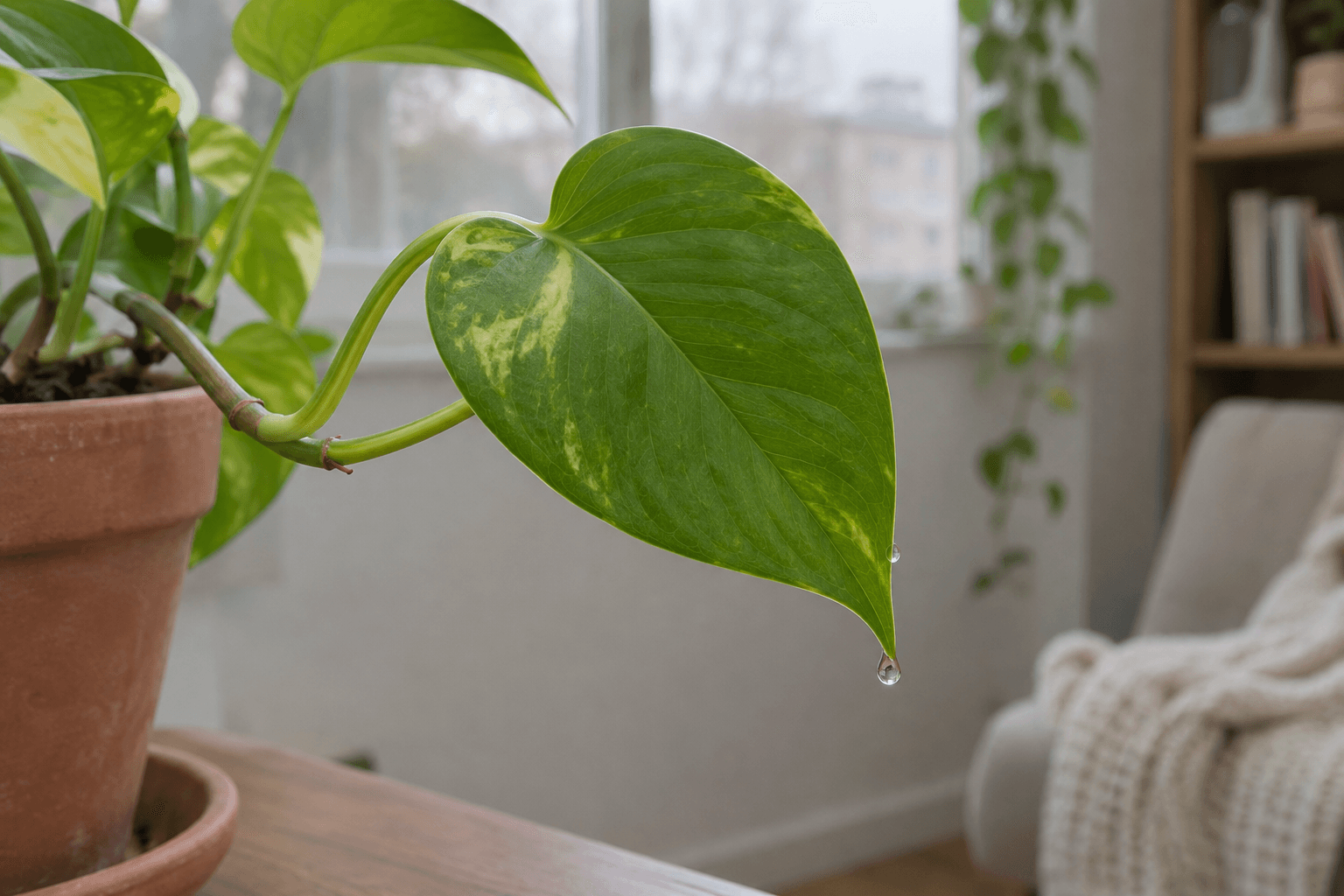
The drop at the end of the leaf
A clear drop forming at a leaf tip or margin, especially in the morning with moist potting mix, can be guttation: liquid leaving specialised leaf pores under root pressure. It is not the same as water vapour lost through transpiration. A droplet alone does not diagnose overwatering or pests. Check the pot, the pattern and the rest of the plant before changing care.
Where does the wetness begin?
Choose the closest observation. If none fits, keep a photograph and check again before treating.
A clear bead returns at a tip or edge
Guttation is possible, especially with moist mix and a morning pattern. Check the pot before adding more water. The drop does not tell you how dry the root ball is, and it is not a reason to dry every plant completely.
Work out whether this pot needs waterThe leaf or shelf feels tacky
Inspect above the mark and on leaf undersides. Honeydew can come from sap-feeding insects, while some flowers produce their own secretions. A clear drop alone cannot identify either one.
Trace a sticky deposit to its sourceMost of the leaf is wet after misting
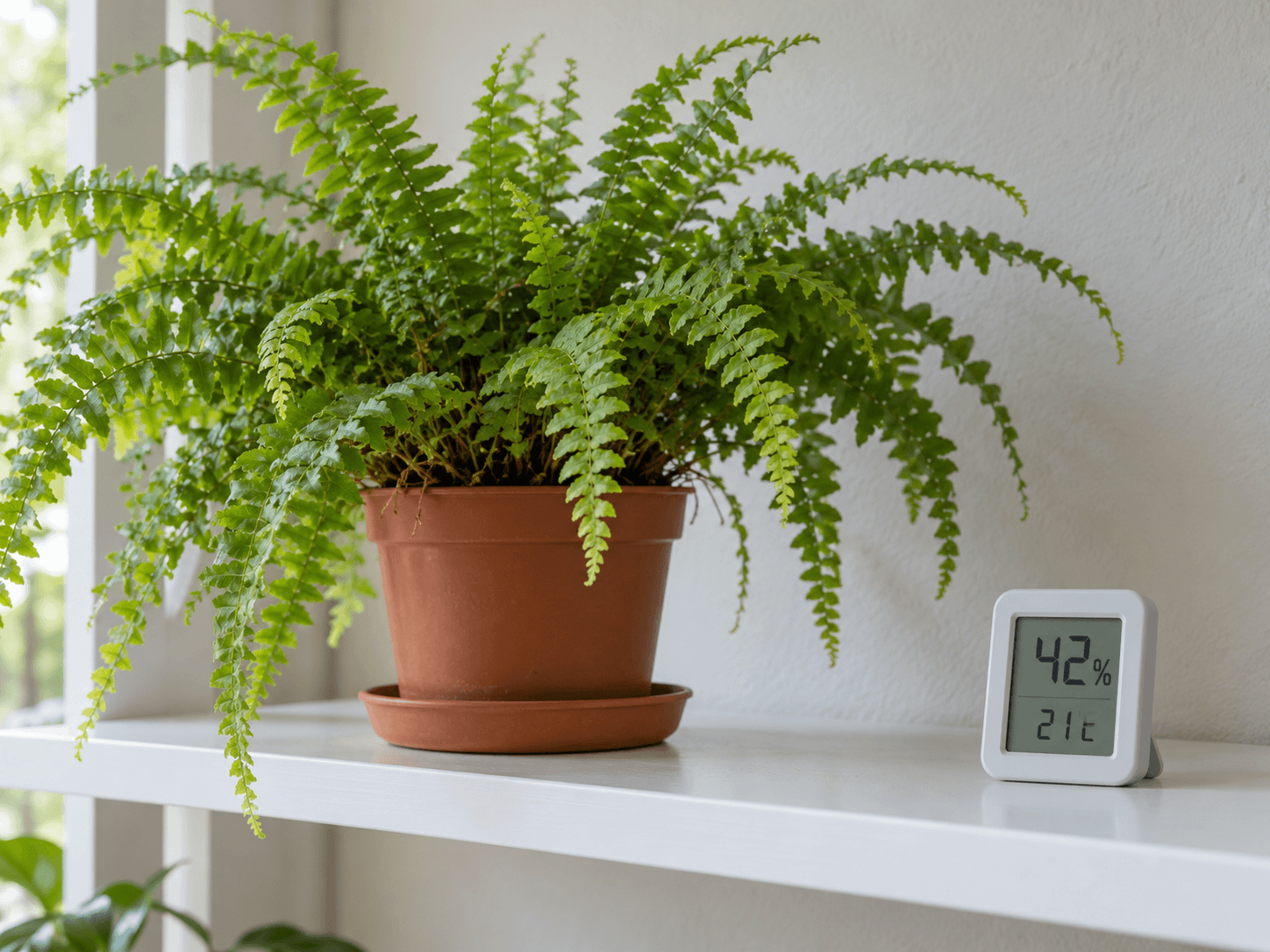
That observation has an external water source. Let the foliage dry in its suitable position. If the question is whether the room is humid enough, use a hygrometer rather than the wetness of the leaf.
Measure the air separately from leaf wetnessLook before wiping it away
Notice where the liquid starts. A bead hanging from the tip of an otherwise dry leaf is a different observation from a whole plant just misted or a wet patch below a flower. Photograph the leaf and the pot, and note when you last watered. Protect the surface beneath it while you investigate.
Guttation fluid contains water and dissolved substances; it is not simply collected room humidity. In some plants, root pressure pushes liquid out through hydathodes, specialised pores usually near leaf edges. Cool, still or humid conditions can slow evaporation, making the drops easier to notice. It is often most apparent overnight or in the morning.
Use the pattern, not one photograph
| Observation | What to check next |
|---|---|
| Drops repeatedly form at tips or margins, often by morning | Guttation is possible. Check moisture and drainage; keep the plant name with your notes. |
| Many surfaces are wet after spraying, a spill or condensation | Look for the external water source. Leaf wetness alone does not show water leaving the plant. |
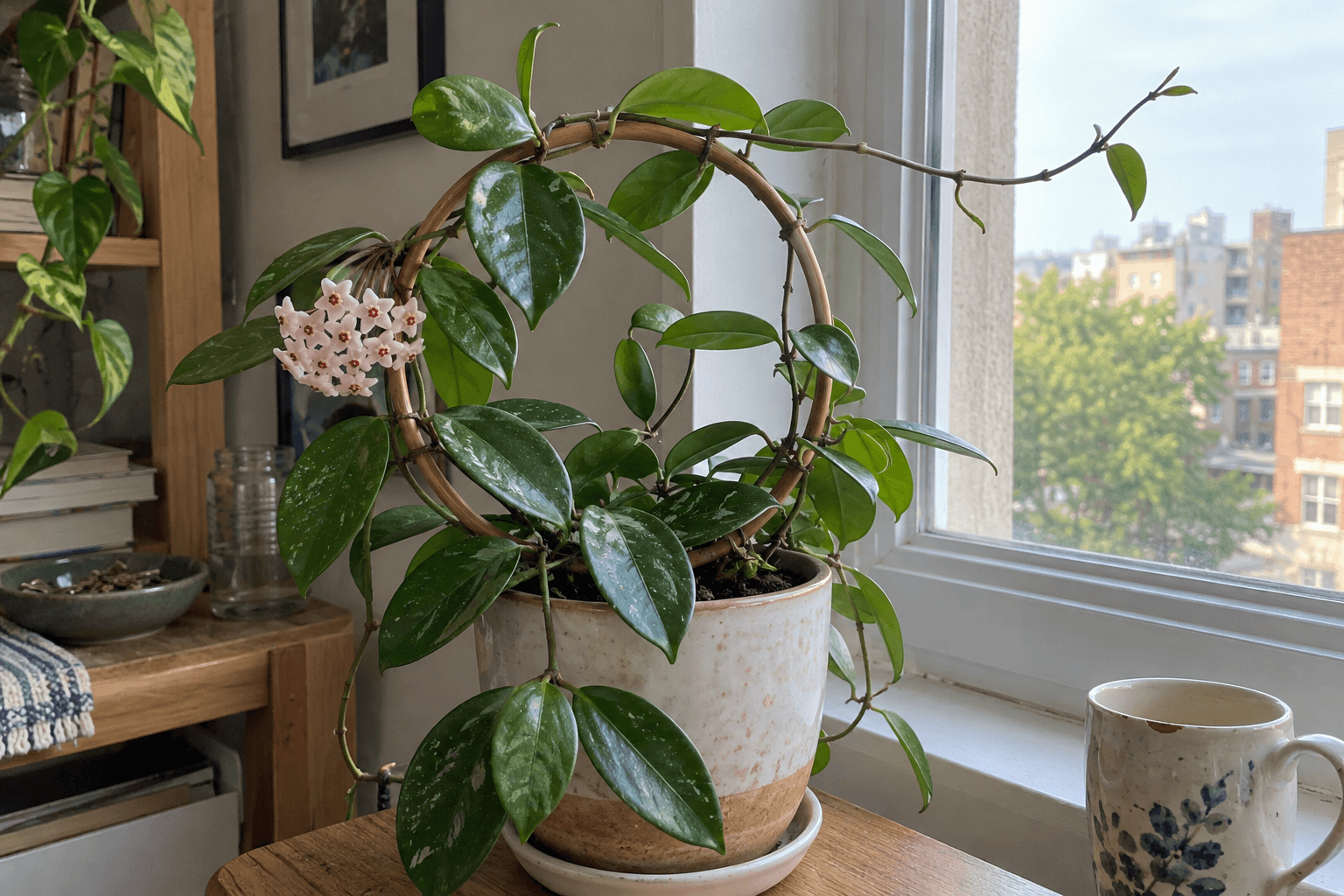
| Tacky deposits recur on leaves, stems or the shelf below | Inspect above the deposit, including leaf undersides, for insects or a flower secretion. |
These are observation prompts, not an identification test. Location and timing narrow the question; they cannot prove the source of every drop. Do not identify a pest from a clear bead alone, or assume that all sticky liquid is harmless guttation.
If the deposit is tacky, follow the sticky-leaf inspectionCheck the roots' environment before reaching for the jug
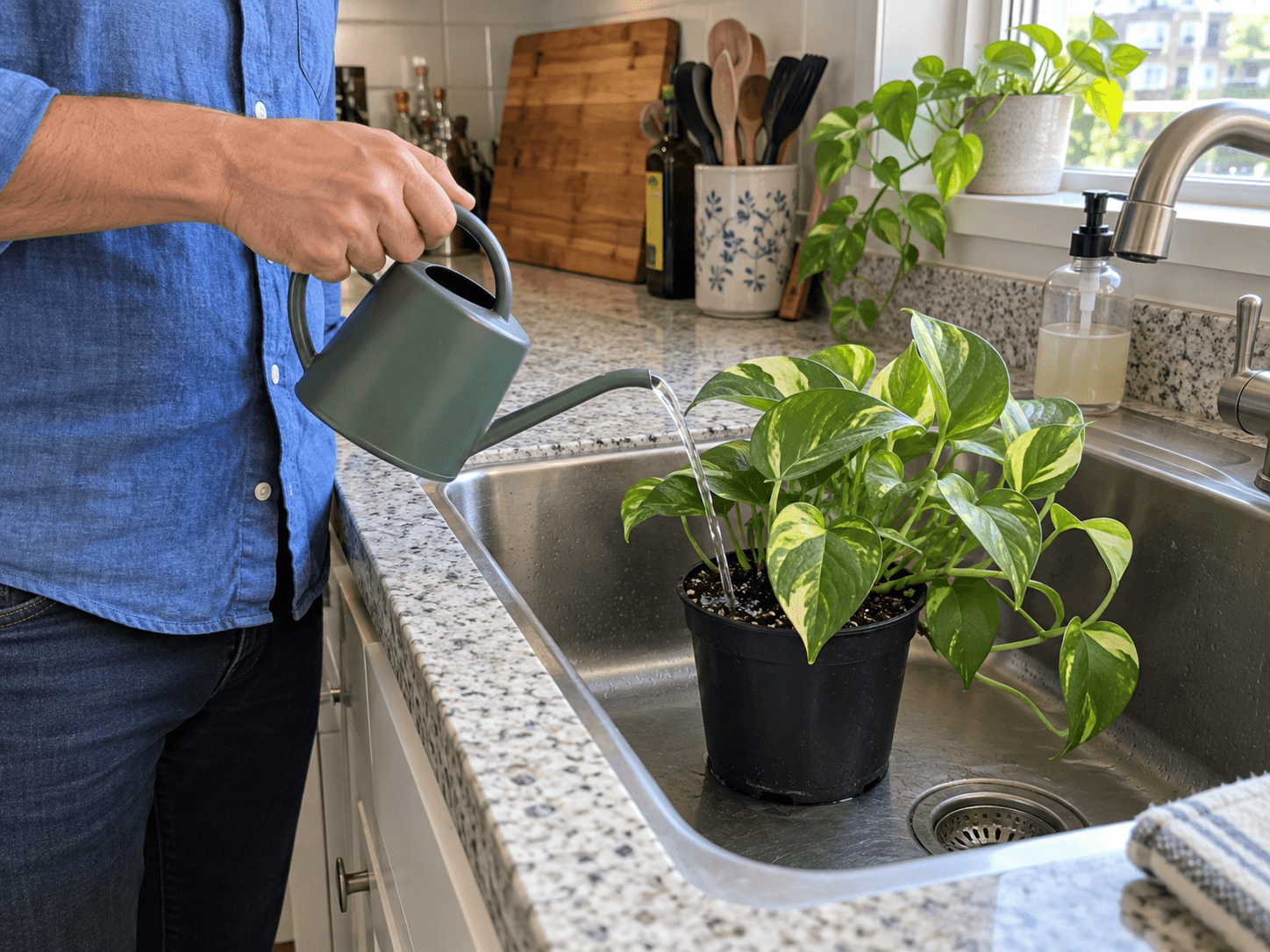
Feel the medium where you can do so without damaging roots, lift the pot if manageable and check for water trapped in an outer container. Guttation often occurs when the medium is very moist. That makes the next useful question whether this plant is ready for more water, not how to replace the drops it has lost.
Empty collected runoff and let the pot drain. Follow the species' normal moisture needs rather than imposing a long dry spell on every plant that drips. Repeatedly wet mix, worsening yellow leaves or a plant wilting in wet soil deserve their own investigation. A few drops without those changes are not a reason for emergency repotting.
Decide whether this particular pot actually needs waterKeep one small record
For the next few checks, record the time, recent watering, whether the mix is still wet and which leaves produce drops. Keep the plant in suitable light and avoid changing water, fertilizer, pot and position together. If deposits or damage keep spreading, clear photographs and that short care history are more useful than several simultaneous treatments.
Wipe a suitable smooth leaf gently with a damp soft cloth if residue remains, supporting it rather than pulling on the tip. Wash your hands after handling plant fluids and keep them away from food. Do not taste a drop to identify it. The practical aim is a pot you can assess and a protected shelf, not a plant that never releases a bead of liquid.
If the air is the concern, measure humidity separatelyFind a related guide below.
Back to the beginningSources & notes
Care guidance checked against these horticultural references on November 2, 2026.
- New York Botanical Garden: Why are my plant leaves dripping water?Guttation fluid, moist medium, leaf-tip droplets and overnight conditions.
- RHS: How plants lose waterTranspiration, root pressure and hydathodes near leaf margins.
- University of Minnesota: Plants and waterRoot pressure moves water and dissolved materials; guttation differs from transpiration.