The bump that does not brush away
Check stems and leaf undersides for persistent bumps, and use documented photographs before treating the plant.
The short answer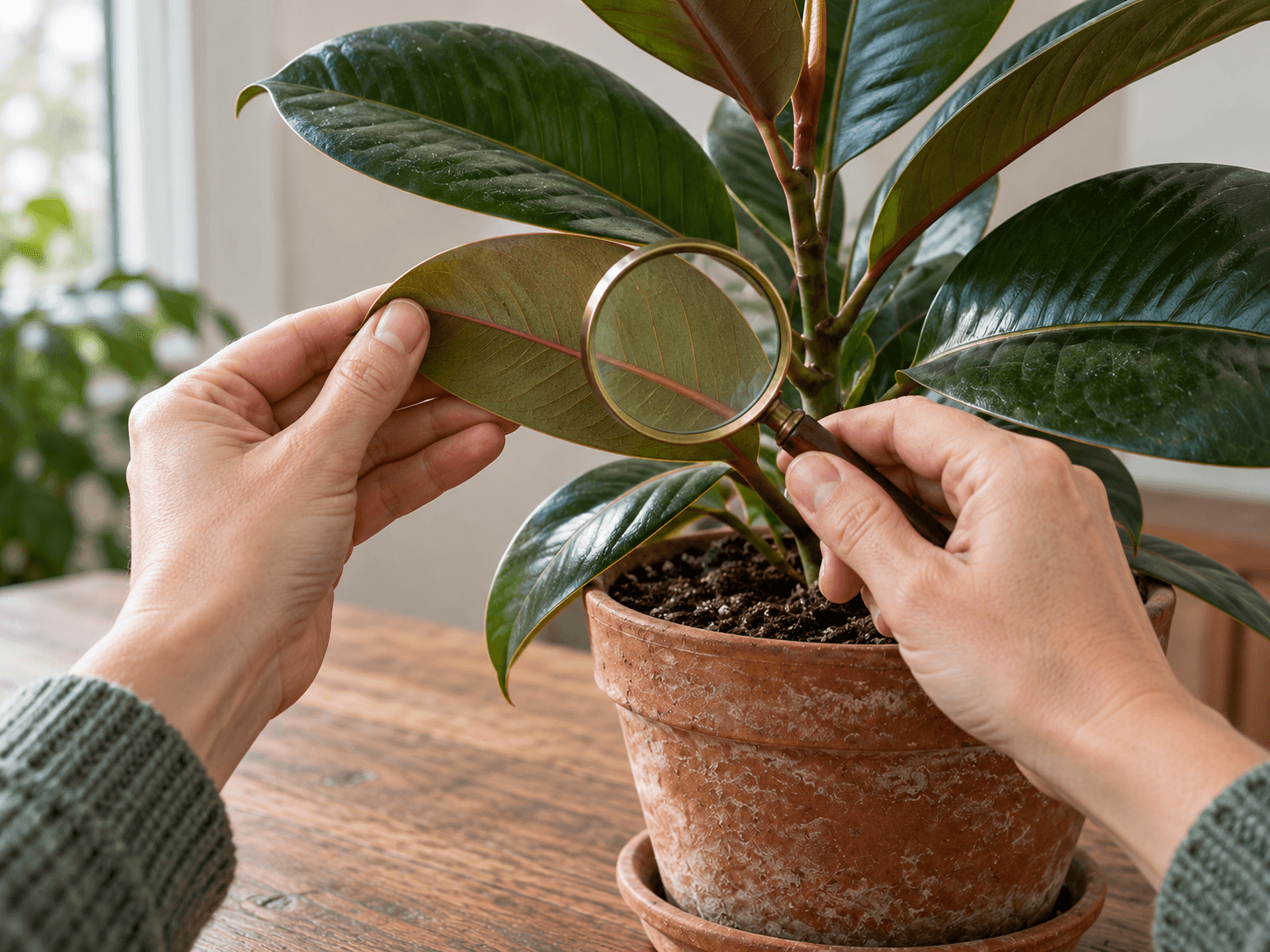
Inspect the hidden surfaces
Use good light and a magnifier to examine stems, leaf joints and the undersides of leaves, especially along veins. Look for a repeated pattern of attached bumps rather than one scar. The linked university pest guide includes real photographs. The editorial image above shows an inspection setup, not a diagnostic picture of scale.
A sticky shelf is a clue
Honeydew can collect on leaves and furniture beneath a plant with soft scale, but stickiness alone does not identify the insect. Armoured scales may be present without it. Photograph the bumps closely and include the whole plant for context. Avoid scraping every natural mark from a leaf while trying to prove a diagnosis.
Reduce the immediate problem
Once scale is identified, keep the plant separate and work over a washable surface. On a small, accessible infestation, support the leaf or stem and gently dislodge individual insects with a dry cotton swab or soft toothbrush. Stop if the leaf surface is tearing. Remove heavily infested leaves or stems only where the plant can spare them.
Clean fallen material and inspect the same leaf joints, undersides and stems again at subsequent checks. Tiny crawlers can remain after the visible adults are removed. Physical removal becomes less practical when insects fill inaccessible joints or much of the plant; discarding a badly infested, declining specimen can protect the rest of the collection.
Use Canadian directions
If a pesticide is needed, verify that the current Canadian label permits the plant, pest and indoor use. Follow its application and repeat-treatment directions. A product recommended on an American extension page is not automatically registered for use in your home. Do not substitute dish detergent or a stronger homemade mixture for a labelled treatment.
Find a related guide below.
Back to the beginningSources & notes
Care guidance checked against these horticultural references on 20 October 2026.
- University of Minnesota Extension: Managing insects on indoor plantsInspection, isolation, pest signs and integrated management.
- University of Missouri Extension: Managing indoor plant pestsPhysical removal of scale with a dry swab or toothbrush, pruning heavily infested parts and limits of manual removal.
- Health Canada: Use pesticides safelyCanadian authorization, indoor use and label directions.
- Health Canada: Pesticide label searchCheck current product registration and the complete label.