The pot beneath the pretty pot
Choose a practical inner pot, understand terracotta versus plastic and avoid hidden standing water or gravel drainage myths.
The short answer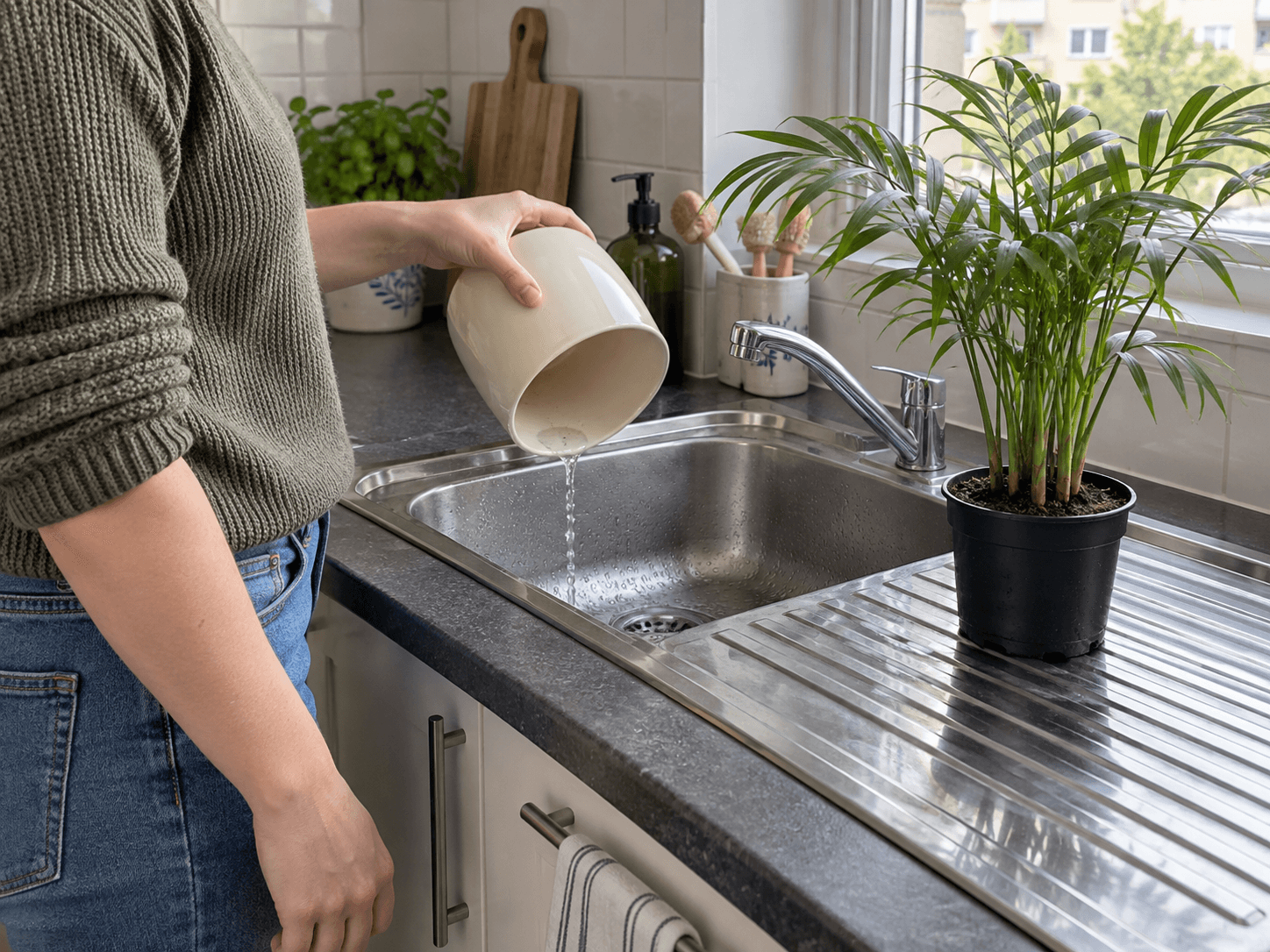
Let each pot do one job
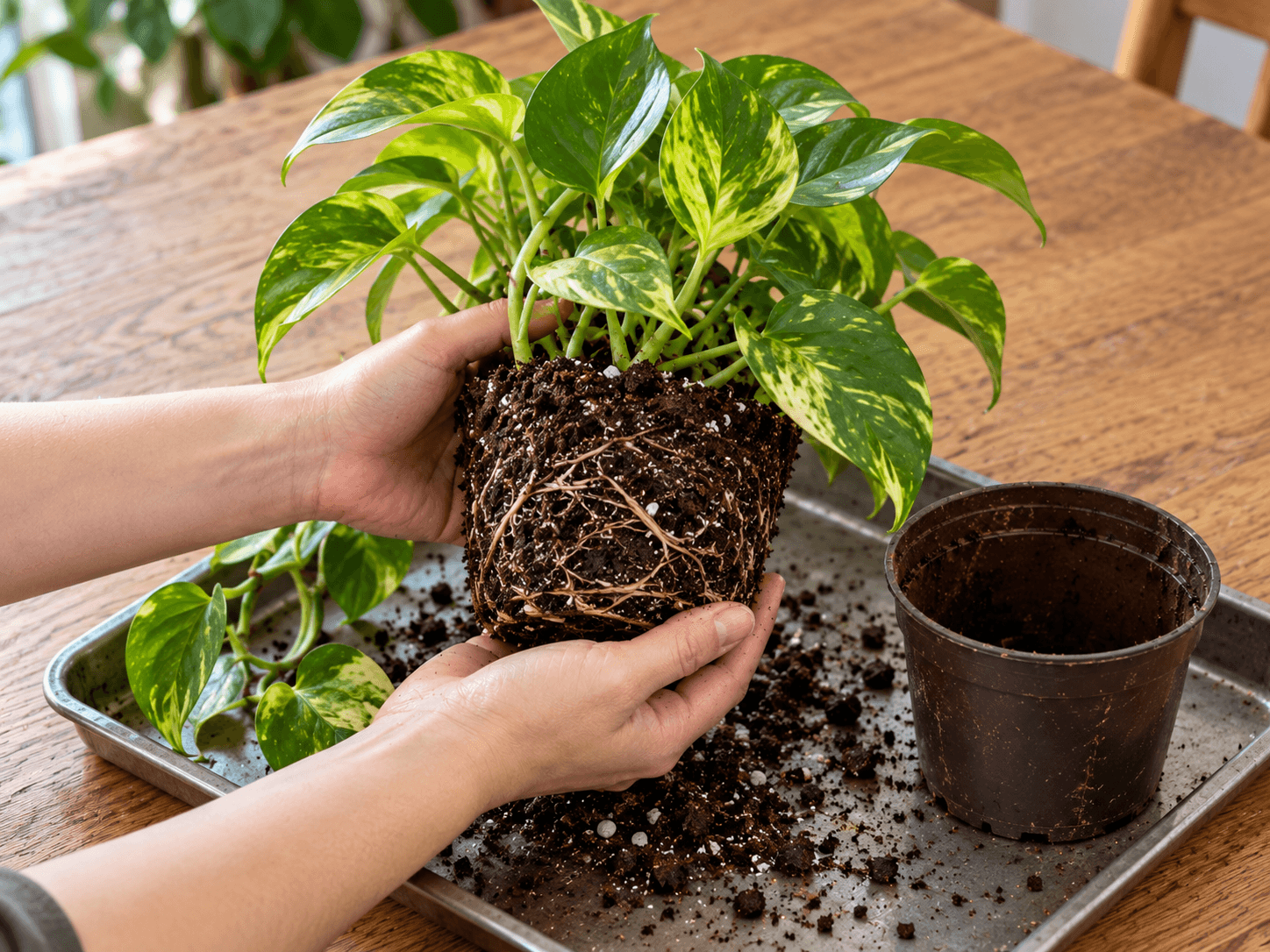
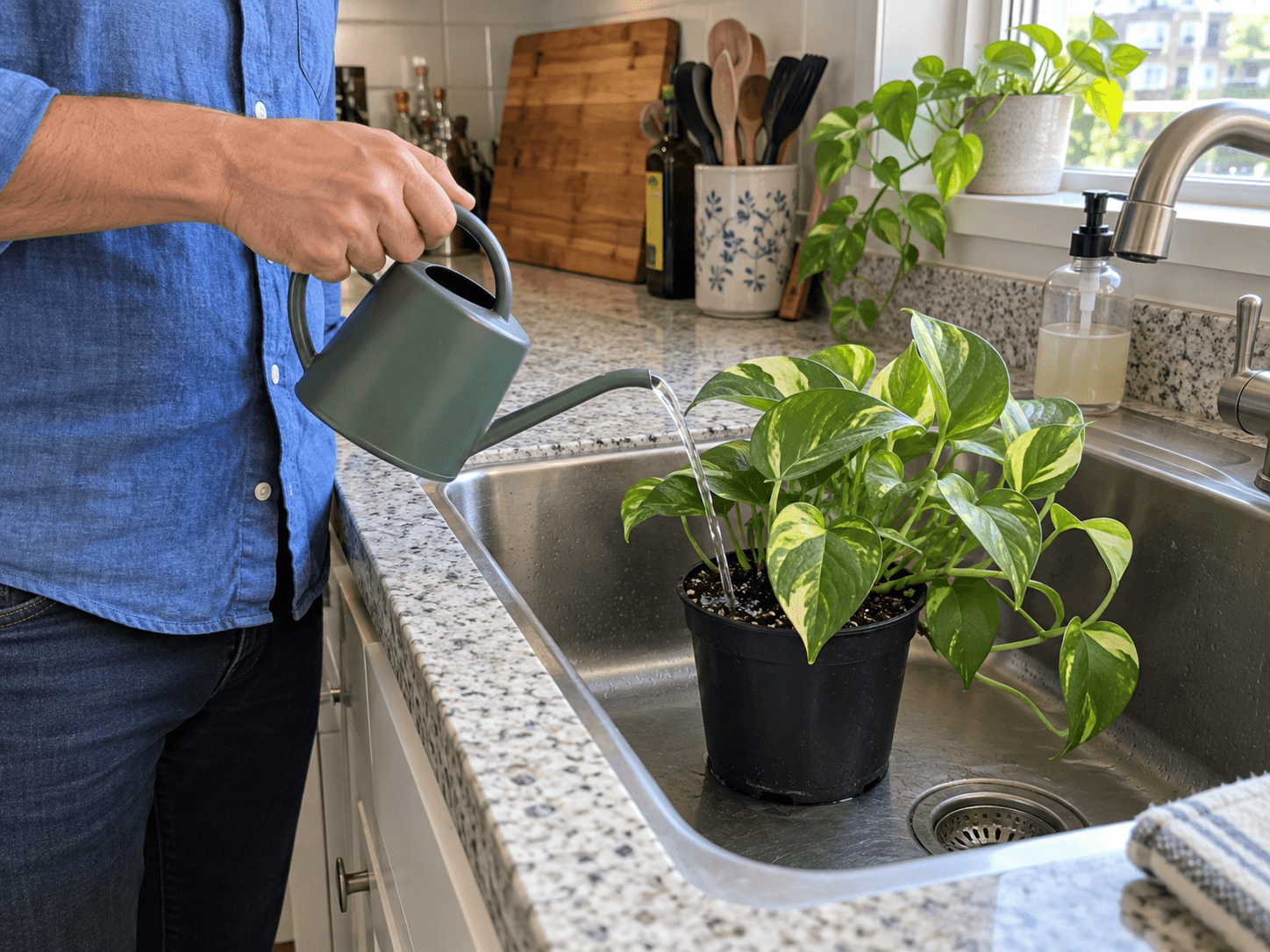
The growing pot holds the roots and medium; the cover pot contributes colour, weight and finish. Keeping the jobs separate makes watering easier. A plain nursery pot can sit inside a beautiful ceramic vessel, provided you can remove it and the outer vessel does not trap water against its base.
Check the fit before buying. A tight lip can make extraction awkward once leaves fill the space. Leave enough room to lift the inner pot without dragging stems against the rim. If you cannot remove it, plan a reliable way to see and empty runoff.
What actually drains
A saucer protects the surface. Empty it after watering; roots should not sit in runoff.
A hole gives excess water a route out. The mix still needs suitable air space and water-holding properties, and the root ball must fit the volume. A hole in a huge pot full of dense wet medium does not guarantee healthy roots.
A gravel layer takes up root space and does not make a non-draining container behave like a draining one. Use a proper growing pot rather than trying to engineer drainage with stones. Protect furniture with a waterproof saucer or tray and check underneath for moisture.
Choose the material for your routine
| Material | Useful feature | Watch for |
|---|---|---|
| Terracotta | Porous walls can encourage drying | May need more frequent checks; can mark furniture. |
| Plastic nursery pot | Lightweight and easy to lift | Holds moisture longer in many settings. |
| Glazed ceramic | Stable, with a wide choice of finishes | Check whether it has a hole; do not assume. |
| Decorative basket | Softens the room visually | Needs an appropriate waterproof liner and draining inner pot. |
Scroll to see all columns
Material alone does not determine watering. The mix, plant size, root mass and light can outweigh the difference between two containers. Keep the whole setup in view.
Do not buy years of growing space at once
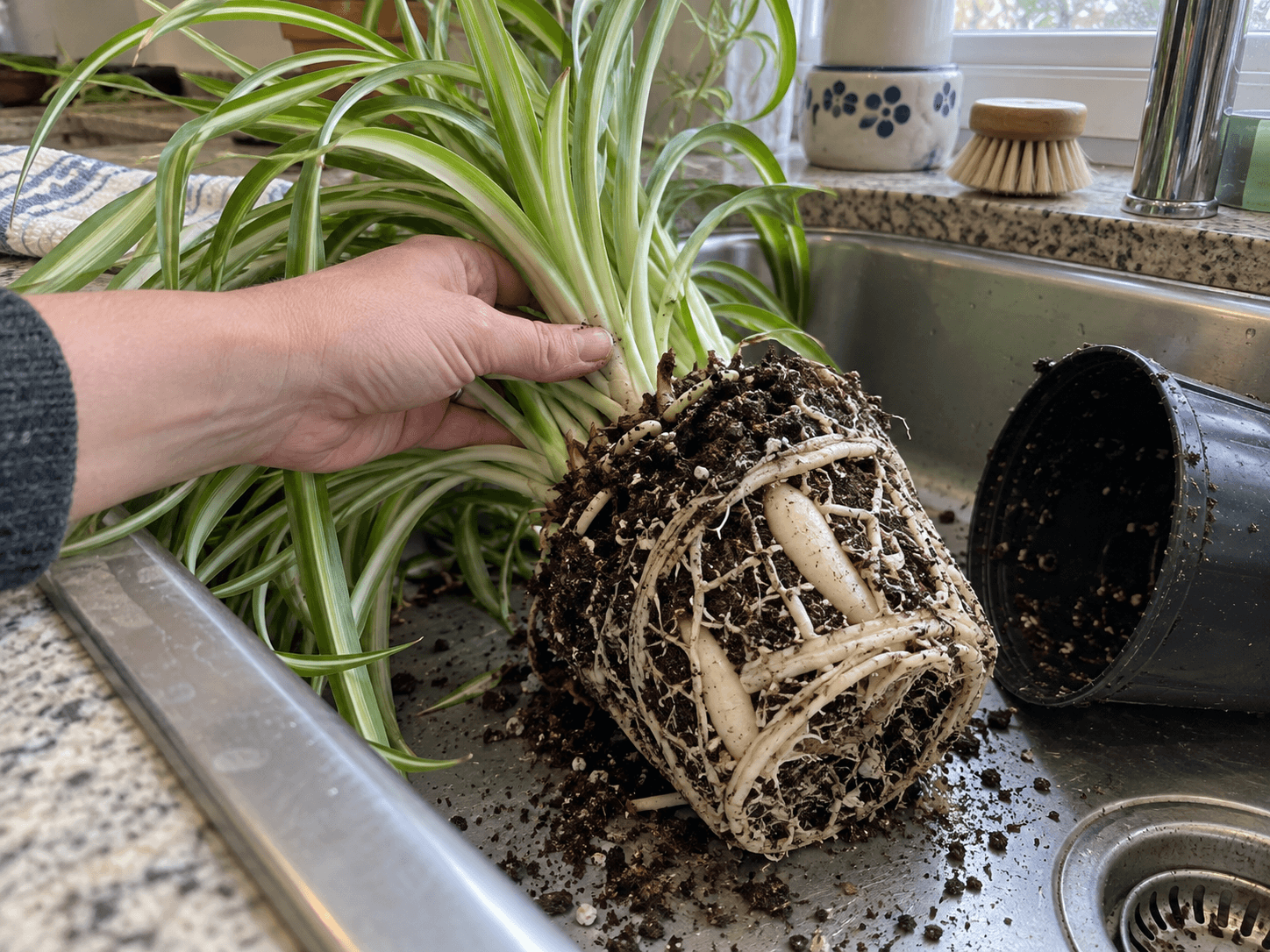
When a healthy plant needs repotting, choose a modest increase that gives roots room without surrounding them with a large wet volume. Measure the actual root ball and the inside of the new pot, not just the product label. A tapered pot can be much narrower at the bottom than it looks at the rim.
For a top-heavy plant, improve stability with an appropriate shape or a heavier outer container. Increasing wet soil volume is not the only way to make a plant less likely to tip. A pot that lets you care for the plant comfortably is the one you will keep using.
Find a related guide below.
Back to the beginningSources & notes
Care guidance checked against these horticultural references on 20 October 2026.
- University of Maryland Extension: Potting and repottingRoot-ball placement, aeration and why not to add gravel.
- NC State Extension: Plants grown in containersContainer materials, potting media, nutrition and indoor care.
- University of Maryland Extension: Watering indoor plantsMoisture and pot-weight checks; top and bottom watering.