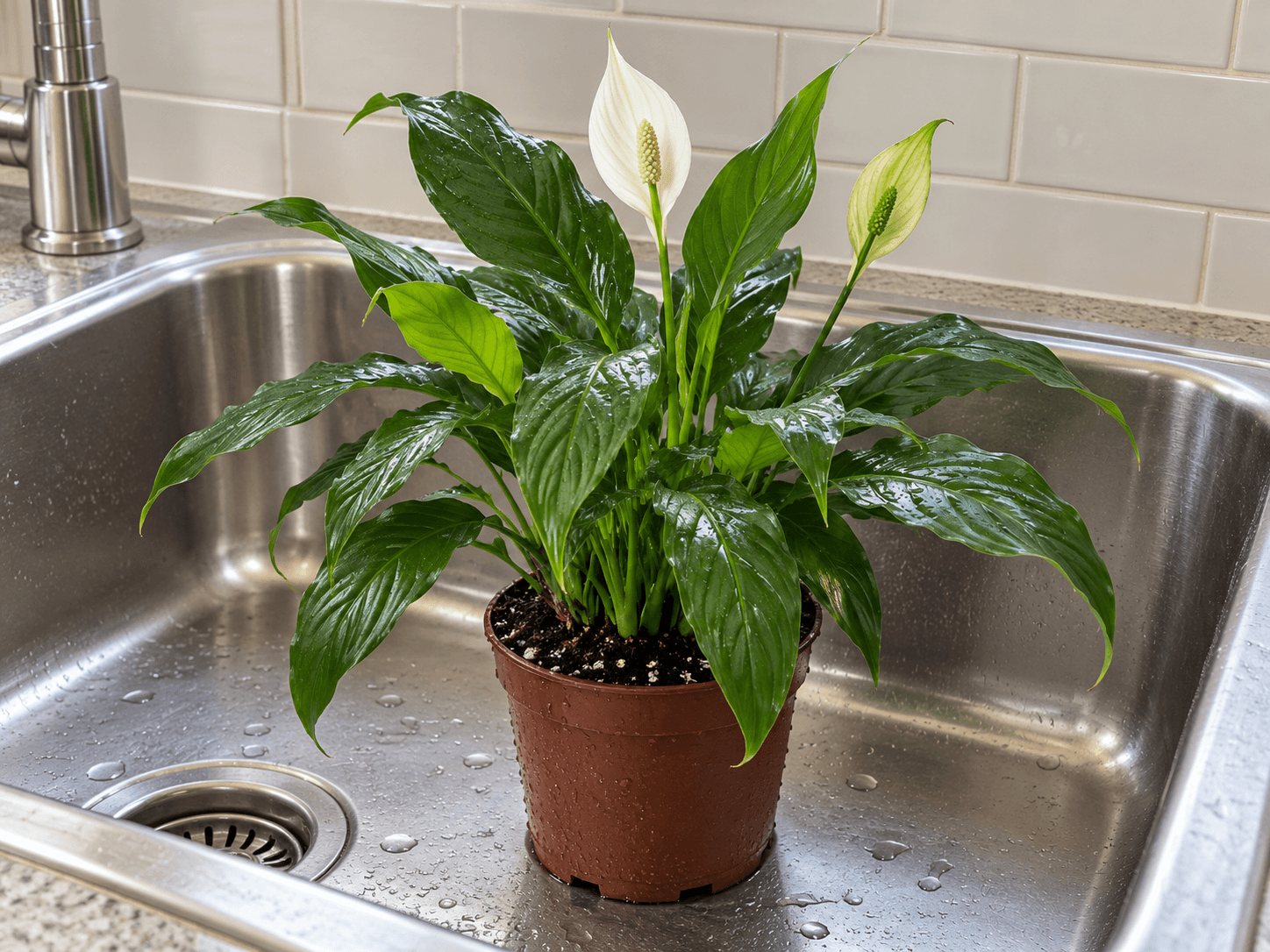
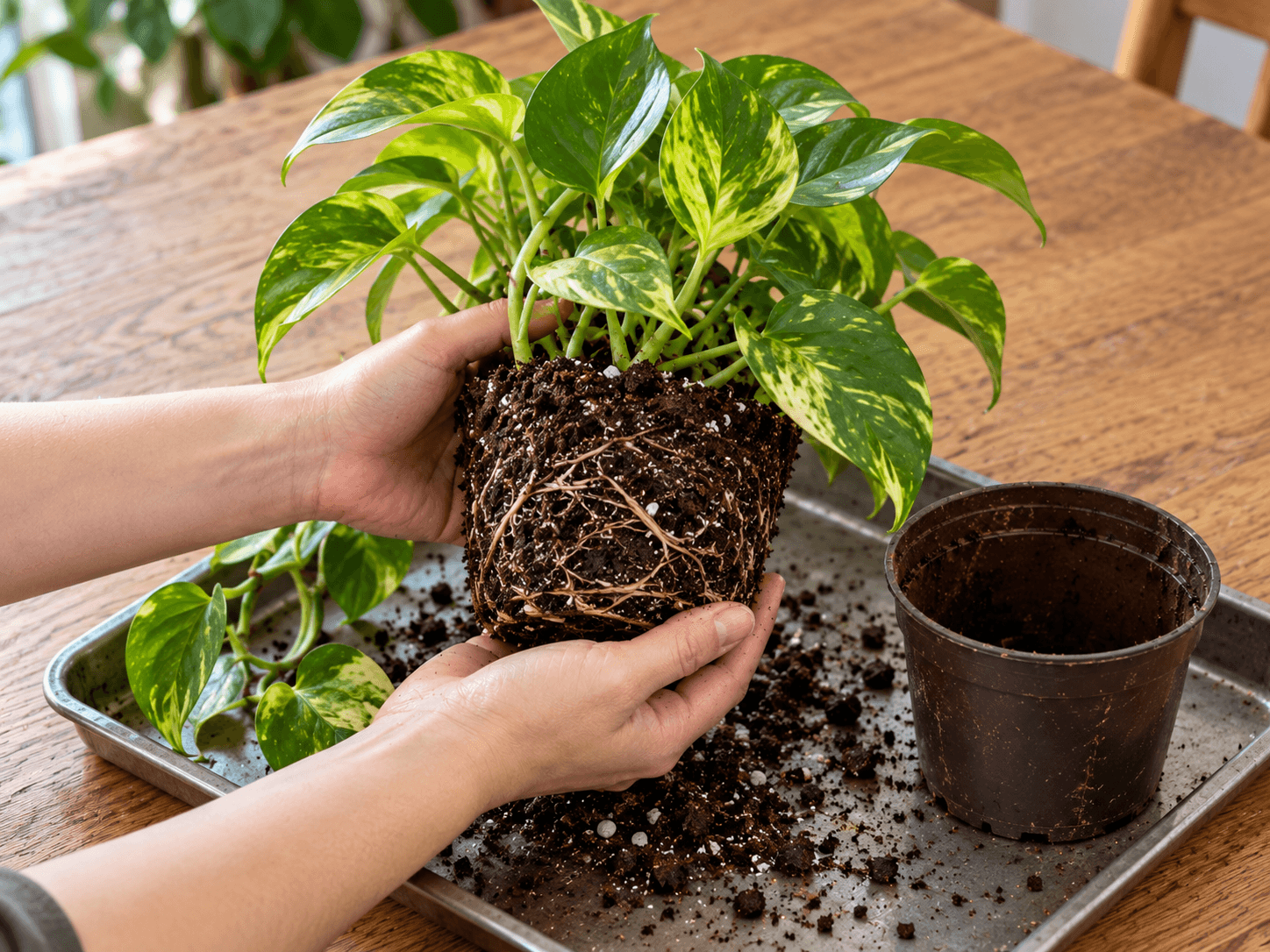
Check each pot before filling the watering can
Start with moisture, drainage and the recent conditions. Sort the collection into useful next actions instead of giving every plant the same rescue.
The short answer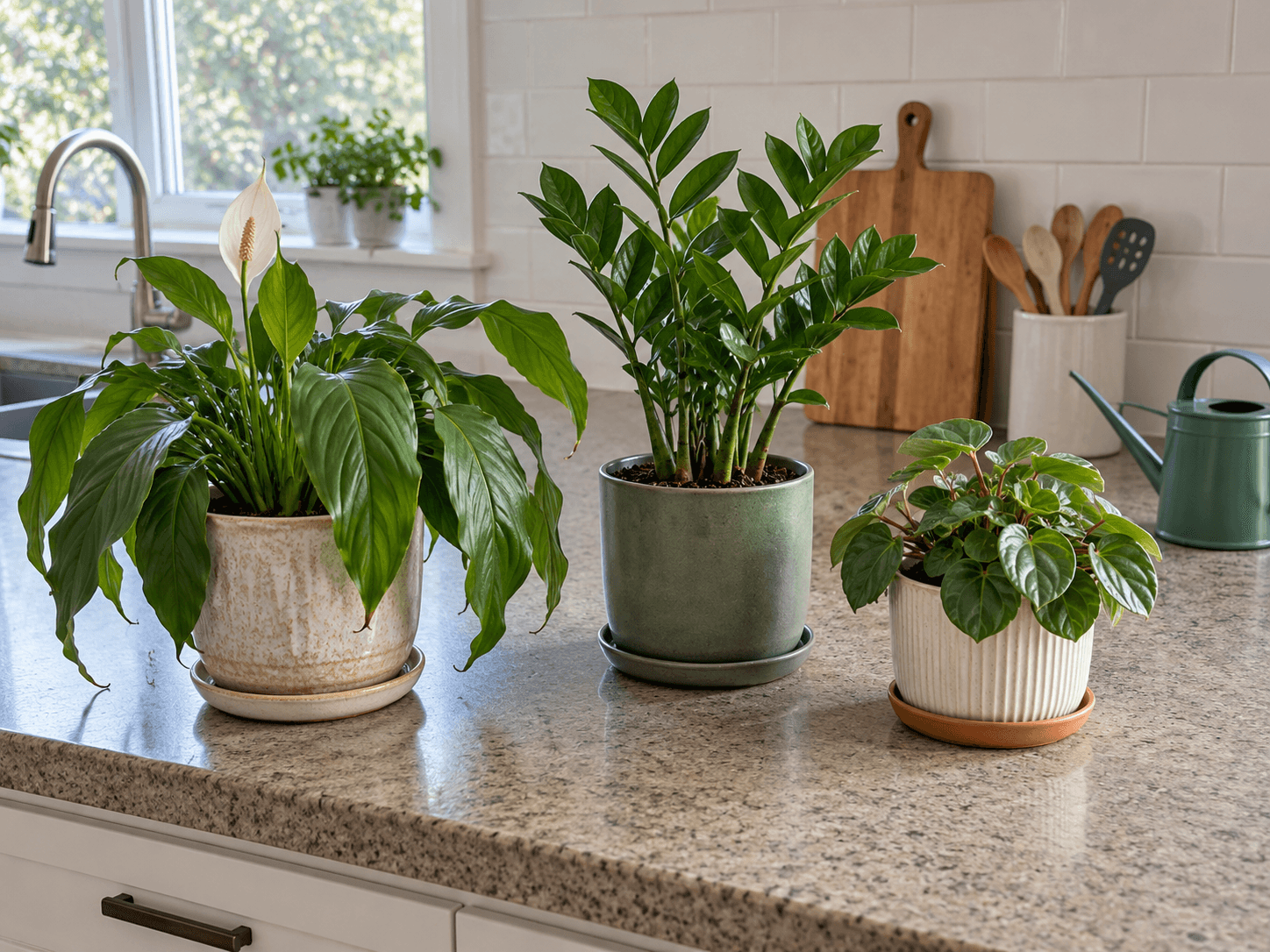
Find out what happened while you were away
If someone helped, ask when they last checked or watered each plant. A pot that looks neglected may have received water that morning. Check whether a blind stayed closed, heating changed or a plant was moved. The recent conditions matter more than the number of days on your calendar.
Make one pass through the collection before starting a large rescue session. Look for fallen containers, water on furniture, soft plant bases and clear pest signs. Put an affected plant apart from its neighbours if pests are suspected. Photograph changes that may be useful to compare later.
Choose the next action from the pot
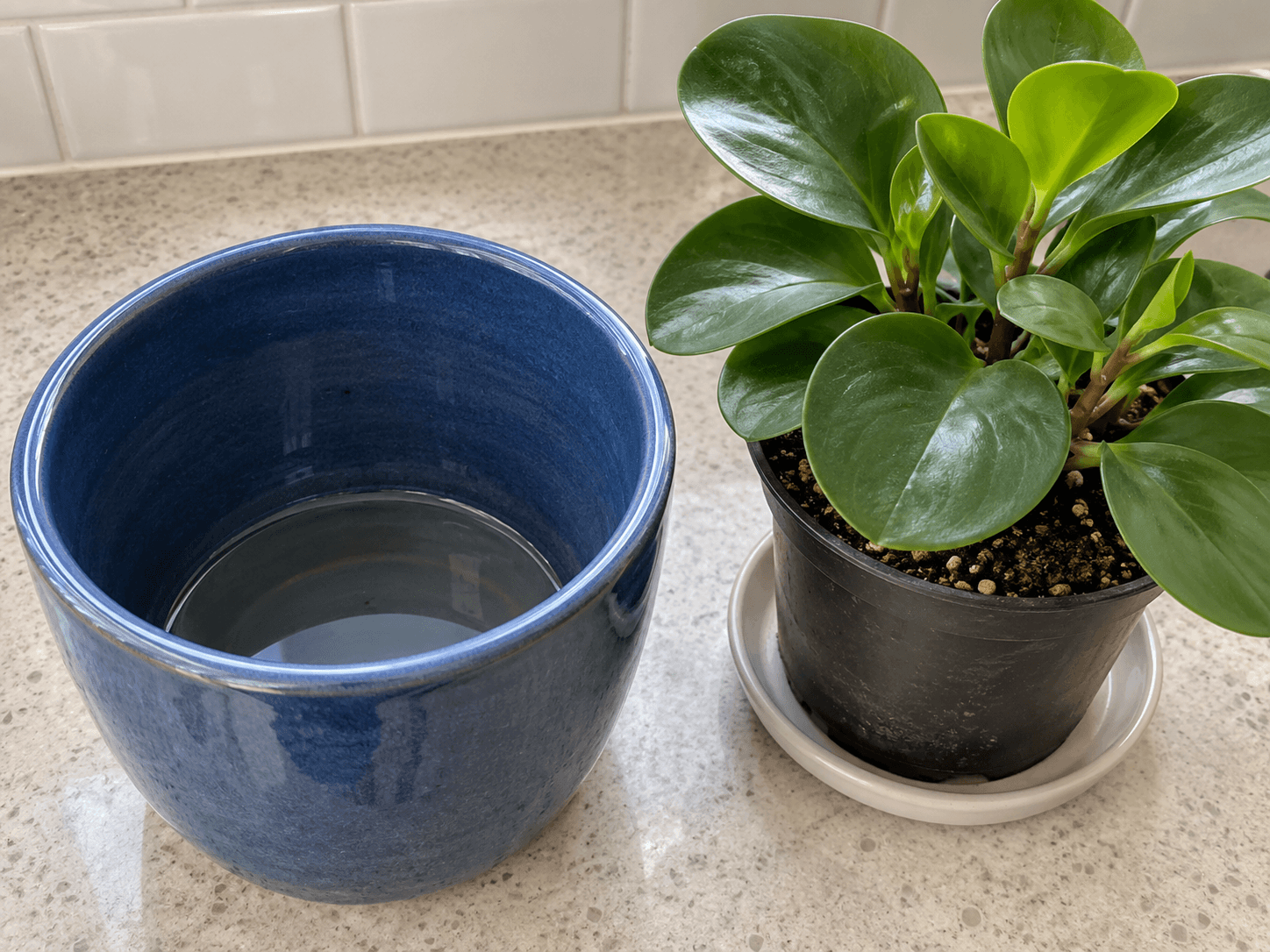
| Finding | Next action |
|---|---|
| Dry mix and a light pot | Water according to the species, checking that the root ball takes up water, then drain. |
| Damp mix and a firm plant | Leave water alone and check again as appropriate. |
| Wet mix with wilt or soft bases | Empty trapped runoff and investigate roots and drainage. More water is not the first response. |
| Damage after heat, cold or strong sun | Move away from the exposure and inspect the extent of damage. |
| Pest signs or unexplained spreading decline | Separate for closer identification and targeted care. |
Give dry mix time to take up water
Very dry potting mix can pull away from the pot and shed water down the sides. A stream leaving the drainage holes does not always mean the centre is wet. Apply water gradually and check absorption. Temporary bottom watering can help suitable houseplant mixes; remove the pot and let it drain when rewetted.
Do not leave the entire collection soaking together. Different plants may need different treatment, and shared water can move material between pots. After watering a dry plant, give it time to respond in suitable light. Repeatedly adding water because the leaves have not lifted immediately can create a second problem.
Keep the next round of care small
Remove loose dead material and keep access clear, but postpone optional pruning, propagation and feeding while a plant is stressed. Repot when an actual root or medium problem calls for it, not as a universal apology for being away. Some old leaf damage will remain even when subsequent growth is healthy.
Write down what you found and what you did. Follow the plants with continuing symptoms and use the more specific guides for wet roots, repellent dry mix or pests. Severe collapse may not be recoverable; seek a closer assessment when the cause or remaining healthy tissue is unclear. Adjust the next care arrangement using what this check revealed.
Find a related guide below.
Back to the beginningSources & notes
Care guidance checked against these horticultural references on 20 October 2026.
- Iowa State University Extension: Diagnosing houseplant problemsDistinguishing environmental damage, cultural problems, pests and disease.
- Iowa State University Extension: How to care for houseplantsRewetting dry media, ordinary water sources and indoor care decisions.
- University of Maryland Extension: Watering indoor plantsMoisture and pot-weight checks; top and bottom watering.
- University of Minnesota Extension: Managing insects on indoor plantsInspection, isolation, pest signs and integrated management.