Wet saucer, dry middle
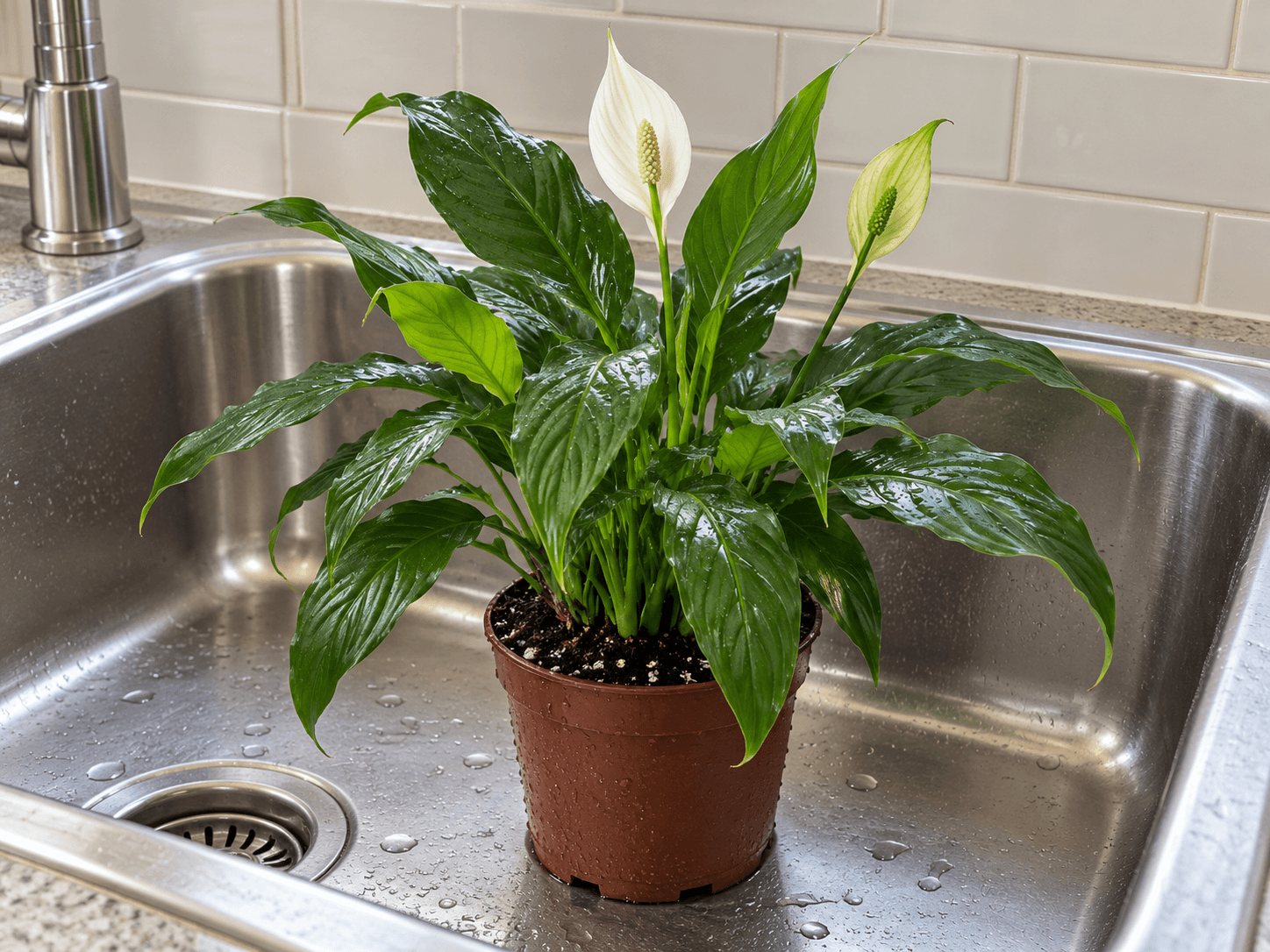
Fast runoff can hide a dry root ball. Check where the water went before deciding that drainage is excellent.
The short answer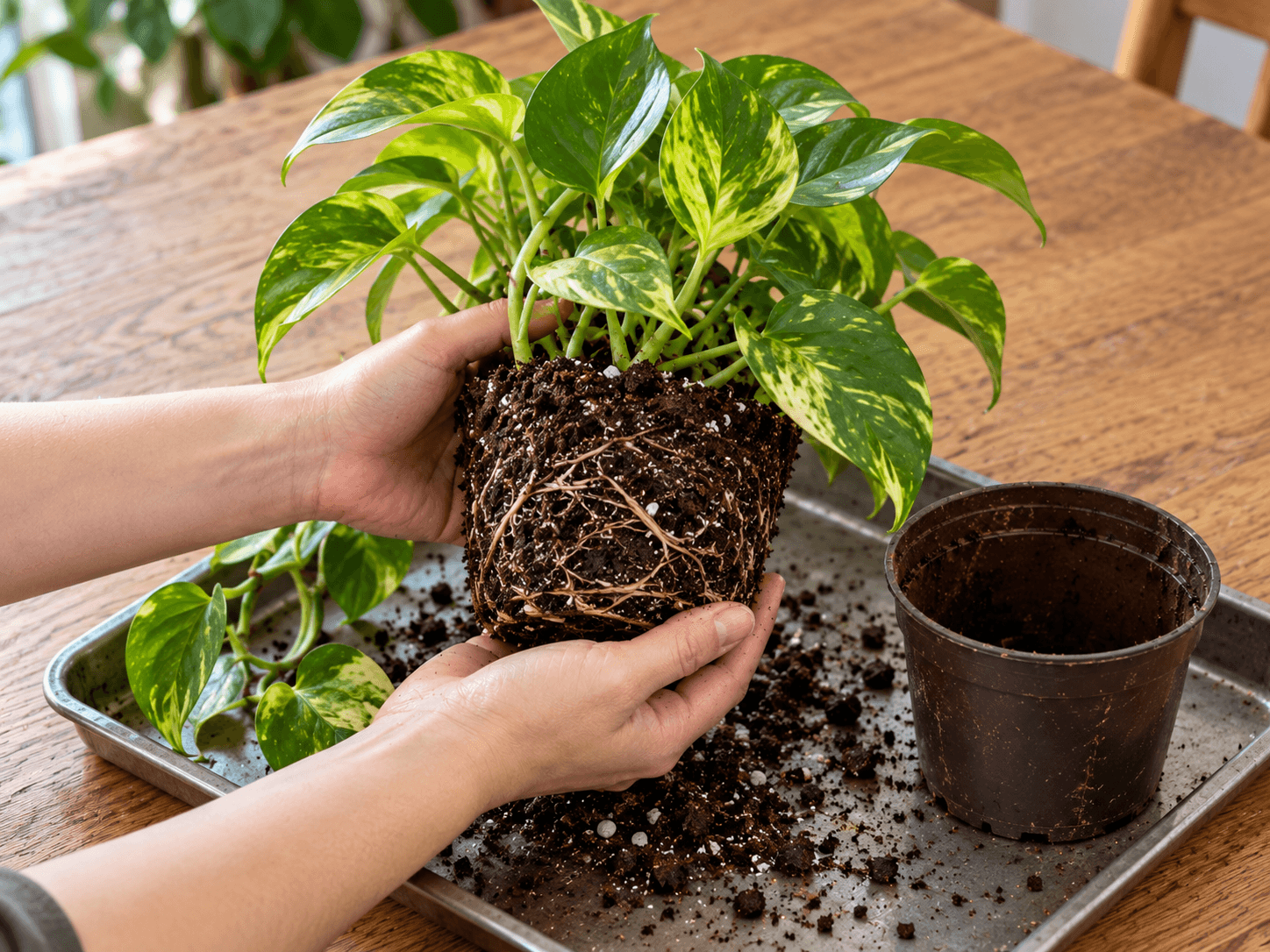
Check the centre, not the saucer
A stream from the drainage hole only proves that some water found a route through. Feel the medium in more than one accessible place and compare the pot's weight with its usual watered weight. Mix that has shrunk from the sides can let water bypass the roots. A consistently wet core calls for a different investigation.
Give dry mix time
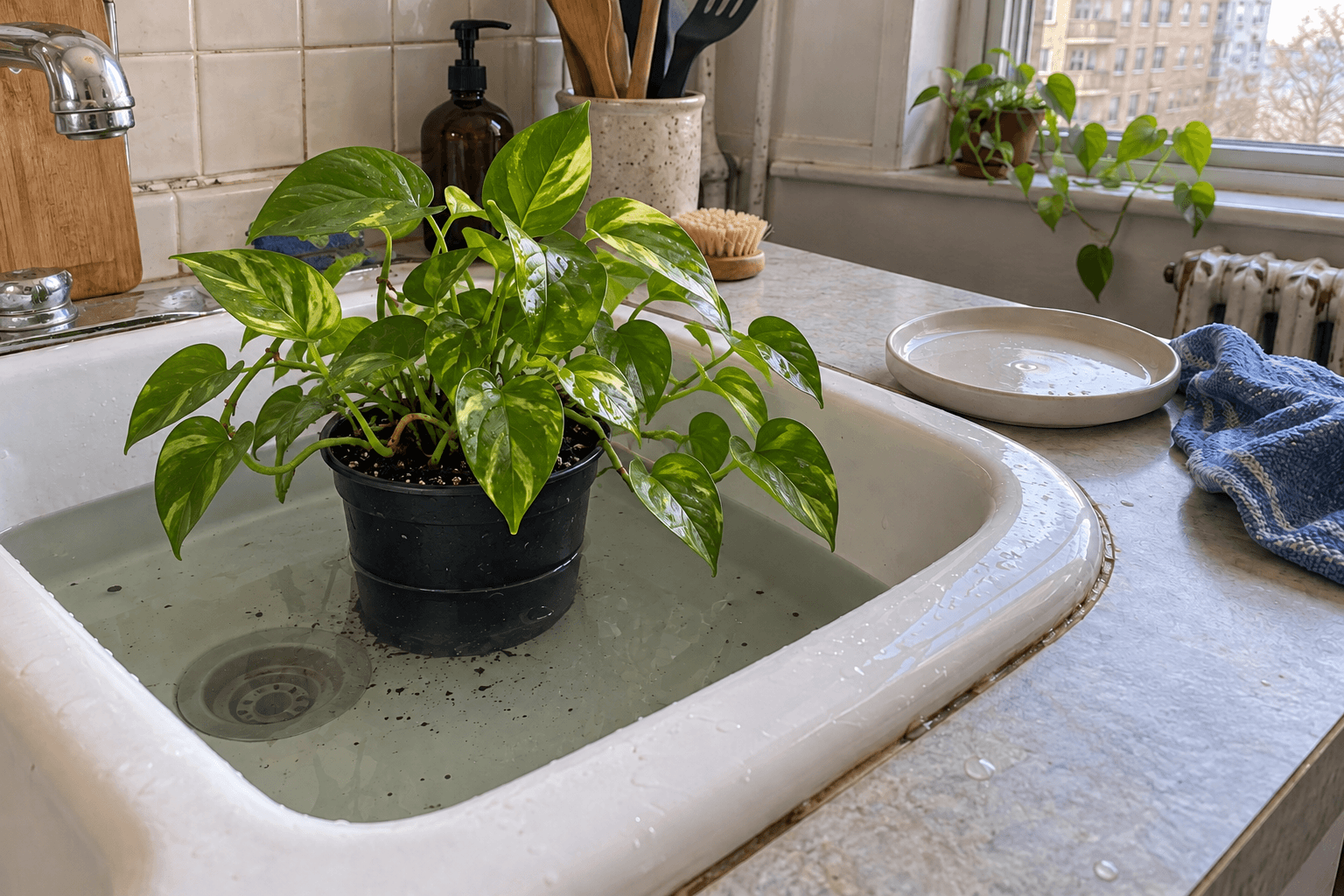
For a genuinely dry root ball, apply water slowly in several passes, allowing time for absorption. A supervised soak from below can also help rewet resistant medium. Keep foliage and the crown out of the water, then lift the pot out and let it drain fully. Do not leave it soaking overnight as a general remedy.
Check why it happened
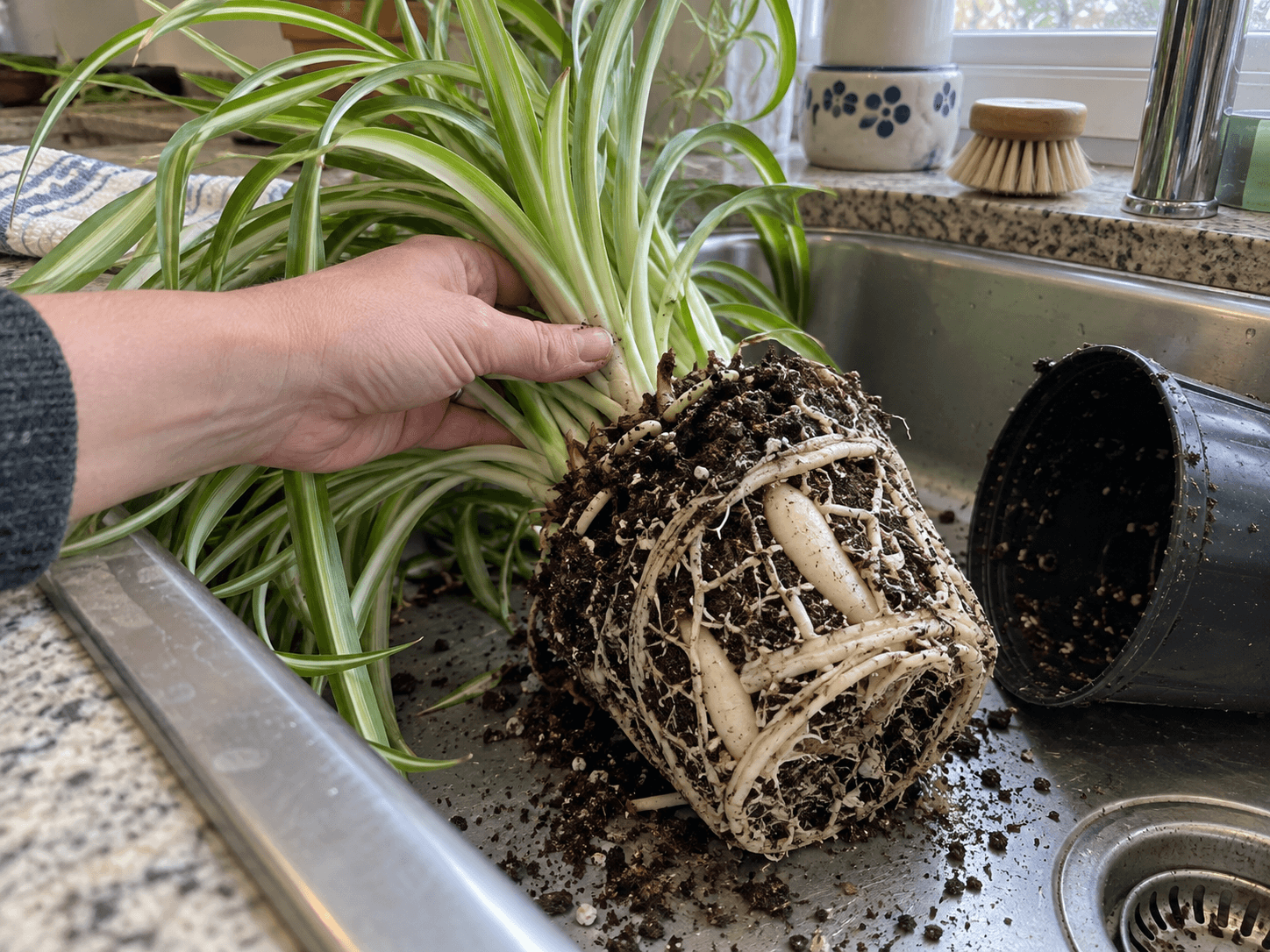
If the pot quickly becomes dry again, inspect for a tightly packed root system and very little remaining medium. Repotting may be appropriate. If the problem followed a missed watering, a better check routine may be enough. Repeated soaking without identifying the cause can hide a container that no longer supports an ordinary watering cycle.
Use the next watering as a check
Notice whether the pot absorbs water more evenly and gains weight after draining. Keep a note of the interval until it approaches its next watering. Different species need different amounts of drying, so avoid turning one rescue into a universal schedule. The useful outcome is a root ball you can assess, not merely a saucer that fills quickly.
Find a related guide below.
Back to the beginningSources & notes
Care guidance checked against these horticultural references on 20 October 2026.
- Iowa State University Extension: How to care for houseplantsRewetting dry media, ordinary water sources and indoor care decisions.
- University of Maryland Extension: Watering indoor plantsMoisture and pot-weight checks; top and bottom watering.
- University of Maryland Extension: Potting and repottingRoot-ball placement, aeration and why not to add gravel.