Give roots air, too
Understand what a potting mix needs to do, when a specialty mix makes sense and why one recipe cannot suit every home.
The short answer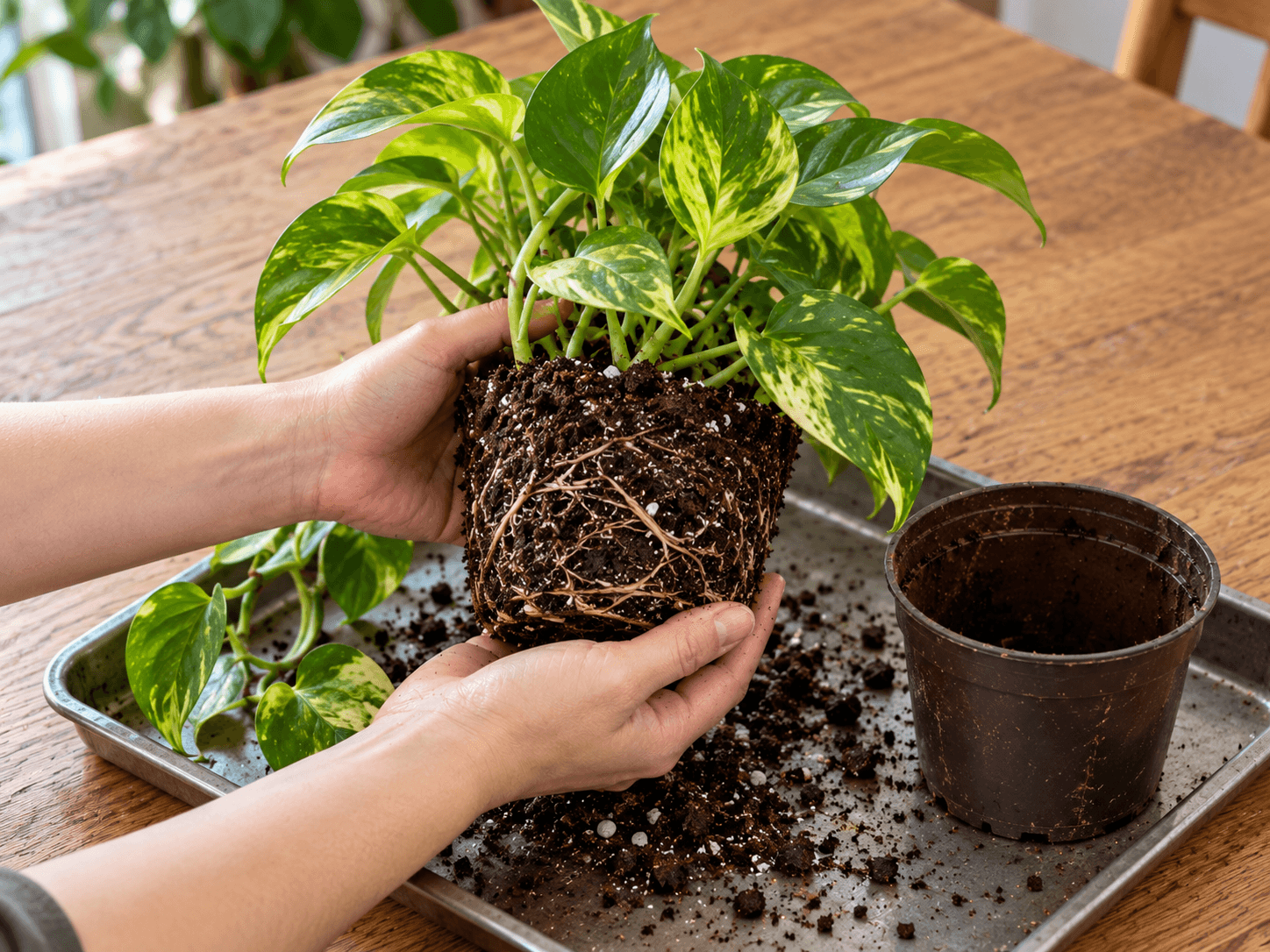
A mix is a root environment
Potting mix is not simply something to hold a plant upright. It must hold useful moisture, allow air spaces and give excess water a route through the pot. A fine, compacted medium can stay wet around roots even when the surface looks dry.
Read the bag rather than the photograph. Look for the intended use, major ingredients and whether fertilizer is already included. Terms such as "premium" do not tell you how it will behave in a cool apartment with a small window.
What the ingredients contribute
| Ingredient or component | Typical role |
|---|---|
| Coir or peat-based components | Hold moisture; behaviour varies with texture and formulation. |
| Perlite or pumice | Help preserve pore space when used appropriately. |
| Bark | Adds coarse structure; size and decomposition matter. |
| Fertilizer charge | Supplies nutrients for a period; check before adding more. |
A handful of coarse material does not reliably transform every unsuitable base mix. Particle size, proportions and the existing root ball matter. Start with a reputable mix for the plant group, then adjust only when you can explain the problem you are solving.
Three useful starting points
See the dry-down routine for a stem succulent: StapeliaFor ordinary leafy tropicals, look for a porous indoor container mix. For jade and other succulents, choose a mix that dries more readily in your room. For a moth orchid, use an appropriate orchid medium rather than fine general-purpose soil; its root environment is different.
These are groups, not identical care rules. A peace lily and a ZZ can both be sold as houseplants but prefer different moisture patterns. Match the mix, pot and watering routine to the species. Avoid borrowing a complicated recipe from a greenhouse without considering the conditions in which it was used.
When the old medium needs attention
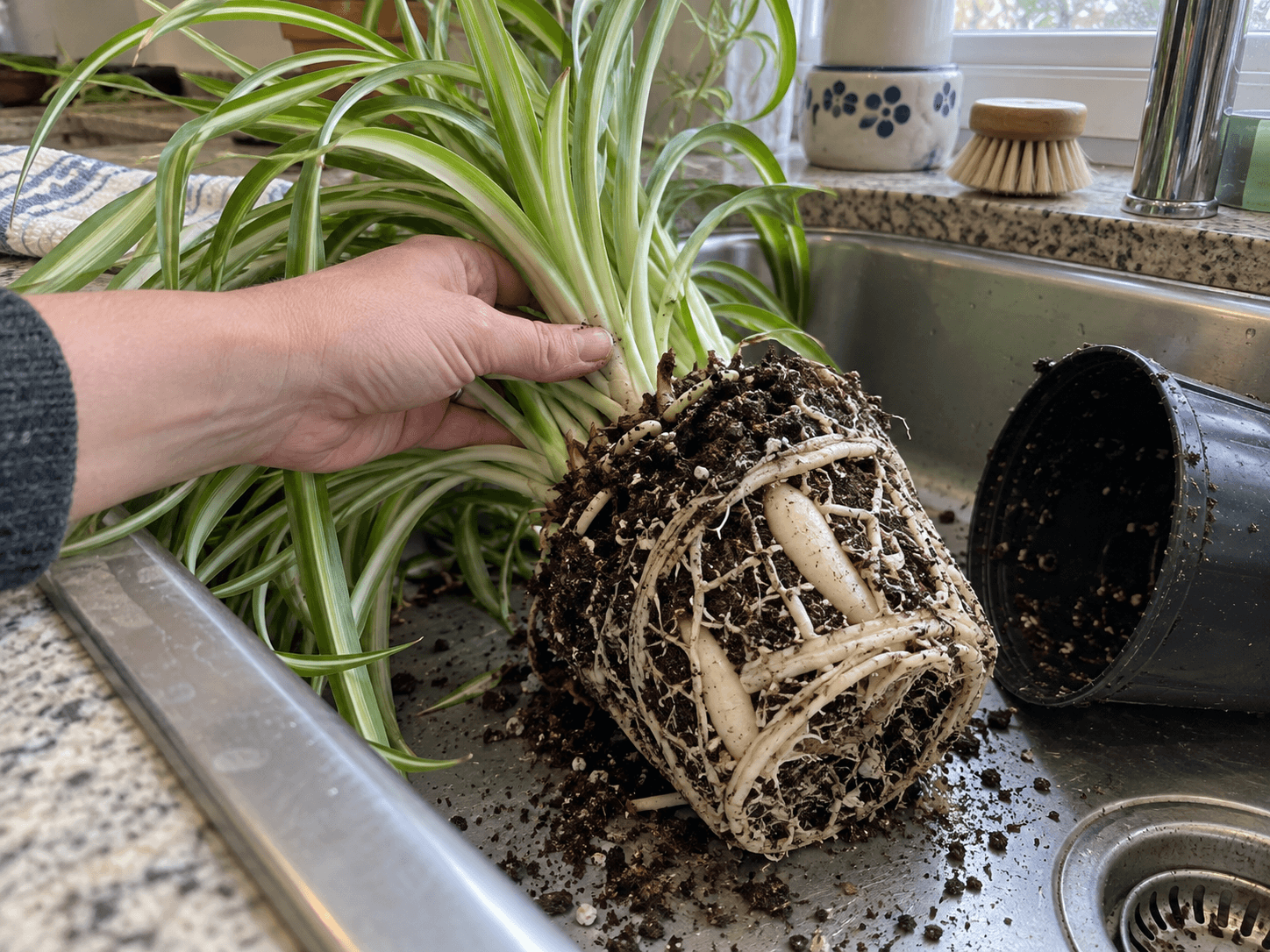
Persistent compaction, water bypassing a dry core, poor drainage or a breaking-down orchid medium can justify repotting. First check whether the problem is actually a blocked hole or water trapped in a cover. Replacing the mix will not fix a container that keeps the roots submerged.
- Store unused mix closed, dry and away from outdoor contamination.
- Use clean pots and tools when repotting.
- Keep the plant at its appropriate original depth.
- Record the change, because a new mix can alter the drying interval.
Find a related guide below.
Back to the beginningSources & notes
Care guidance checked against these horticultural references on 20 October 2026.
- University of Maryland Extension: Potting and repottingRoot-ball placement, aeration and why not to add gravel.
- NC State Extension: Plants grown in containersContainer materials, potting media, nutrition and indoor care.
- NC State Extension: PhalaenopsisHybrid identity, bark media, roots and indoor culture.
- University of Minnesota Extension: Managing insects on indoor plantsInspection, isolation, pest signs and integrated management.