Let the pothos trail
Epipremnum aureum
Keep golden pothos growing with useful light, a draining pot and thoughtful pruning. Includes yellow leaves and pet placement.
The short answer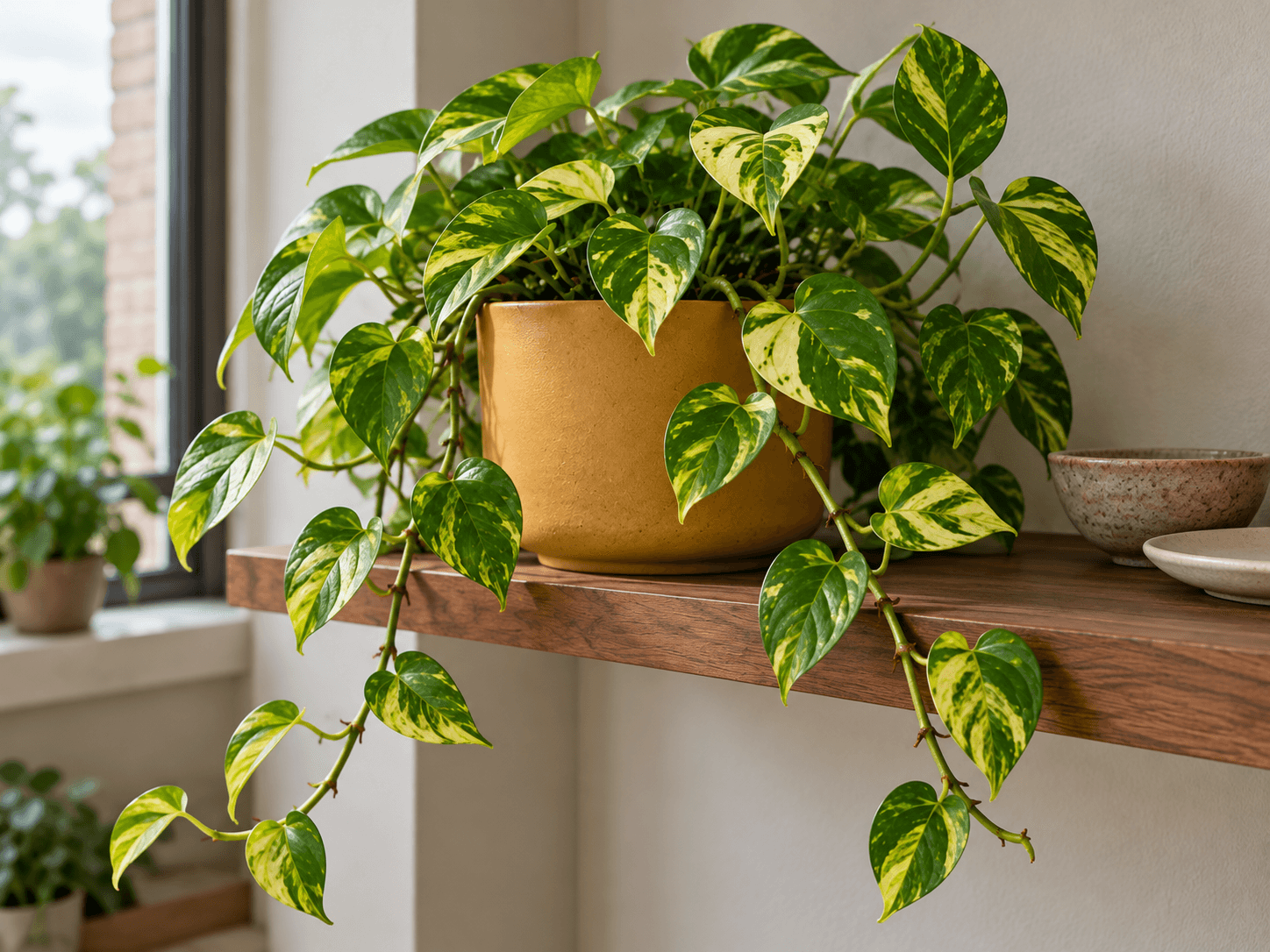
A shelf with actual daylight
A pothos can survive a less-than-ideal corner for a long time. Survival is not the same as a full, actively growing plant. Choose a shelf near a window where the leaves receive daylight, rather than a dark ledge picked only for the length of the trailing vines. Keep the pot accessible enough to lift and inspect.
Golden pothos has irregular yellow markings. In dim conditions, the plant can become less variegated. Compare new leaves rather than expecting older ones to repaint themselves after a move. Introduce stronger light gradually, especially if a plant has spent weeks in a dim shop or hallway.
Water the root ball, then empty the cover
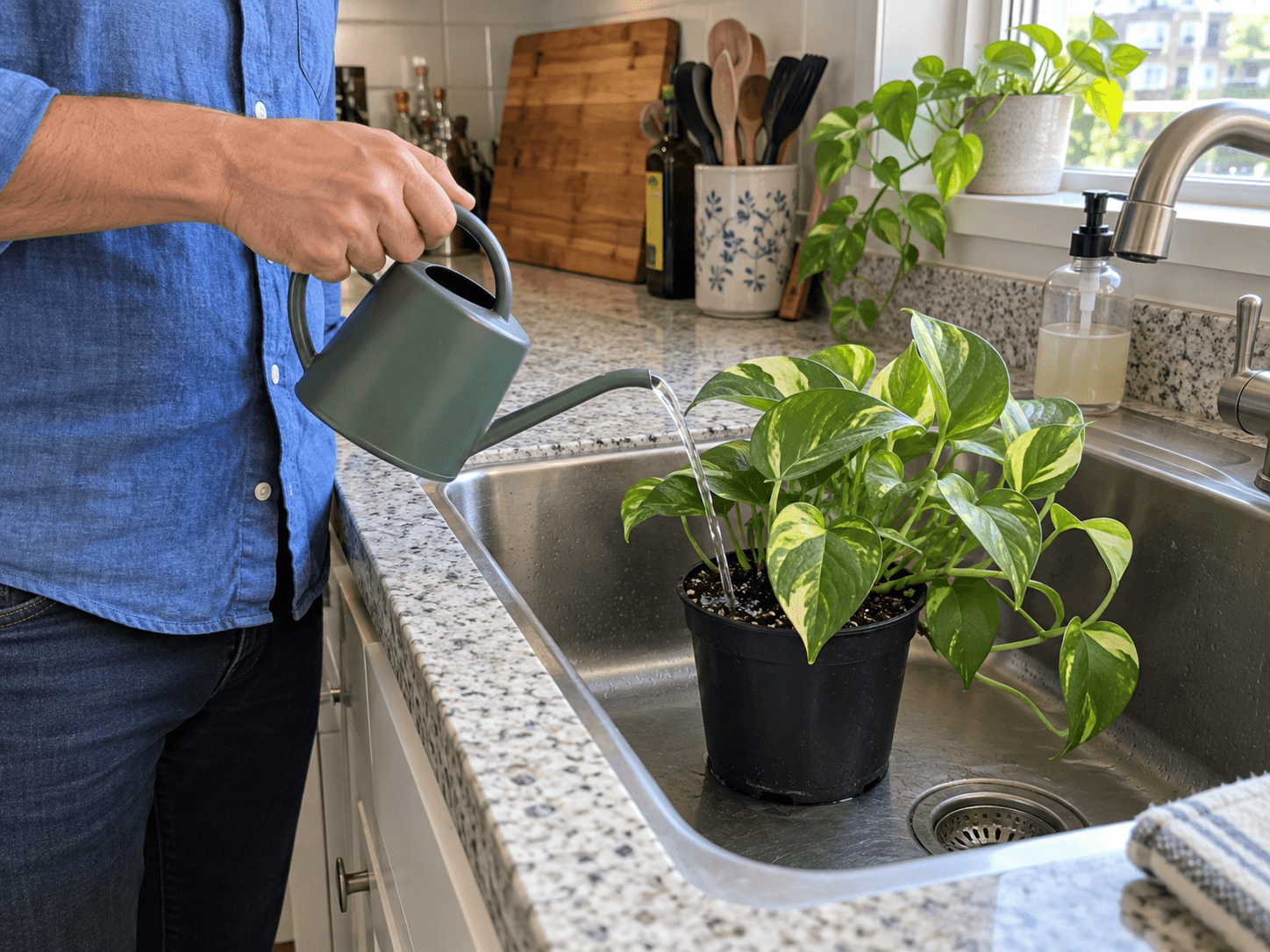
Feel the potting mix and compare the pot weight before watering. When it is ready, water evenly and let the excess escape. Repeated small splashes can leave parts of the root ball dry while the bottom stays wet. Take a hanging pot down for watering if that is what it takes to see the drainage.
A long vine makes it tempting to leave the pot untouched for months. Check beneath the pot as well as beneath the leaves. If runoff collects in a cover or saucer, remove it. A cool winter window and a large cachepot can change drying time substantially.
Check the pot before choosing a watering dayLonger is not always fuller
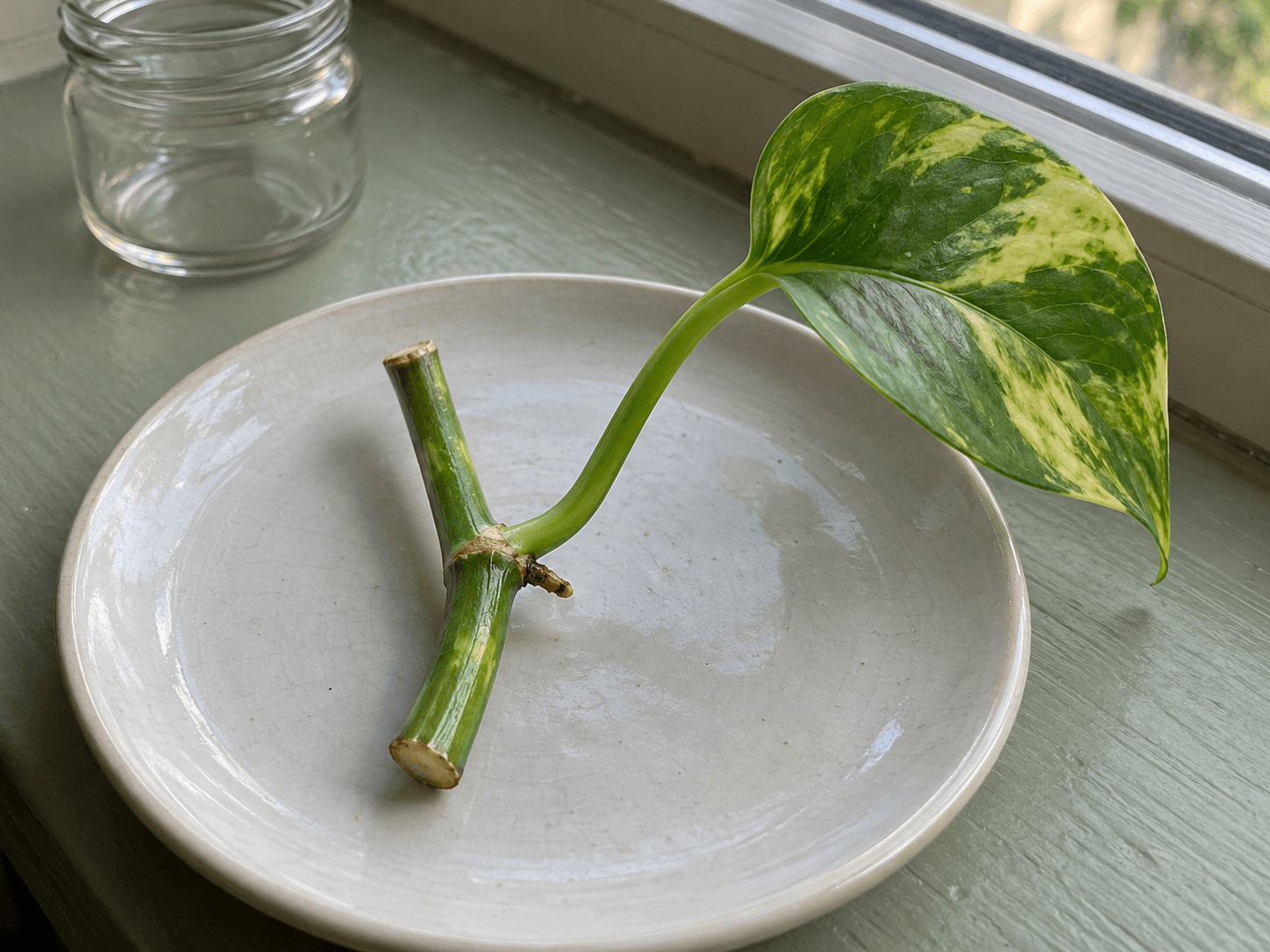
Decide whether you want a trailing curtain or a compact plant. If the ends are leafy and the stems near the pot are bare, shortening a few vines can improve the balance. Cut with clean snips just above a node on the parent vine. Save healthy node-bearing pieces for propagation rather than pushing leaf stalks into the soil.
Pothos can also climb. Attach the stem with loose ties to a stable support and leave leaves free. Do not let roots attach to painted walls unless you are prepared for damage when the vine is removed.
Turn a healthy vine into a node-bearing cuttingA yellow leaf is a prompt to inspect
An occasional oldest leaf may yellow naturally. A cluster of yellowing leaves, a limp vine or blackened margins deserves a closer check of roots and moisture. Look for pests at the leaf bases. Avoid treating all three possibilities at once; establish what the pot is doing first.
| What you find | A useful next check |
|---|---|
| One older leaf; the rest looks sound | Photograph it and watch for further change. Older pothos leaves can yellow and fall as vines lengthen. |
| Several yellow leaves; the pot is heavy and wet | Empty trapped runoff and check drainage. If decline continues, inspect for soft, decaying roots; yellow alone does not prove root rot. |
| A light pot with dry mix below the surface | Water evenly, allow drainage and check that the root ball actually absorbed water. Do not follow with daily top-ups. |
| Bumps or cottony material on stems and leaf joints | Separate the plant and compare the insects with documented reference photographs before choosing a treatment. |
Find a related guide below.
Back to the beginningSources & notes
Care guidance checked against these horticultural references on October 23, 2026.
- NC State Extension: Epipremnum aureumIdentity, light, pruning, rooting and ingestion risk.
- University of Maryland Extension: Watering indoor plantsMoisture and pot-weight checks; top and bottom watering.
- ASPCA: Golden pothosToxicity to cats and dogs; veterinary advice after suspected ingestion.
- Iowa State University Extension: Propagating houseplantsSpecies-appropriate stem cuttings, divisions and plantlets.