Choose for everyone at home
Start with exact botanical names, choose better-suited plants for accessible displays and account for pots, trailing vines and curious pets.
The short answer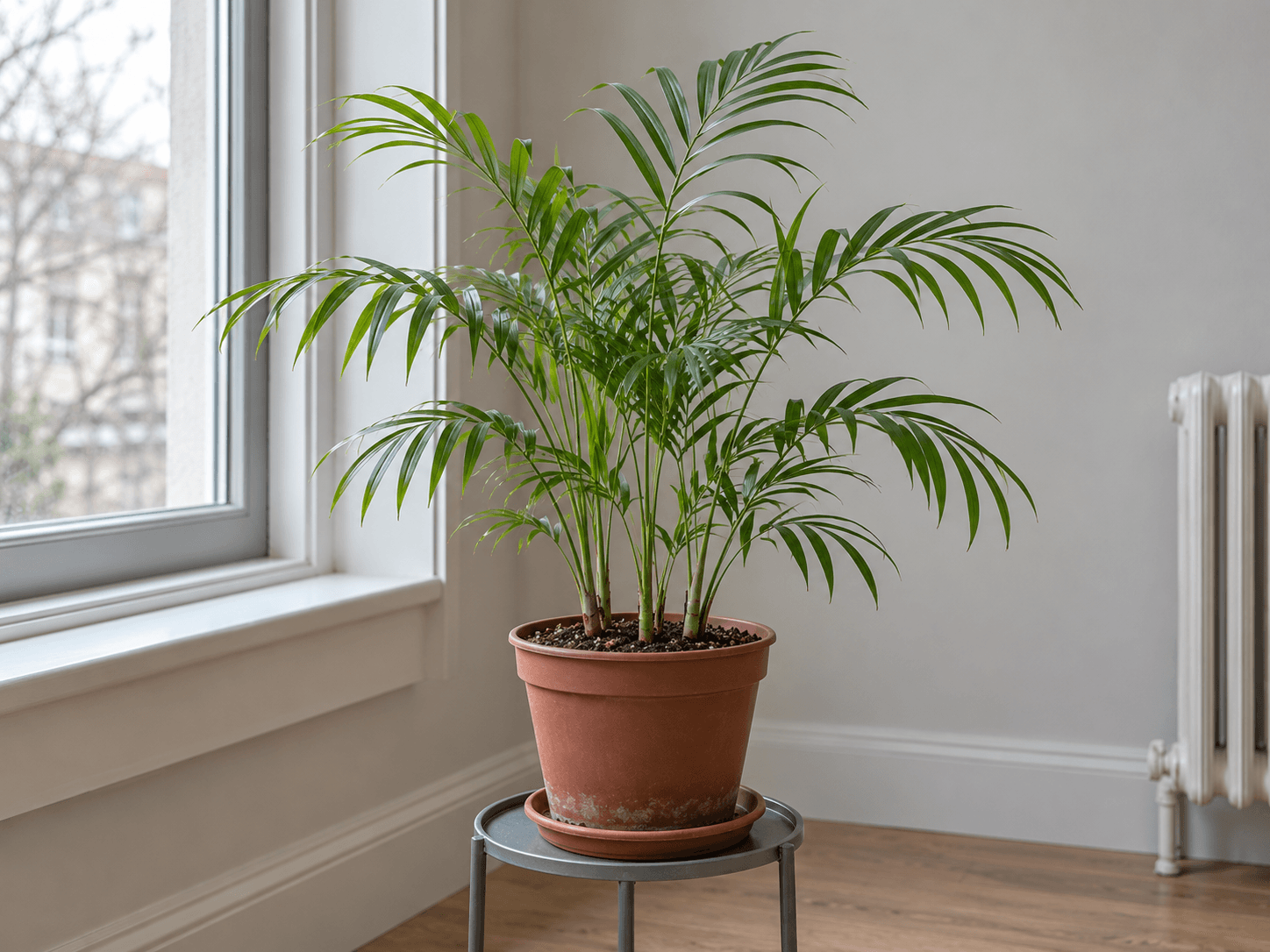
Begin with the full name
A label saying "palm" or "ivy" is not enough for a safety decision. Photograph the botanical name and compare it with a reliable listing. A parlour palm, Chamaedorea elegans, should not be substituted with any plant that happens to have palm-like leaves.
Common names can be reused for unrelated plants, and a mixed planter can contain several species. If you cannot identify every plant in an accessible arrangement, resolve that before placing it where an animal can chew it.
Two useful starting points
| Plant | Why consider it | Still plan for |
|---|---|---|
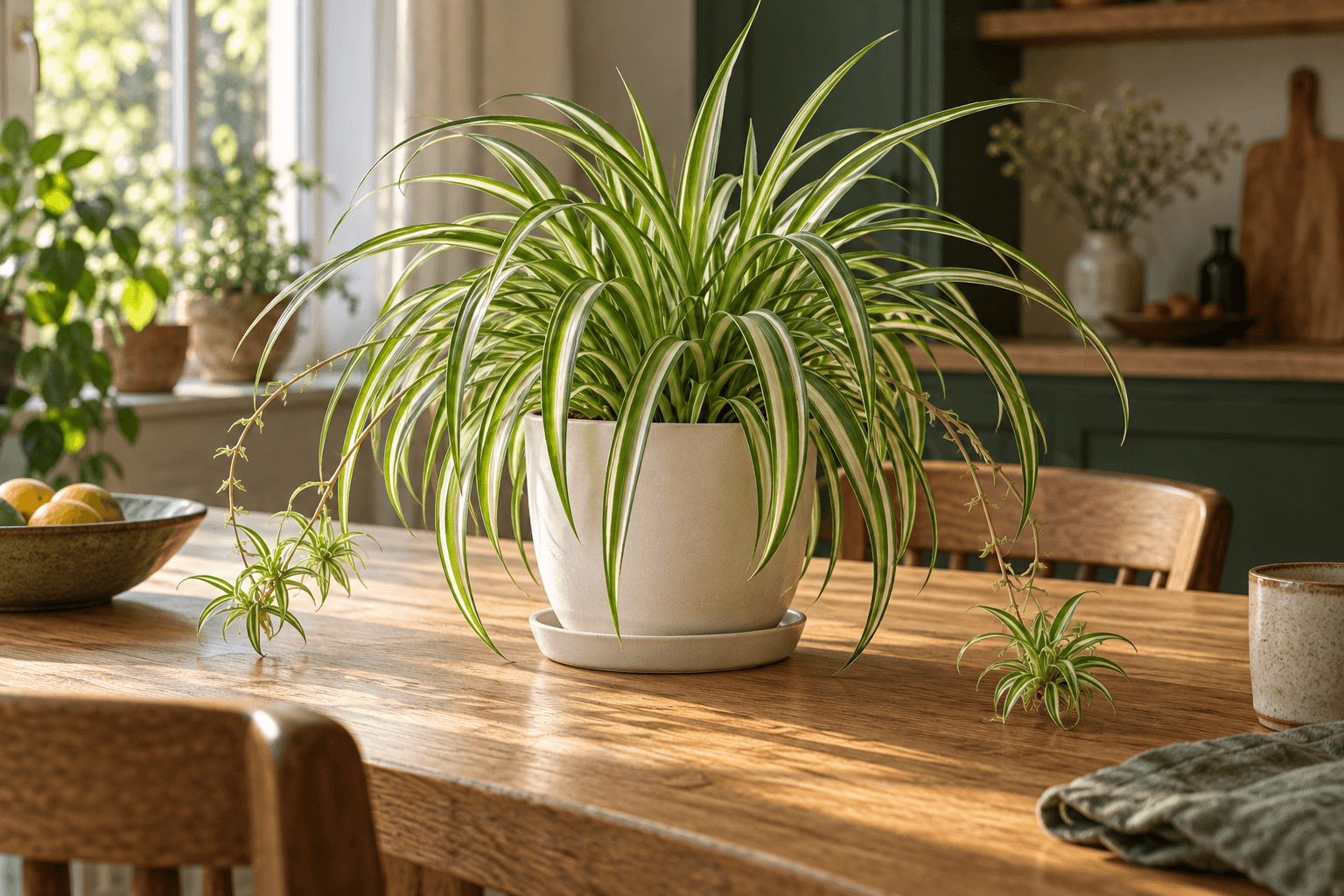
| Spider plant / Chlorophytum comosum | ASPCA lists it as non-toxic to cats and dogs. | Dangling leaves and plantlets can invite chewing or pulling. |
| Parlour palm / Chamaedorea elegans | Included in ASPCA pet-friendly choices. | Secure the pot and confirm the exact identity. |
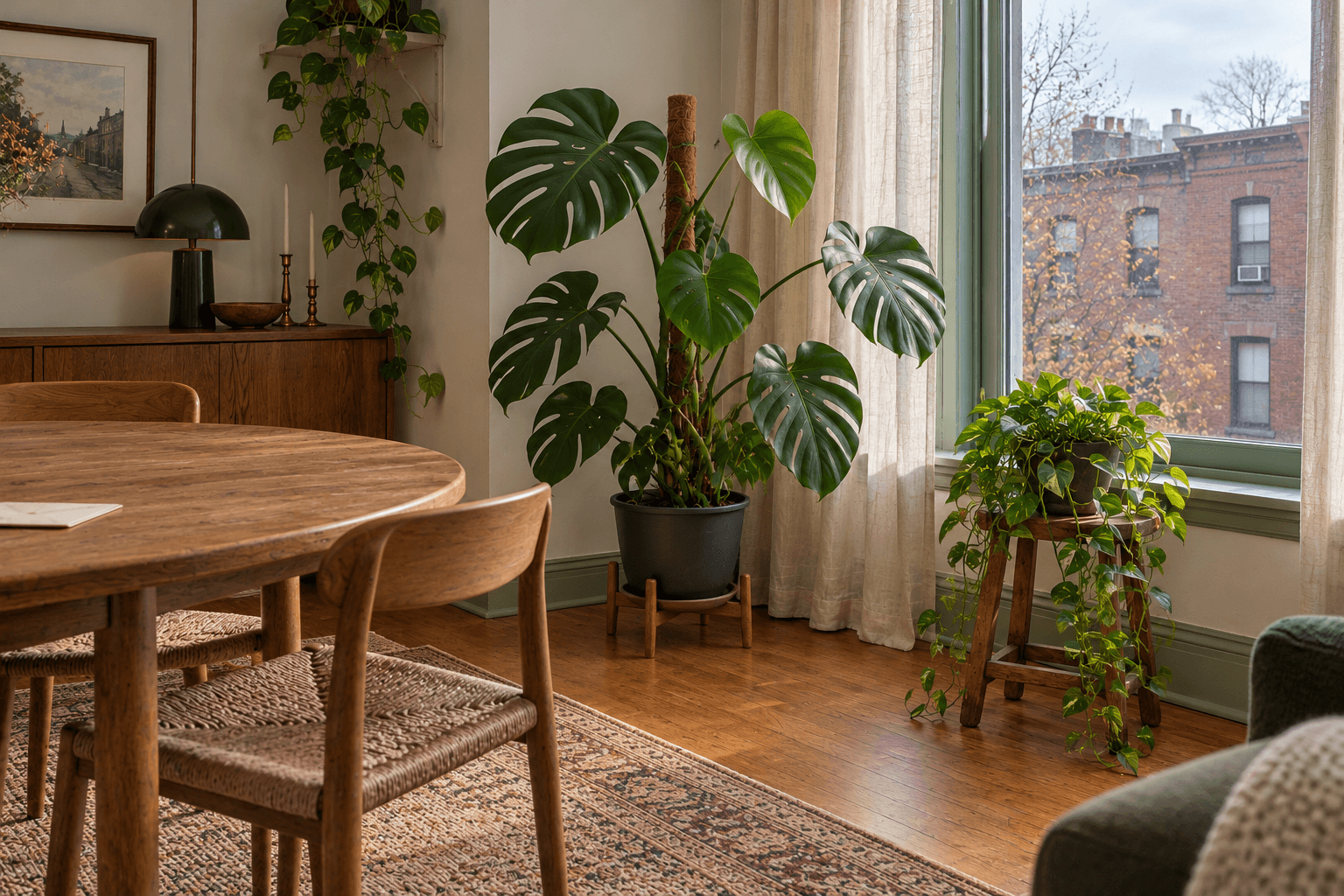
| Golden pothos / Epipremnum aureum | Useful trailing plant, but toxic to cats and dogs. | Use a different choice if access cannot be prevented. |
Scroll to see all columns
An animal can still develop stomach upset after eating plant material. Plant choice is one part of the setup, along with placement, stability and observation of the animal’s behaviour.
Walk through the route to the plant
A high shelf is not automatically inaccessible to a cat. Look at nearby chairs, counters and other launch points. Trailing vines can bring a plant within reach even when the pot itself is high. A heavy pot falling from a shelf creates a separate hazard.
- Choose a stable container and a suitable secure stand or fixing.
- Keep trailing growth from hanging into accessible areas.
- Store fertilizer, pesticides and loose care materials separately.
- Reassess the setup when the plant grows or furniture moves.
Children introduce different access patterns and safety questions. Do not transfer a pet-toxicity classification into a blanket child-safety claim. Use an appropriate human poison resource for ingestion questions.
If a pet may have eaten a plant
Contact a veterinarian promptly with the plant’s identity and what happened. Save the label and a photograph, and keep remaining plant material available for identification. Do not wait for a houseplant guide to establish a diagnosis or try a home remedy.
For everyday planning, maintain a short list of the plants you own and their botanical names. It makes shopping, gifts and care handoffs much easier. Tell someone bringing flowers or a new plant which animals live in the home so they can choose with that information.
Find a related guide below.
Back to the beginningSources & notes
Care guidance checked against these horticultural references on 20 October 2026.
- ASPCA: Pet-friendly plant choicesSpider plant and parlour palm choices for homes with cats and dogs.
- ASPCA: Golden pothosToxicity to cats and dogs; veterinary advice after suspected ingestion.
- NC State Extension: Chamaedorea elegansSolitary stems, indoor light, watering and growth habit.
- NC State Extension: Chlorophytum comosumPlantlets, light, moisture and leaf-tip sensitivity.