A cloth, a leaf, five minutes
Clean broad leaves gently, handle fine fronds carefully and make a short maintenance routine useful without coating foliage in shine products.
The short answer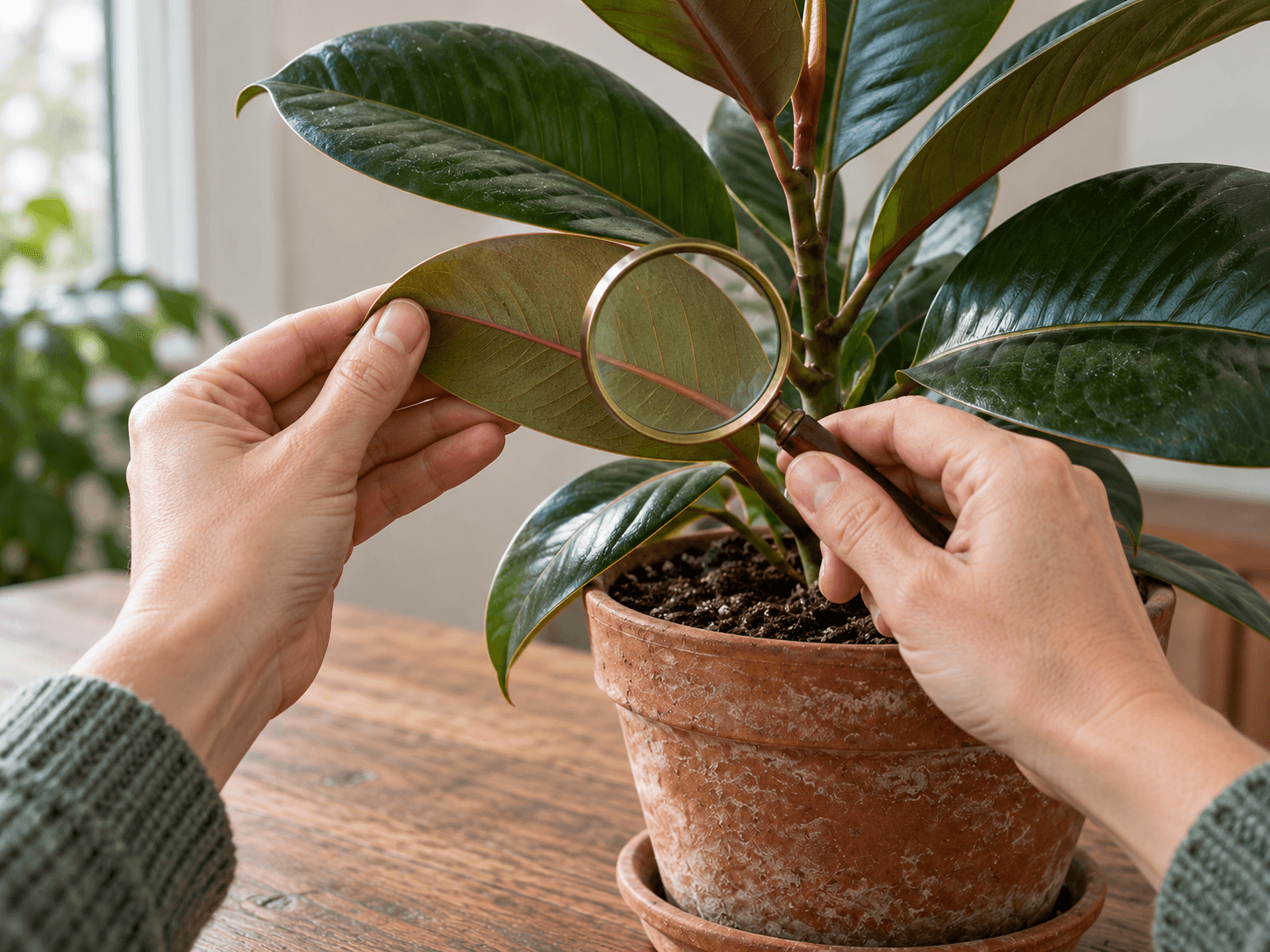
Make the cleaning useful
Dust obscures the leaf surface and makes small changes harder to see. Cleaning is a convenient moment to inspect the plant, not a requirement for a perfectly glossy display. Choose a few leaves at a time if a large specimen makes the job awkward.
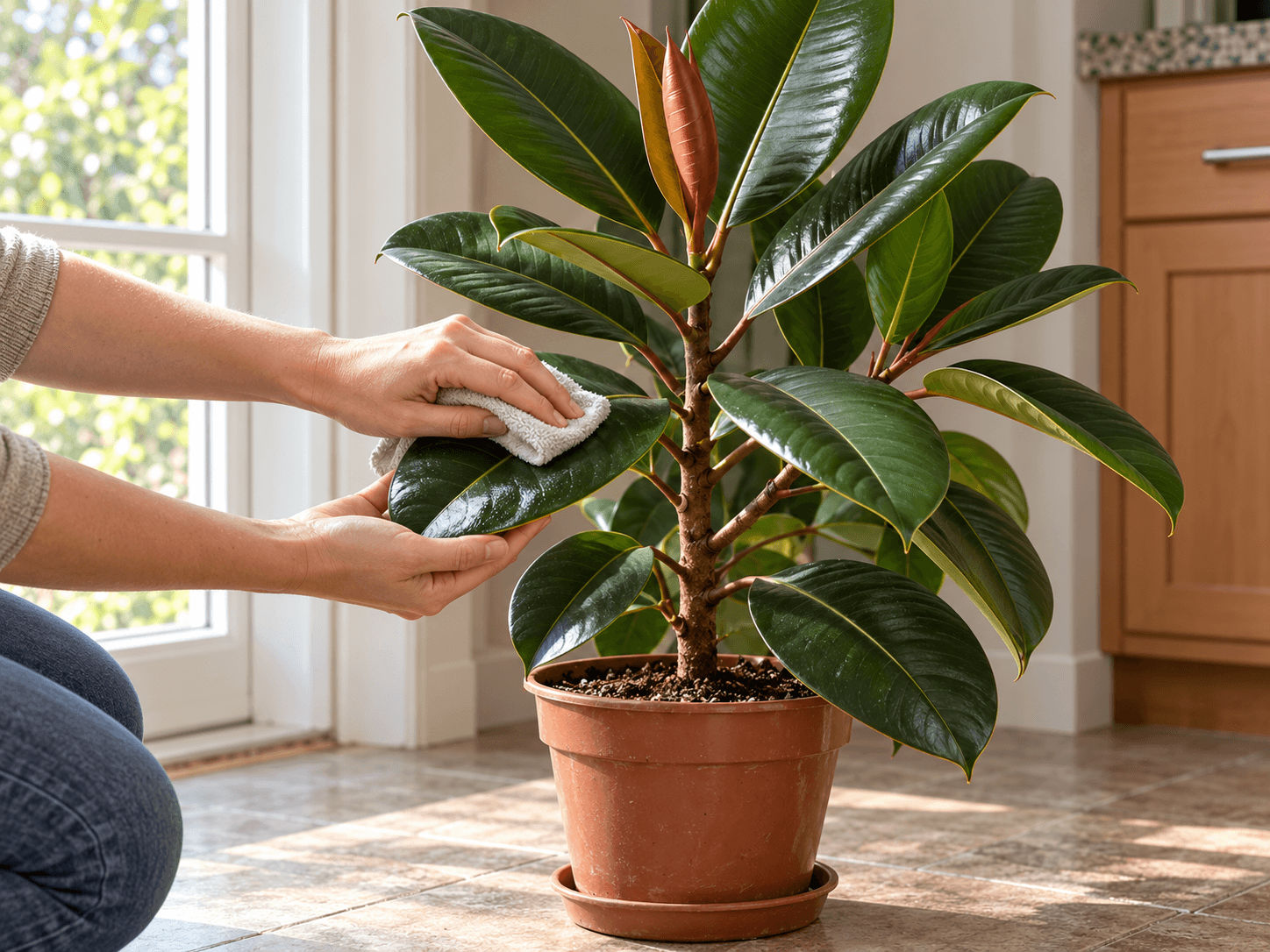
Place the plant where you can see the underside without twisting stems. On a rubber plant or monstera, support each broad leaf from below. Keep one hand under the leaf and move the cloth lightly with the other.
Start with plain water
- Use a clean, soft cloth dampened with water, not dripping.
- Support the leaf and wipe away dust without scrubbing.
- Rinse the cloth frequently so you are not spreading grit.
- Check the underside, stalk and joints for pests or sticky residue.
- Clean the saucer and remove dead material from the pot surface.
Avoid milk, cooking oils and leaf-shine products. They add material when the purpose is to remove it. If you see a suspicious deposit, inspect and photograph it before wiping everything away.
Different leaves need different handling
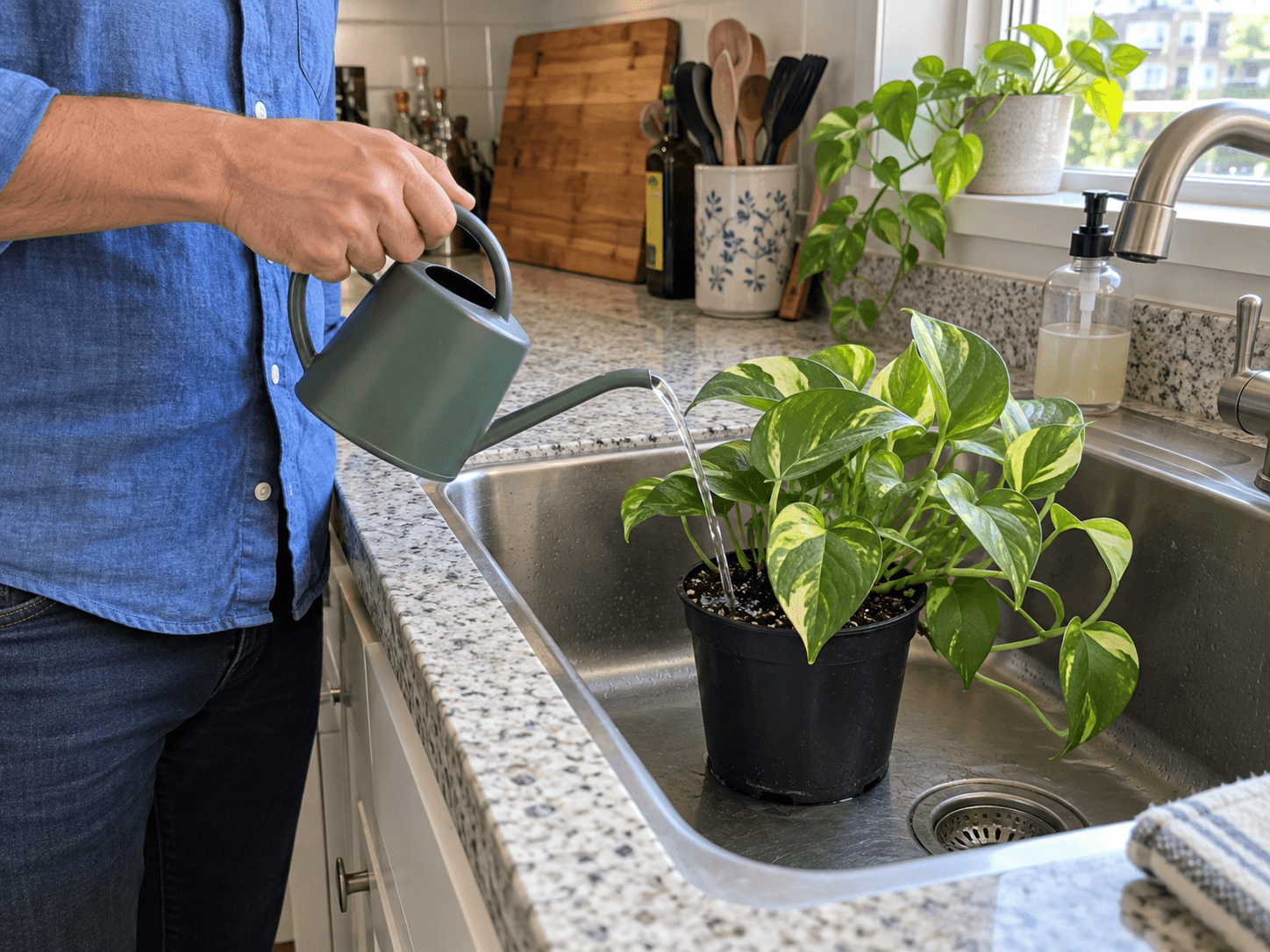
Fine palm fronds are easy to bend or tear. A gentle rinse may be more practical than wiping every leaflet, provided you protect the mix from washing out and let the plant drain. Keep water from collecting in crowns or sitting indefinitely between leaves.
Hairy leaves and particularly delicate plants need a species-appropriate approach. Do not apply a broad-leaf wiping routine to everything on the shelf. When in doubt, use a soft dry brush very gently or consult guidance for the plant you have.
A clean leaf is not a pest clearance
If you find cottony clusters, stippling, webbing or sticky residue, separate the plant and identify the cause. Wiping may remove visible pests but leave hidden stages behind. Clean tools and cloths before moving to another plant.
A regular short inspection is easier than a major rescue after months of missed signs. Tie it to a moisture check, but do not turn that into automatic watering. Finish by confirming the pot is stable, the cover is empty and the plant is clear of glass or heater airflow.
Find a related guide below.
Back to the beginningSources & notes
Care guidance checked against these horticultural references on 20 October 2026.
- University of Minnesota Extension: Managing insects on indoor plantsInspection, isolation, pest signs and integrated management.
- NC State Extension: Ficus elasticaLight, drafts, leaf care, pruning and sap.
- NC State Extension: Plants grown in containersContainer materials, potting media, nutrition and indoor care.
- NC State Extension: PhalaenopsisHybrid identity, bark media, roots and indoor culture.