The small flies around the pot
Distinguish fungus gnats from other household flies, reduce persistently wet conditions and understand what sticky traps can and cannot do.
The short answer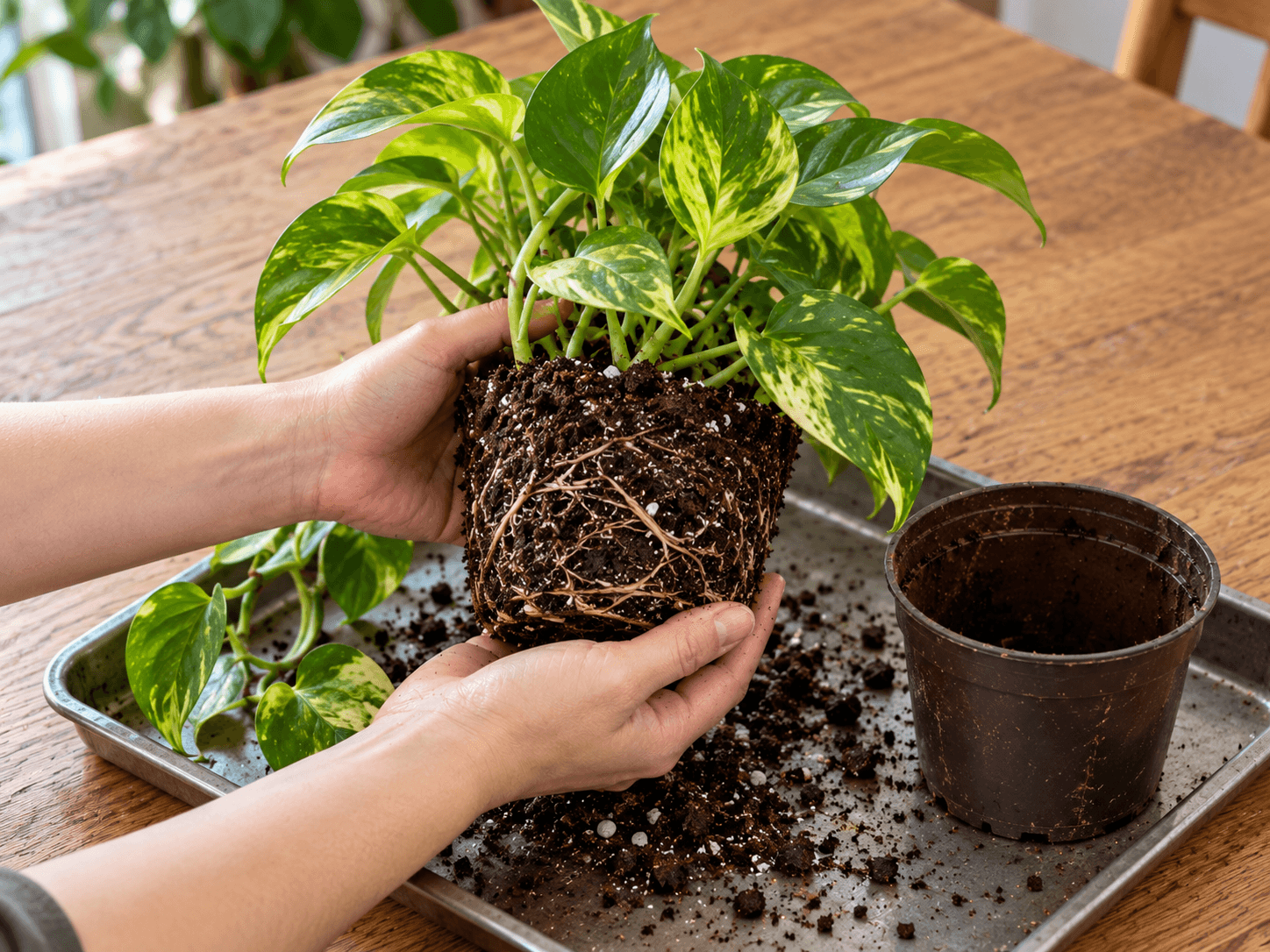
Find where the flies are coming from
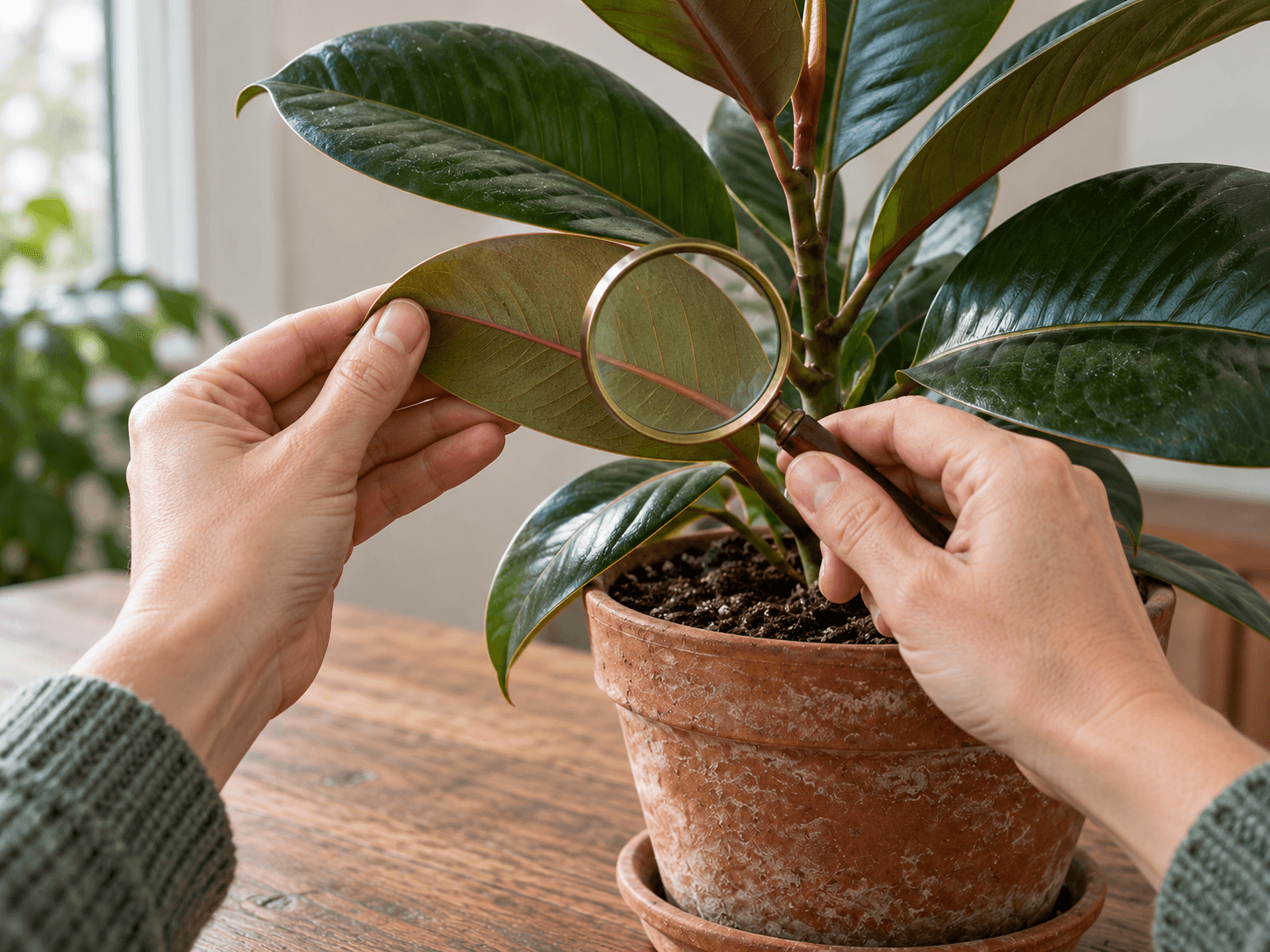
Watch where the insects gather and emerge. A fly near a plant may also have come from fruit, a drain or another source. Check several pots, especially those with consistently damp surfaces. A close photograph or a captured specimen can help with identification.
Fungus gnat adults are small dark flies, roughly 1.5-3 mm long, with clear wings. Their larvae are legless, wormlike and dark-headed in the growing medium. Compare an insect with the documented photographs in the extension source rather than treating every small fly as a gnat. A sticky card close to the pot helps monitor adults but does not reach larvae below the surface.
Correct the wet conditions you can see
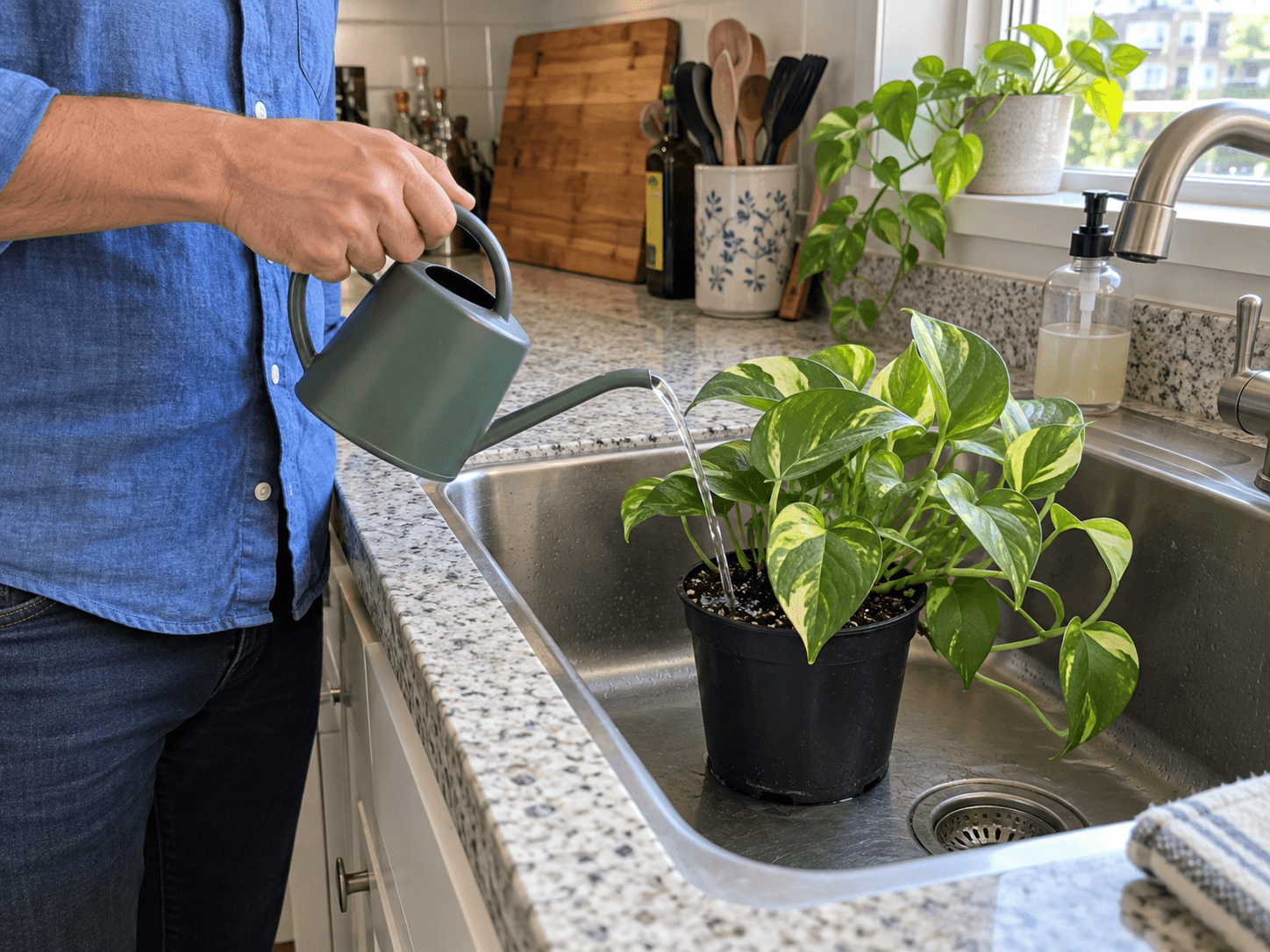
- Empty water from saucers and decorative covers.
- Check the drainage holes and the moisture deeper in the pot.
- Remove dead leaves and other decaying material from the surface.
- Adjust watering to the plant’s needs instead of keeping every surface constantly damp.
Do not force a moisture-loving plant into severe drought to solve a gnat problem. A sensible dry-down differs between a peace lily and a snake plant. If the mix stays wet for an unusually long time, consider light, pot size and medium condition.
Use traps as information
Place sticky traps so children and pets cannot reach them, and follow the product instructions. Date a card or record counts at a consistent interval. A decline in adults can help you assess progress, but occasional adults and hidden larvae may persist.
Avoid comparing a card left for a day with one left for two weeks. The point is to establish a trend under similar observation conditions. If activity remains high, reassess whether another pot or another household source was missed.
If moisture management is not enough
If the same pot keeps producing adults after drainage and watering are corrected, ask for a control that targets fungus gnat larvae in the medium. A spray meant only for flying adults will not reach that stage. Availability and permitted uses vary, so verify the exact Canadian product and label for indoor ornamental plants and the target pest. Follow storage and application instructions, which matter for living controls as well as pesticides.
Do not pour household cleaners or improvised peroxide mixtures into the root ball. Repeated disturbance or an unnecessary repot can add stress without resolving the source. If the plant is also declining, inspect its roots and care conditions rather than assuming all damage comes from the visible flies.
Find a related guide below.
Back to the beginningSources & notes
Care guidance checked against these horticultural references on 20 October 2026.
- University of Minnesota Extension: Managing insects on indoor plantsInspection, isolation, pest signs and integrated management.
- University of Maryland Extension: Diagnose indoor plant problemsOverlapping causes of wilt, yellowing, poor growth and root damage.
- Health Canada: Use pesticides safelyCanadian authorization, indoor use and label directions.
- Health Canada: Pesticide label searchCheck current product registration and the complete label.