Make room for a sprawling cactus
Epiphyllum oxypetalum
Queen of the night needs room for long stems, filtered light and a stable pot. Learn what the flat growth is and what to expect from its short-lived flowers.
The short answer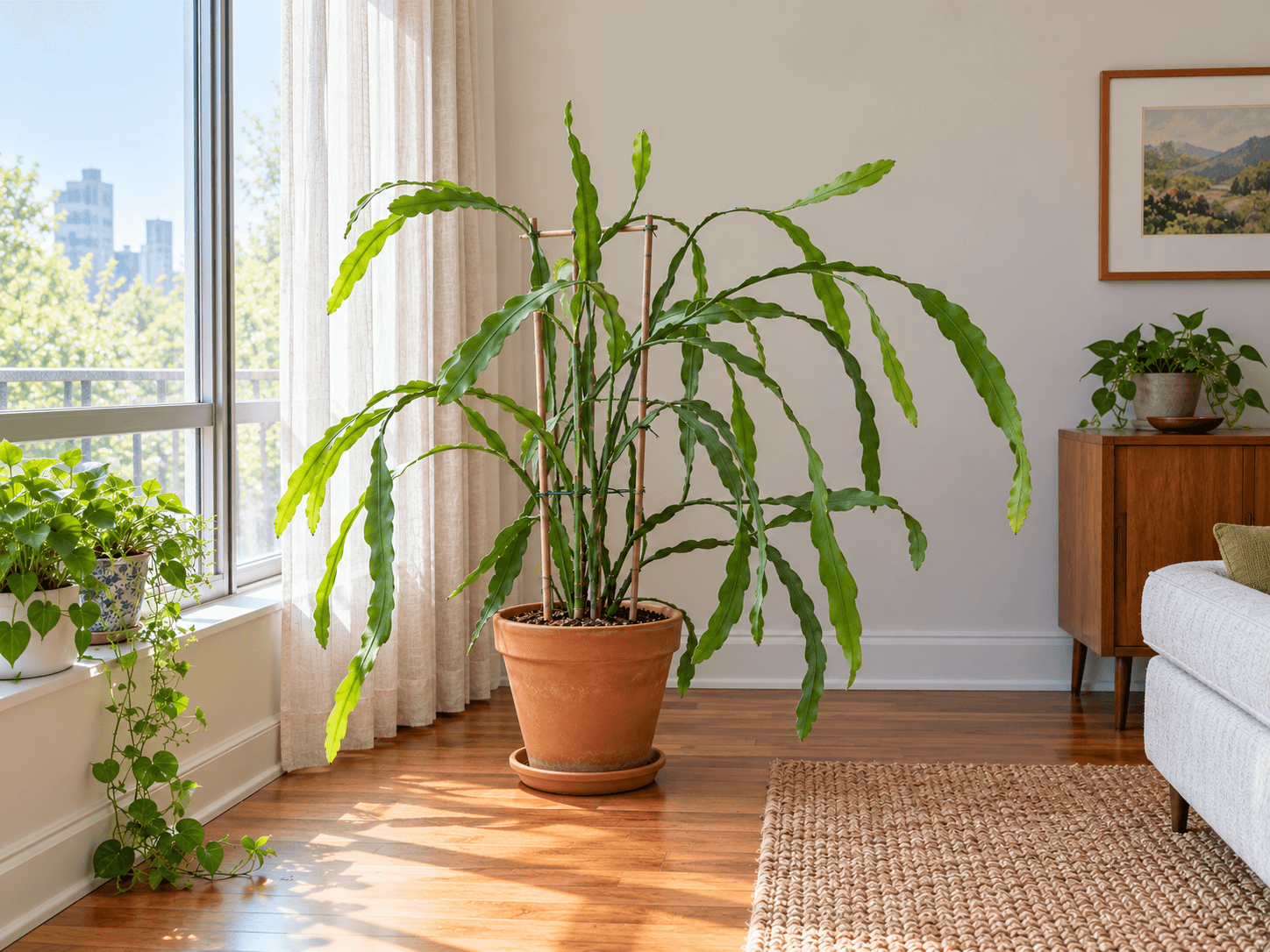
Those flat blades are stems
The long flattened green growth performs the work of leaves, but it is stem tissue. Older cylindrical branches can support broad wavy-edged sections. This mix of shapes is normal for E. oxypetalum; it does not mean two different plants have been put in the pot.
Check the botanical name when buying an orchid cactus. Many colourful hybrids are sold under that broad description and may flower differently. The familiar large white night flower belongs to this particular species, not to every plant carrying the common name.
Plan for the reach of the next stem
Choose a stable container and enough open space for new growth. Add a suitable support before long stems begin catching on furniture. Use loose ties that hold a sturdy stem without cutting into it, and keep the plant clear of a route where people regularly brush past.
Bright filtered daylight suits this forest cactus better than an abrupt move into hot midday sun. A window position also needs checking after dark in cold weather. Do not press the stems against cold glass just to fit the plant into a narrow gap.
Check the light at your chosen windowDrainage still matters
Use an open mix suited to forest cacti and a pot with drainage holes. During active growth, water as the surface begins to dry, then drain thoroughly. Let the interval extend when growth slows. Avoid treating this plant as a desert cactus that should spend long periods completely dry.
A sprawling top does not automatically require a large volume of new compost. Check the root ball before choosing a bigger container. A heavier outer container can improve stability, but only if you can see and remove any water collected inside it.
Check drainage inside a decorative outer potWatch a developing bud in the evening
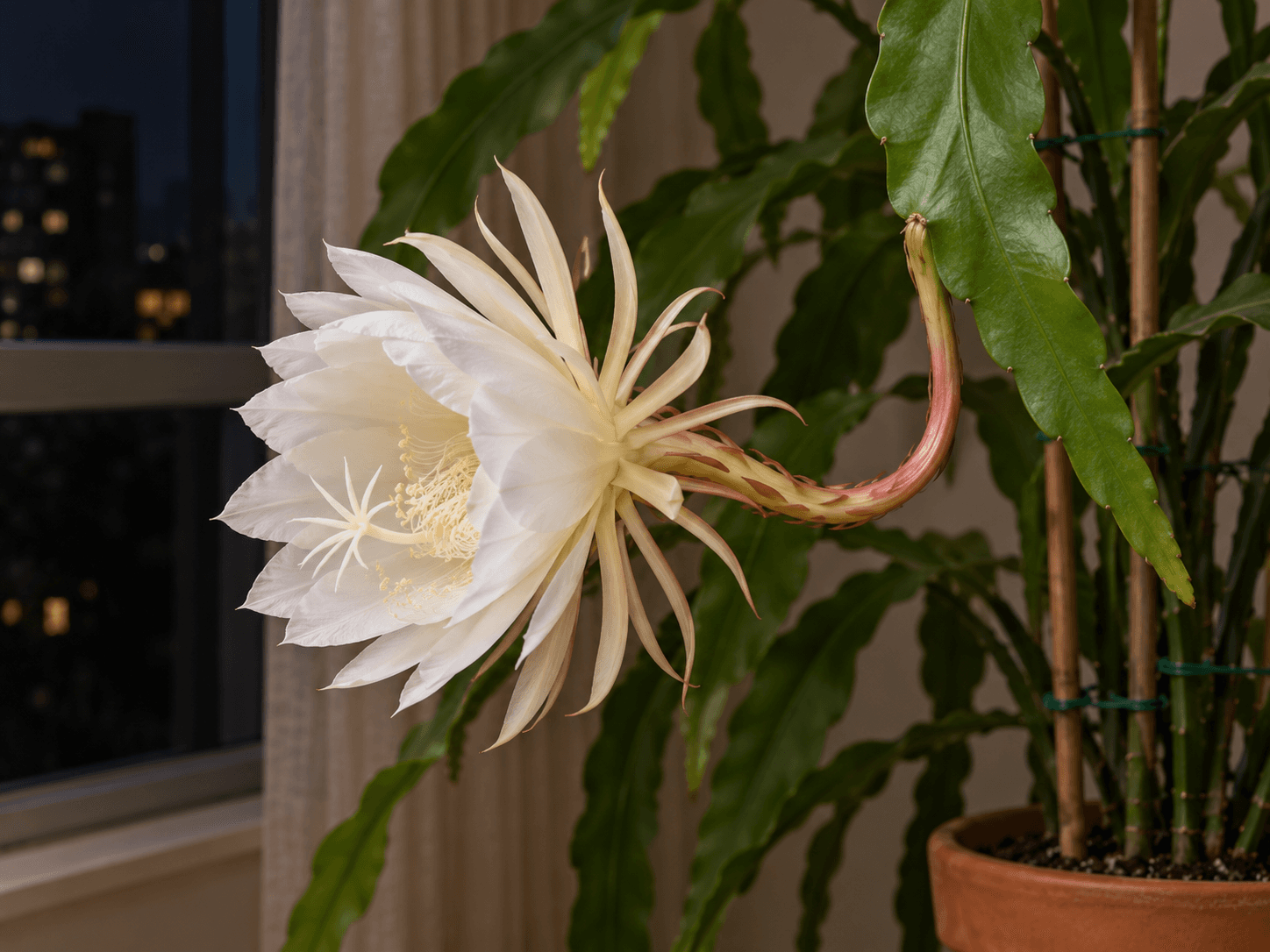
A mature, well-grown plant can form large fragrant white flowers that open at night and fade by morning. If a bud is developing, check it in the evening rather than waiting for the next afternoon. Photograph it where the plant already stands instead of moving the pot repeatedly for a better backdrop.
For winter rest, the RHS recommends a bright cooler place around 11 to 14 C for epiphyllums, with the mix only just moist rather than completely dry. Check the temperature at the pot overnight; a sheltered-looking Toronto balcony is not that environment. Once buds form, restore warmer conditions above 15 C and the growing-season watering routine. Maturity and indoor conditions still affect whether flowers appear.
A healthy shortened stem can become another plant
If a healthy stem has outgrown its space, save a firm section about 15 to 23 cm long during active growth. Keep track of which end was nearest the base. Leave the cut surface in a warm dry place for several days until it has sealed before planting; a fresh wet wound is more vulnerable to decay.
Set the lower end about 2.5 to 5 cm into an airy cactus propagation mix in a draining pot. Keep it warm, around 18 to 24 C, in bright filtered light, with the mix just moist. Support the cutting if it rocks rather than burying most of the stem. Allow roots and new growth to establish before treating it as a mature, larger plant.
Find a related guide below.
Back to the beginningSources & notes
Care guidance checked against these horticultural references on 20 October 2026.
- RHS: How to grow epiphyllum cactiForest-cactus culture, filtered light, watering, support and winter rest.
- NC State Extension: Epiphyllum oxypetalumFlat and cylindrical stems, nocturnal white flowers and indoor growth.
- NC State Extension: Plants grown in containersContainer materials, potting media, nutrition and indoor care.
- RHS: How to grow houseplant cacti and succulentsDraining media, restrained pot sizing, watering and species exceptions.