The cactus with a different calendar
Schlumbergera truncata
A forest cactus with jointed stems and autumn flowers needs a different routine from a desert cactus on a hot sill.
The short answer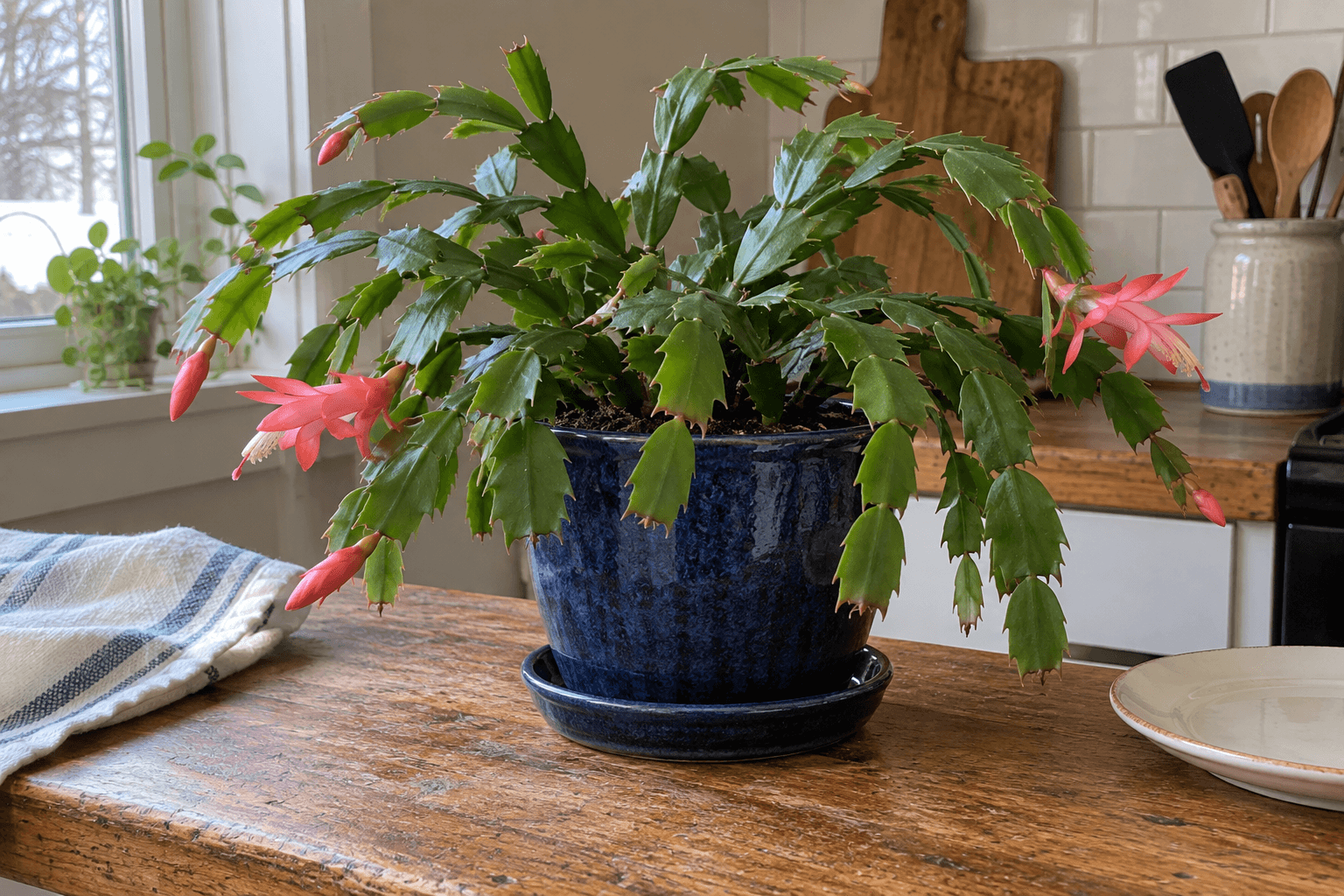
Check the edges
Plants sold as Christmas cactus are often Thanksgiving cactus or hybrids. Schlumbergera truncata has pointed projections on the edges of its flattened stem segments. Those green pieces are stems, not ordinary leaves. A shop label promising Christmas flowers is less useful than identifying the plant and observing how it responds in your own room.
A forest background
This plant does not want the long, hot drought you might associate with a desert cactus. Use a draining medium and water when the surface has dried, adjusting to growth and conditions. Leave no water in the outer container. Limp segments can accompany either dryness or damaged wet roots, so check the pot before deciding.
Let the nights stay dark
For a healthy plant that is not setting buds, check both the night temperature and the lights left on nearby. University of Minnesota Extension gives a useful indoor starting point: nights around 16 to 18 C with at least 12 hours of uninterrupted darkness each night for about six weeks. Keep bright filtered light during the day. An unused room with a window can be easier to manage than a living room lit until midnight.
Measure beside the plant, not at the thermostat across the apartment. A cool room is useful; an icy draft or a Toronto balcony in late autumn is not. Once buds form, keep the position, moisture and temperature steady. These conditions encourage buds without guaranteeing a particular holiday flowering date.
If buds fall, look back over the preceding changes: a move from shop to home, a new heater, a dry root ball or a different light exposure. Inspect moisture before watering and keep the remaining conditions steady. Moving the plant repeatedly between a dark cupboard and a sunny sill can introduce more changes while you are trying to understand the first one. Bud loss does not mean the whole plant is finished.
Keep it after the flowers
Once flowering ends, continue observing the plant rather than putting it in a dark cupboard. New segments signal renewed growth. A healthy multi-segment cutting can eventually become another plant. Before giving one away, label it with its name and your actual growing conditions. The recipient deserves more useful information than a date when it might flower.
Find a related guide below.
Back to the beginningSources & notes
Care guidance checked against these horticultural references on 20 October 2026.
- NC State Extension: Schlumbergera truncataForest cactus identity, stem segments, light and flowering response.
- University of Minnesota Extension: Holiday cactiNight temperature and uninterrupted darkness for Thanksgiving cactus buds, plus bud-drop triggers.
- Royal Horticultural Society: Growing houseplantsIndoor conditions, seasonal care, humidity and holiday planning.
- University of Maryland Extension: Watering indoor plantsMoisture and pot-weight checks; top and bottom watering.