A cactus for filtered light
Rhipsalis baccifera
Mistletoe cactus grows in forest conditions. Give its fine trailing stems filtered light, accessible drainage and more regular moisture than a desert cactus.
The short answer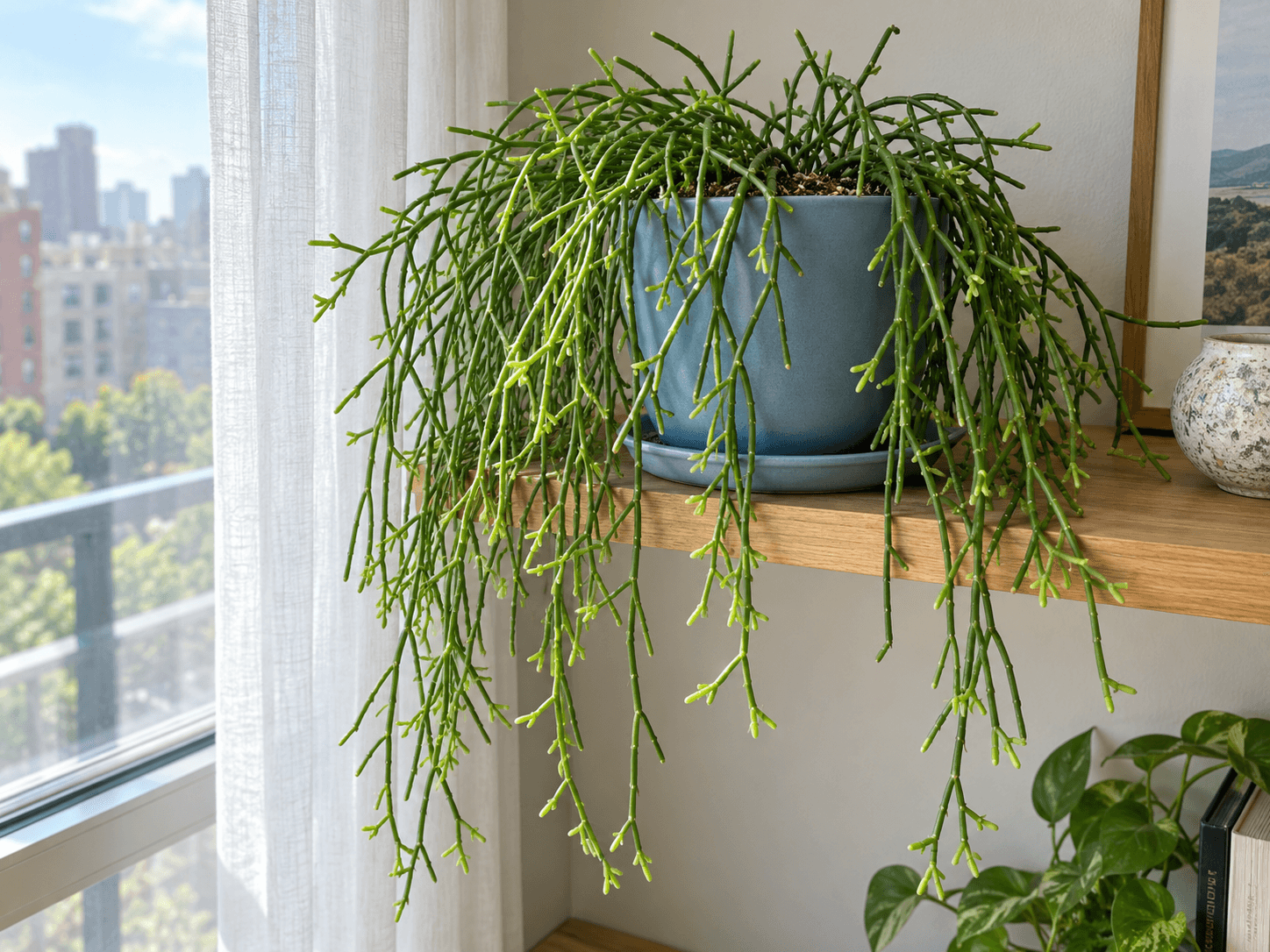
Check which Rhipsalis you have
Rhipsalis is a varied genus. This profile concerns R. baccifera, with narrow cylindrical stems that branch and hang, rather than species with broad flattened growth. Save the botanical label if you have it. Similar common names do not guarantee the same growth habit.
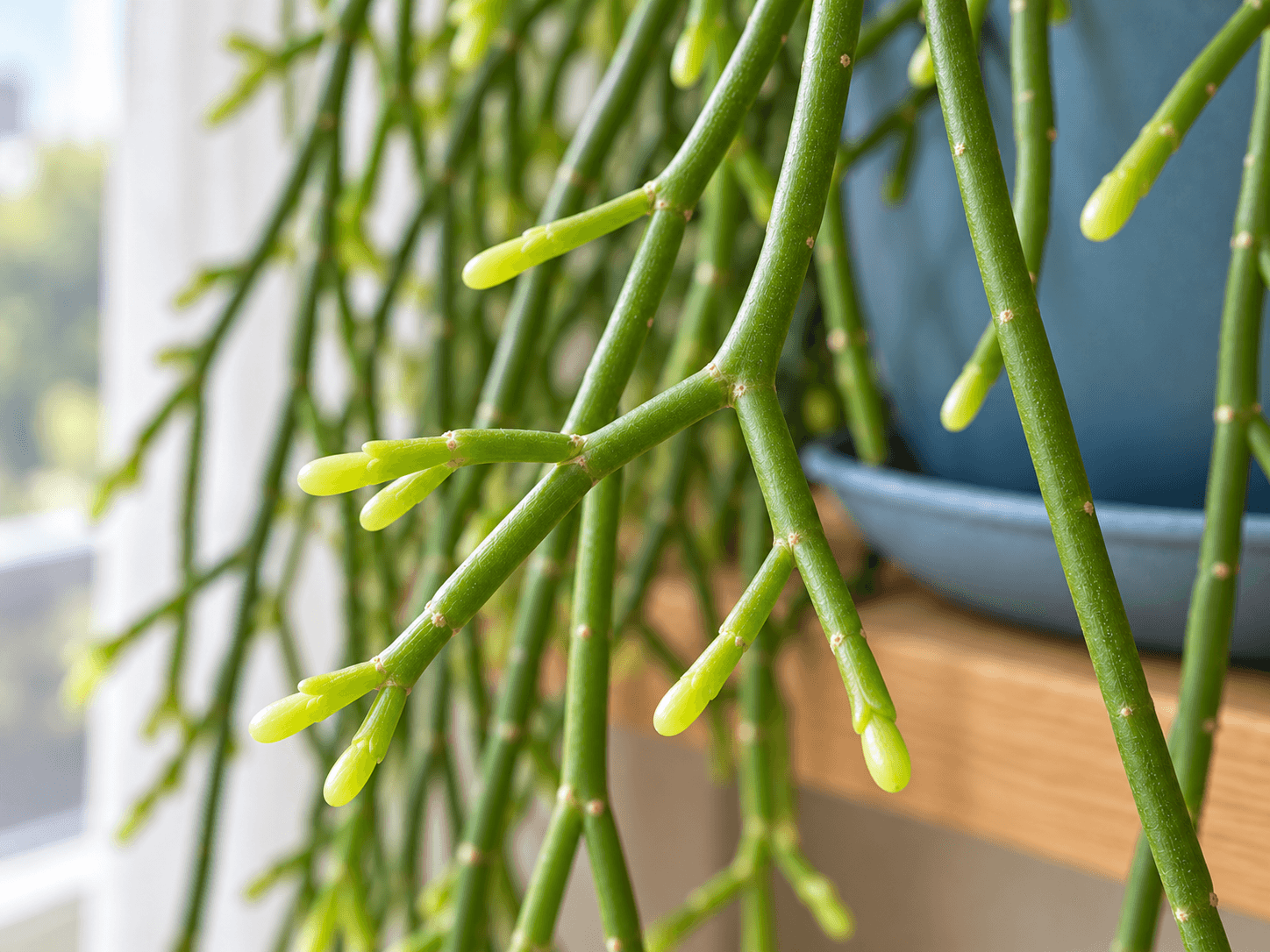
In nature this cactus grows as an epiphyte, using trees for support. That background matters indoors: a routine designed around prolonged dryness and intense desert sun is a poor fit. It still needs air around the roots and a way for excess water to leave.
Leave room below, and access above
A shelf beside a bright window can work if the pot receives light and remains reachable. Filter harsh direct sun. Leave space for the stems to hang without being caught by a drawer, door or passing shoulder. Check that the saucer sits fully on the shelf rather than projecting over the edge.
Before using a hanging container, work out how you will take it down safely. A plant that you can only reach with a watering can is difficult to inspect. Look at the upper stems as well as the trailing ends; both should be part of the care check.
Use the mix as your first check
Water when the surface is beginning to dry and let runoff escape. Aim for reasonably consistent moisture during active growth, with air remaining in the mix. A dense wet root ball and a pot left dry for a long time are both worth correcting.
Thin puckered stems can accompany thirst, but do not assume that every limp tip needs water. Check the mix first. Soft deteriorating stems in a wet pot call for a root and drainage check. When cooler conditions or shorter days slow growth, wait longer between waterings.
Keep the routine simple
Inspect the sheltered branch junctions for pests and remove fallen debris from the pot. Healthy stem pieces can be used for propagation if a trailing section breaks. Avoid repeatedly handling delicate tips just to see whether they feel different.
Mature plants may produce small pale flowers and round whitish or pinkish berries. These are quite unlike the large flowers of some other forest cacti. Their absence indoors is not a reason to force more fertilizer into a plant whose light or roots need attention.
Find a related guide below.
Back to the beginningSources & notes
Care guidance checked against these horticultural references on 20 October 2026.
- RHS: Rhipsalis bacciferaTrailing cylindrical stems, filtered light, moisture and small flowers.
- NC State Extension: Rhipsalis bacciferaEpiphytic habit, young-stem areoles, watering and branching morphology.
- RHS: How to grow houseplant cacti and succulentsDraining media, restrained pot sizing, watering and species exceptions.
- University of Maryland Extension: Watering indoor plantsMoisture and pot-weight checks; top and bottom watering.