Listen before it droops
Spathiphyllum hybrids
Keep a peace lily evenly cared for without using dramatic wilting as a watering schedule. Includes flowers, tips and household placement.
The short answer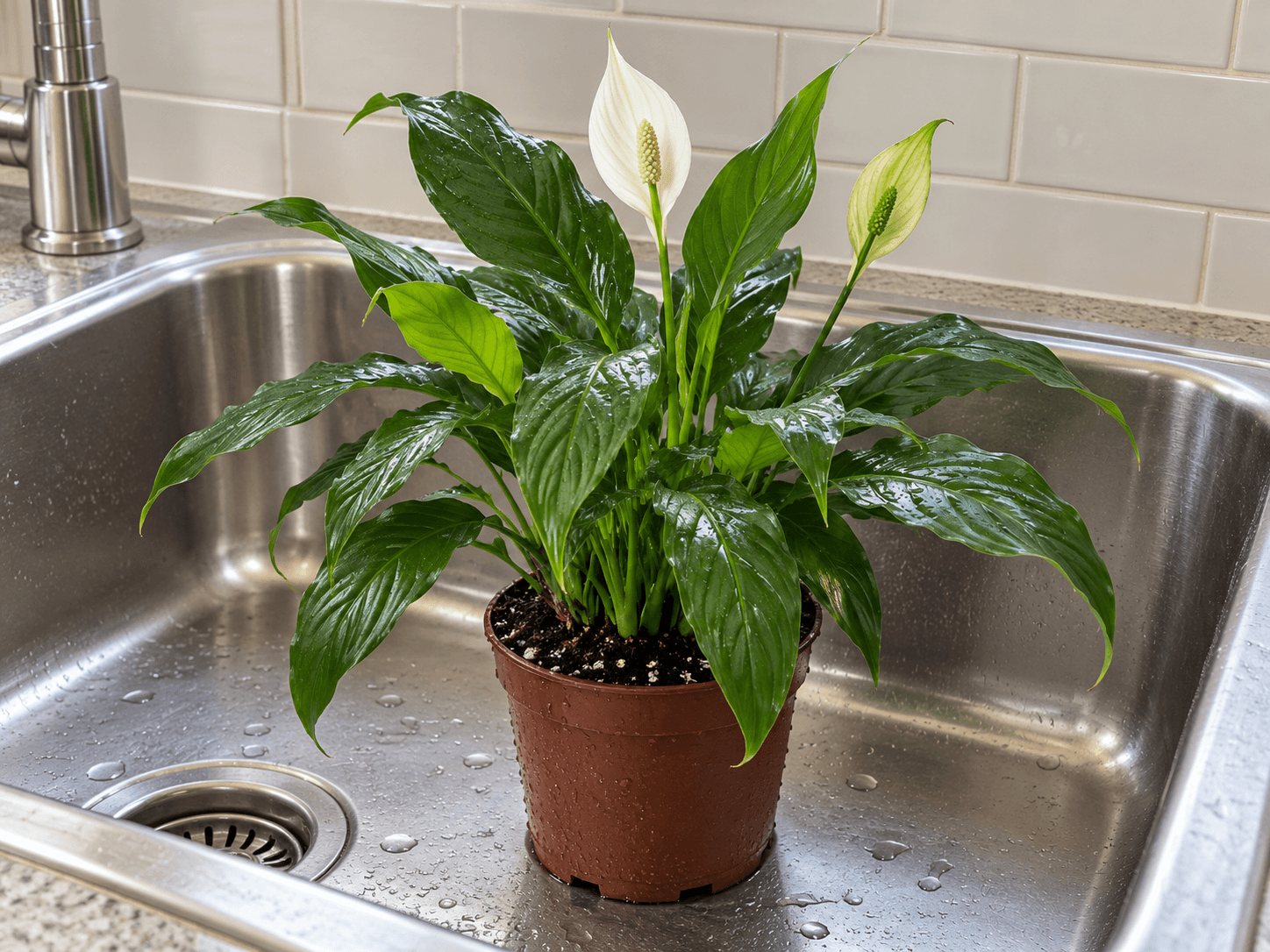
A flowering plant with a misleading name
Peace lilies belong to the genus Spathiphyllum in the arum family. Most shop plants are sold as cultivars or hybrids, and the name on the pot may not identify a single species. Their white "petal" is a spathe, a modified leaf surrounding the flower-bearing spadix.
Choose a plant for the space its leaves occupy when spread, not just the height of its flowers. A peace lily on a busy dining table is easily brushed or knocked. A stable side position near indirect light can be easier to live with.
Before the dramatic wilt
Aim for a mix with some air and consistent moisture. Check as the surface starts to dry; do not keep topping up a heavy wet pot. When watering is needed, wet the mix evenly and let excess water leave. The outer pot should not become a hidden reservoir.
If the pot is genuinely dry, water it and let it drain. Then review why it dried so far. Was it moved nearer a heater, left in a sunny patch or confined by a dense root ball? Preventing the repeated cycle is more useful than enjoying the recovery each time.
White, green, then finished
A spathe can turn green as it ages; that is not automatically a fertilizer deficiency. Remove a finished flower stalk with clean snips if you prefer the appearance. The foliage is the longer-term plant, and a gap between flowers does not mean it has failed.
Low light can limit flowering. Improve the location before reaching for a bloom product. Strong direct sun can scorch foliage, so make any move thoughtfully and observe the plant in its new position.
Tips, feeding and placement
Brown tips have several possible contributors, including moisture stress and excess salts. Check the watering history and fertilizer label. A mix containing fertilizer does not need an automatic extra dose. Judge adjustments by new leaves; the old brown edge will remain brown.
Peace lilies contain irritating calcium oxalates and should be kept away from children and pets that chew plants. They are not true lilies, but that distinction does not make them safe to eat. After suspected ingestion, contact the appropriate poison service or veterinarian with the plant identity.
Find a related guide below.
Back to the beginningSources & notes
Care guidance checked against these horticultural references on 20 October 2026.
- NC State Extension: SpathiphyllumGenus-level identification, moisture, flowering and calcium oxalates.
- University of Maryland Extension: Watering indoor plantsMoisture and pot-weight checks; top and bottom watering.
- University of Maryland Extension: Diagnose indoor plant problemsOverlapping causes of wilt, yellowing, poor growth and root damage.
- NC State Extension: Plants grown in containersContainer materials, potting media, nutrition and indoor care.