Not every bump is an insect
Raised blisters can become corky marks when water uptake and loss get out of balance. Compare carefully before treating for pests.
The short answer
Look beneath the leaf
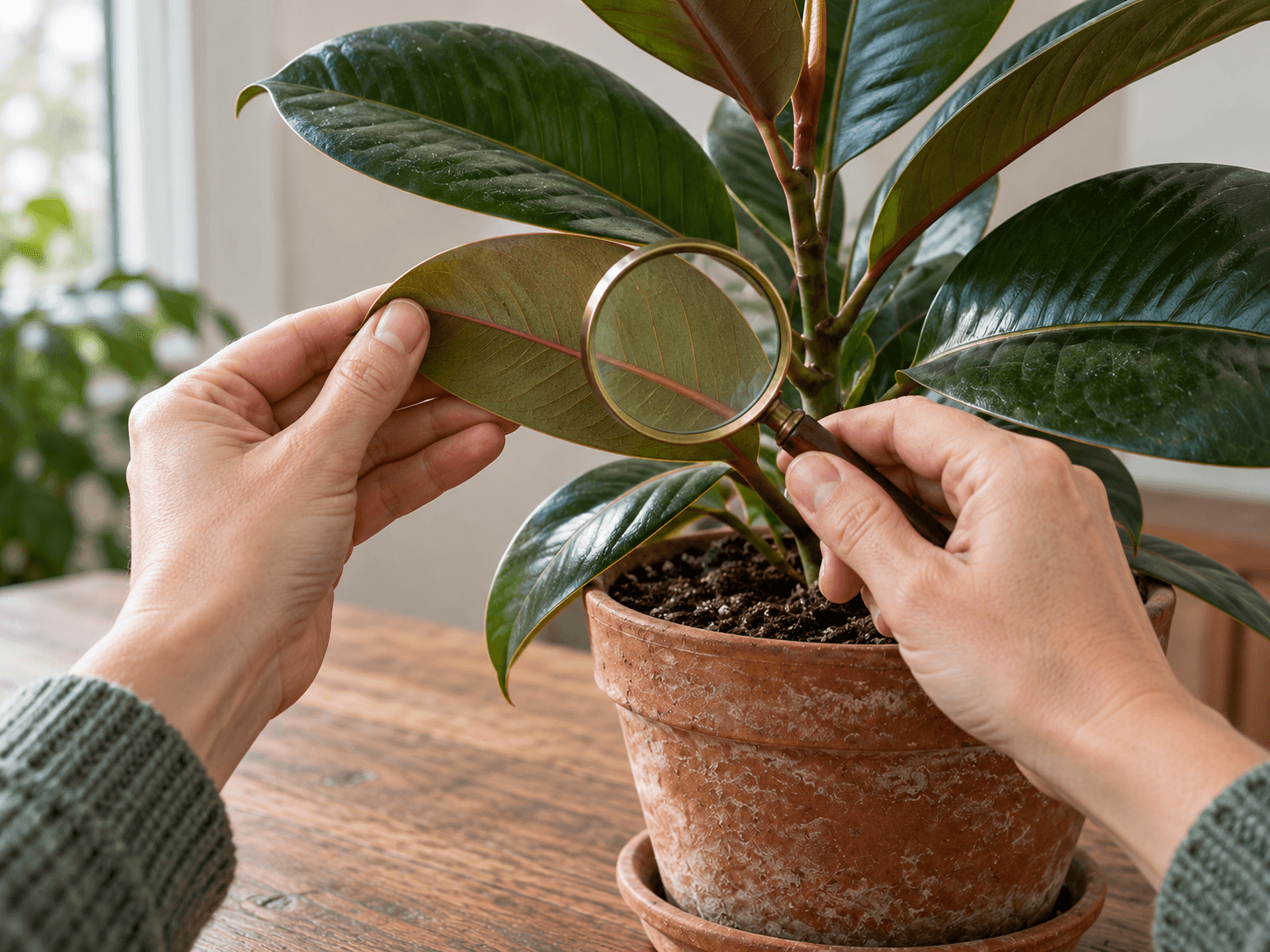
Examine the lower surface in good light. Small blisters may become rough, brown or corky as tissue changes. Compare with the linked university photographs, including the pattern and location. A generated plant portrait cannot establish this diagnosis, and scale insects can also appear as bumps. Seek identification if the distinction remains unclear.
Consider the recent conditions
Edema can occur when roots take up water faster than the leaves lose it. Persistently wet medium, cool or humid conditions and limited light can contribute to an imbalance. Check the actual root-zone moisture and recent room changes. The presence of a mark does not justify letting every affected plant dry to the same extreme.
Improve the growing routine
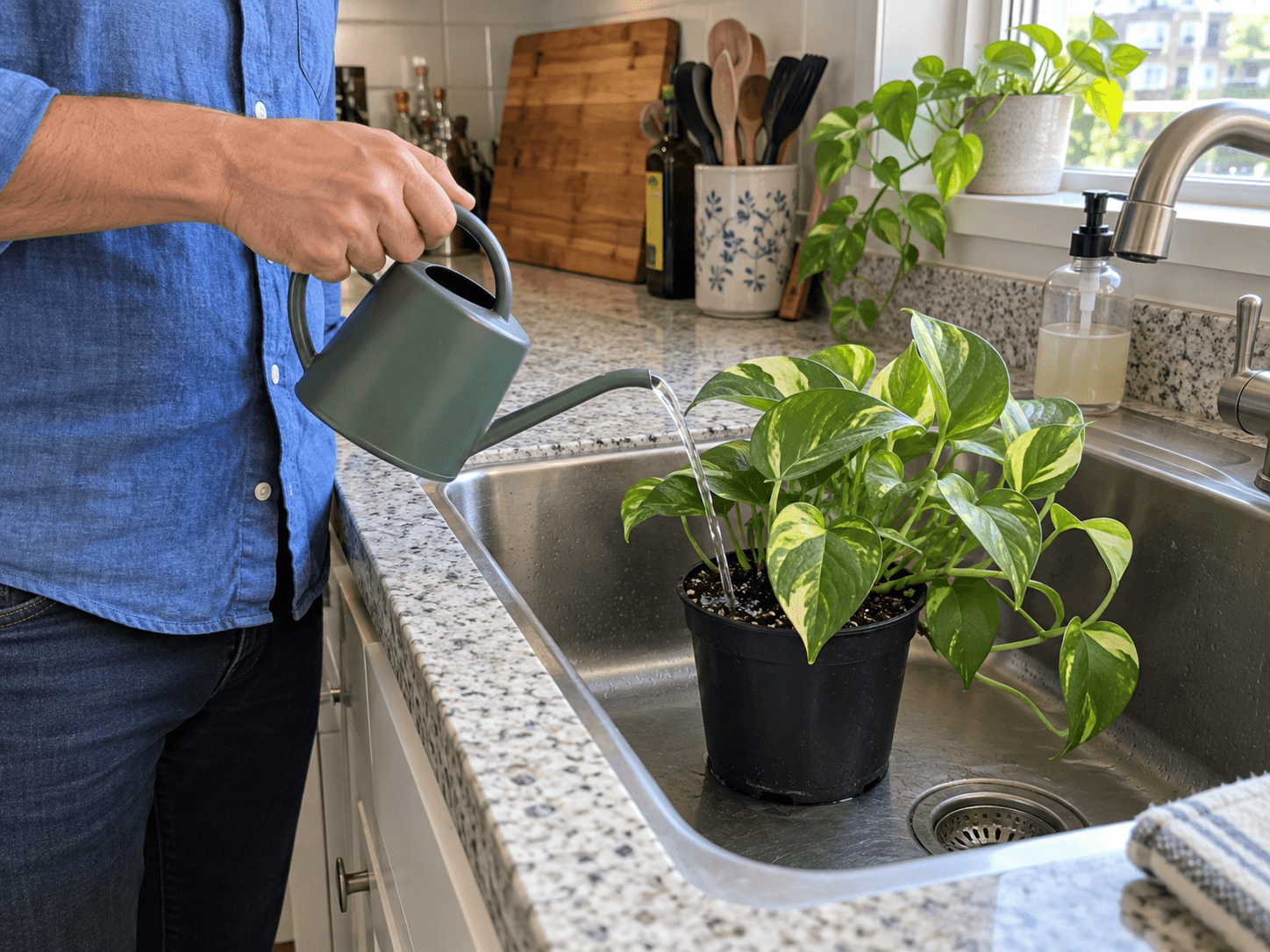
Allow appropriate drying between waterings for the species, ensure drainage and maintain normal airflow. Avoid crowding pots so tightly that foliage remains enclosed. Keep light suitable and make changes gradually. If insects are not present, applying an insecticide will not correct a physiological moisture problem. Do not add several treatments while trying to decide what the marks are.
Look for fewer new marks
Existing corky tissue will remain. Photograph the affected leaves and compare subsequent growth after conditions are adjusted. A stable old mark is different from continuing new injury. If bumps spread or the plant declines, revisit the identification with clear close-ups and its care history. A measured observation is more useful than repeatedly scraping leaves to see what comes off.
Find a related guide below.
Back to the beginningSources & notes
Care guidance checked against these horticultural references on 20 October 2026.
- University of Maryland Extension: EdemaWater imbalance, blisters and corky tissue.
- University of Maryland Extension: Watering indoor plantsMoisture and pot-weight checks; top and bottom watering.
- University of Minnesota Extension: Managing insects on indoor plantsInspection, isolation, pest signs and integrated management.