Jade belongs in the light
Crassula ovata
Choose a genuinely bright place for Crassula ovata, water after dry-down and read soft or stretched growth without guessing.
The short answer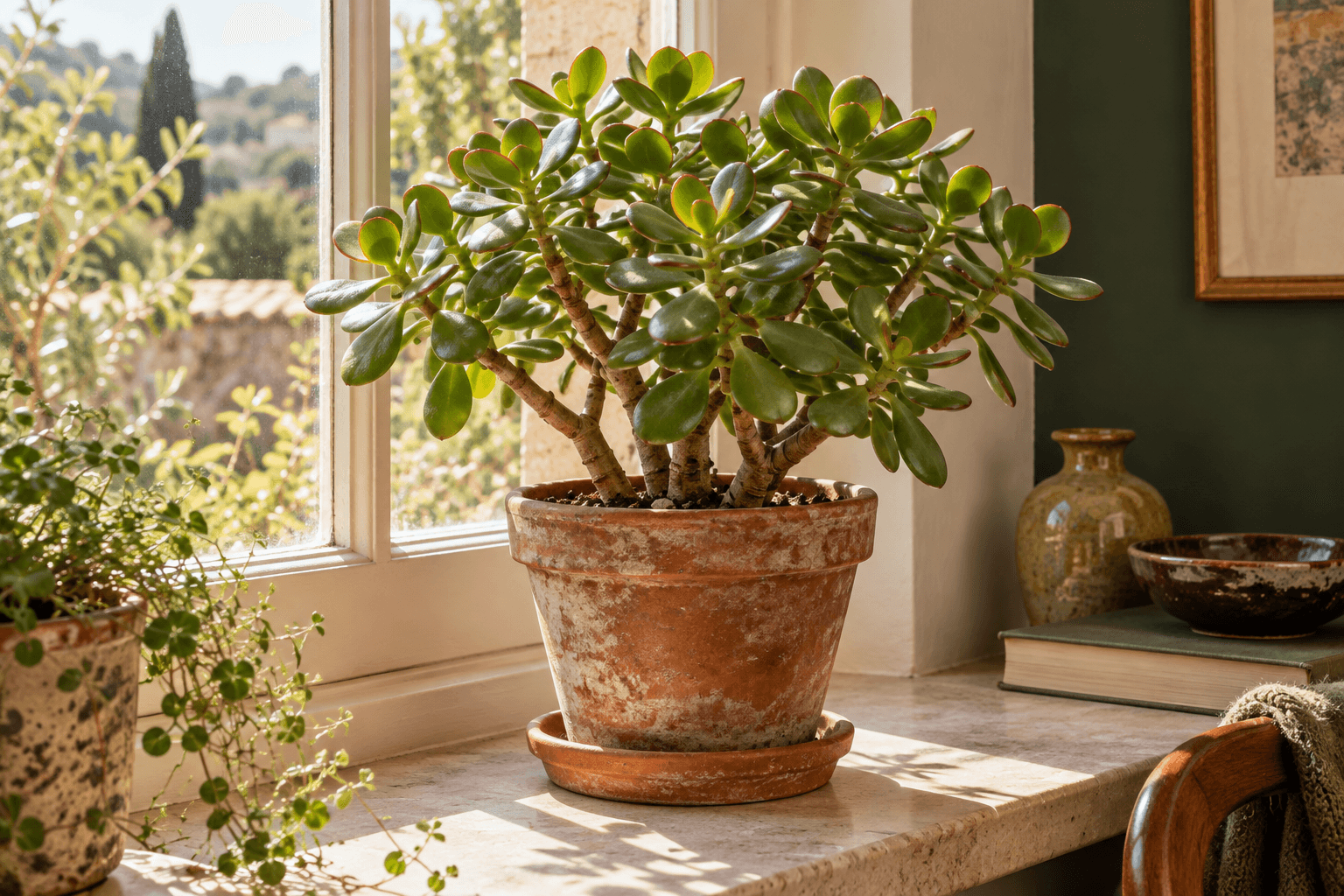
Give the sunny place to the jade
If you have one genuinely bright window, a jade plant is a stronger candidate for it than for the dark end of a desk. It stores water in thick leaves and stems, but storage does not replace light. Long, weak growth with widely spaced leaves is a reason to review the position.
A plant brought from a dim shop should meet stronger sun gradually. Watch how the sun travels across the sill, and keep foliage from pressing against hot or cold glass. A sheer curtain can soften a very intense exposure while the plant adjusts.
Dry mix, then a proper drink
Check the mix below the surface and the weight of the pot. When dry, water evenly and drain thoroughly. A pot that looks dry on top but stays wet around the roots is not ready for another drink. In winter, reduced growth and light often mean a longer interval.
Soft or wrinkled leaves need context. A dry pot and a wet pot can both have a distressed plant in them. Look at the stem base and roots if softness persists, especially when the mix is wet. Do not add water solely because a leaf is less plump than yesterday.
A small tree needs a stable base
As branches thicken, a jade becomes top-heavy. Stability matters, but a huge volume of wet mix is not the best way to provide it. Use a suitable pot with a broad enough base and drainage. If you use a decorative cover, make sure the growing pot cannot sit in trapped runoff.
Choose a succulent mix with good porosity. A fine, dense mix that stays wet for long periods is difficult to manage indoors. Avoid a gravel layer at the bottom; drainage depends on the container and medium as a whole.
Build the shape slowly
Decide which branch you want to shorten before making a cut. Clean tools, a healthy plant and active growth are a better starting point than drastic pruning of an already stressed specimen. A healthy piece of stem can become another plant; leaf cuttings are also possible, but produce a much smaller starting plant.
For a stem cutting, remove the lowest leaves and let the cut end dry and seal for several days. Then set it into a small draining pot of porous propagation mix. Keep that mix lightly moist while roots form, allowing the upper layer to dry before watering again. A rootless cutting needs closer moisture checks than an established jade; neither a saturated pot nor a long, completely dry spell helps it establish.
Keep cut material away from pets and children and check the exact plant before making safety assumptions. A jade is a plant to grow, not an edible herb. If you want to share one, wait until the new plant is established rather than giving someone a loose cutting with a guaranteed deadline.
Find a related guide below.
Back to the beginningSources & notes
Care guidance checked against these horticultural references on 20 October 2026.
- NC State Extension: Crassula ovataIdentity, bright light, dry-down and propagation.
- Iowa State University Extension: Propagating succulentsCallusing stem cuts before rooting in porous medium, including Crassula, and separating rooted offsets.
- New York Botanical Garden: Growing and propagating jade plantsJade stem-cutting setup and moderate rooting moisture with upper-medium drying.
- University of Maryland Extension: Watering indoor plantsMoisture and pot-weight checks; top and bottom watering.
- University of Maryland Extension: Potting and repottingRoot-ball placement, aeration and why not to add gravel.
- Iowa State University Extension: Propagating houseplantsSpecies-appropriate stem cuttings, divisions and plantlets.