Give the ZZ time
Zamioculcas zamiifolia
Understand the ZZ plant’s water-storing rhizomes, slow growth and preference for a bright position with a proper dry-down.
The short answer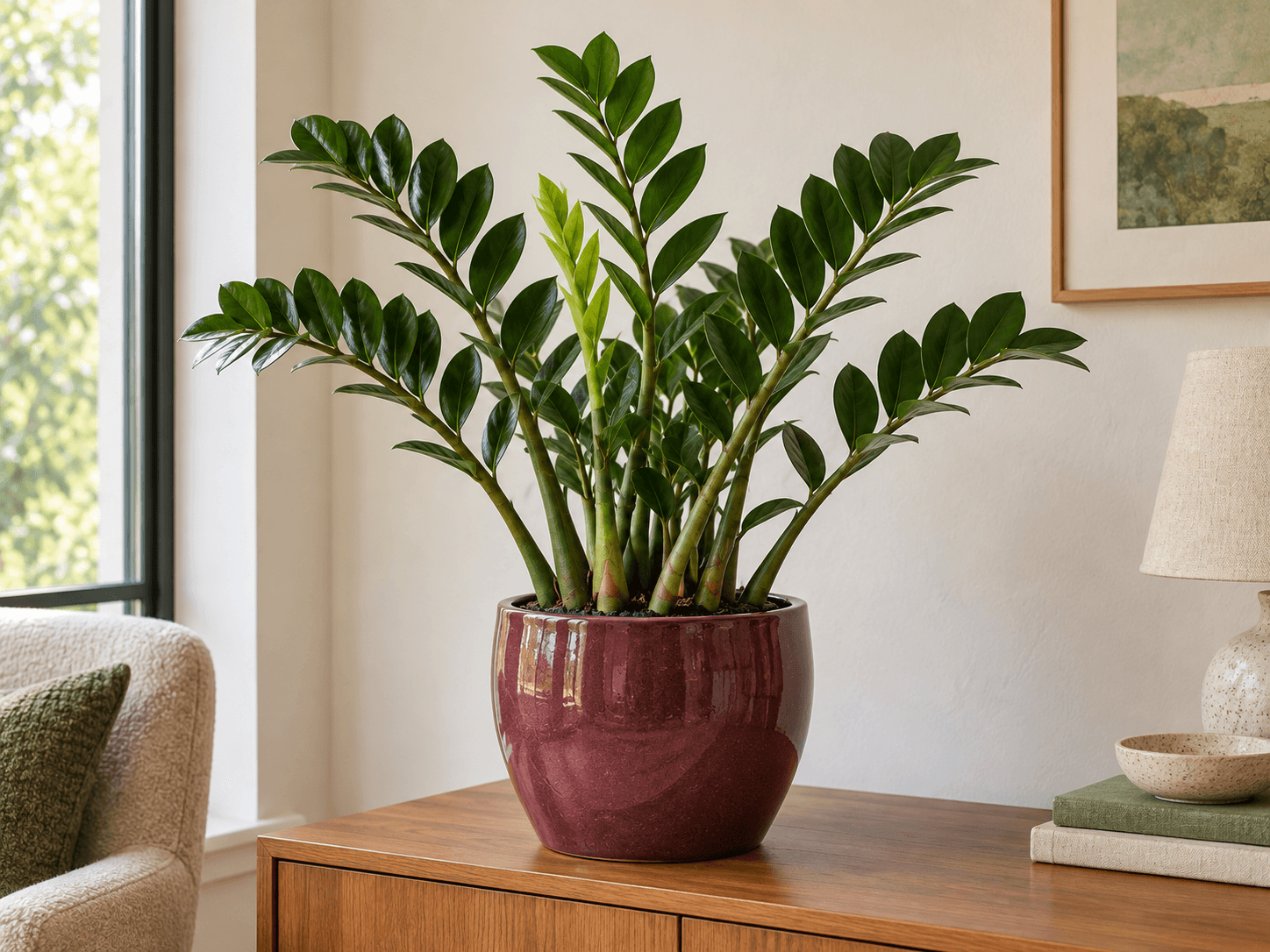
A plant that does not hurry
The ZZ is useful when you like structure more than constant visible change. Glossy leaflets line upright, arching leaves, and growth can arrive in a distinct flush after an uneventful stretch. A quiet month is not, by itself, a reason to feed, repot or water more often.
Start a simple record with the date, position and number of new shoots. That gives you something concrete to compare. The important question is whether the plant remains firm and healthy, not whether it performs on the same schedule as a pothos.
Bright enough to grow
ZZ plants tolerate lower light, but bright indirect daylight supports better growth. Keep strong direct sun from suddenly striking a plant accustomed to shade. On a deep shelf, check whether the plant itself can see the window; the room can feel bright while the pot receives little useful light.
A northern window may be workable, depending on trees, neighbouring buildings and distance from the glass. Take the whole setting into account. If you choose a dimmer place, expect drying and growth to slow, and adjust your checks accordingly.
The water reserve below the surface
The swollen rhizomes are normal storage organs. They are not a sign that the plant needs a larger decorative pot immediately. Use a draining container and check that the mix has dried before watering again. A dense wet core can be missed if you look only at the dusty surface.
When repotting becomes necessary, handle the roots and rhizomes gently. Choose a modest increase in pot size. A lot of fresh mix around a small root system can stay damp for longer than expected.
A short maintenance list
- Wipe dust from leaflets with a soft damp cloth, supporting each leaf.
- Inspect the bases and cover pot whenever you check water needs.
- Feed sparingly during active growth, following the product label and accounting for fertilizer already in the mix.
- Keep leaves and cuttings away from children and pets; ZZ is harmful if chewed.
Division can make sense for a crowded plant with separate healthy rooted sections. Leaf propagation is possible but slow. If your goal is a quick gift, choose an established division or another species rather than promising a rooted ZZ by a particular date.
Find a related guide below.
Back to the beginningSources & notes
Care guidance checked against these horticultural references on 20 October 2026.
- NC State Extension: Zamioculcas zamiifoliaRhizomes, slow growth, light and watering needs.
- NC State Extension: Plants grown in containersContainer materials, potting media, nutrition and indoor care.
- University of Maryland Extension: Diagnose indoor plant problemsOverlapping causes of wilt, yellowing, poor growth and root damage.
- Iowa State University Extension: Propagating houseplantsSpecies-appropriate stem cuttings, divisions and plantlets.