Water from below, then lift it out
Bottom watering can help wet a small root ball evenly. It still needs an endpoint and somewhere for the pot to drain.
The short answer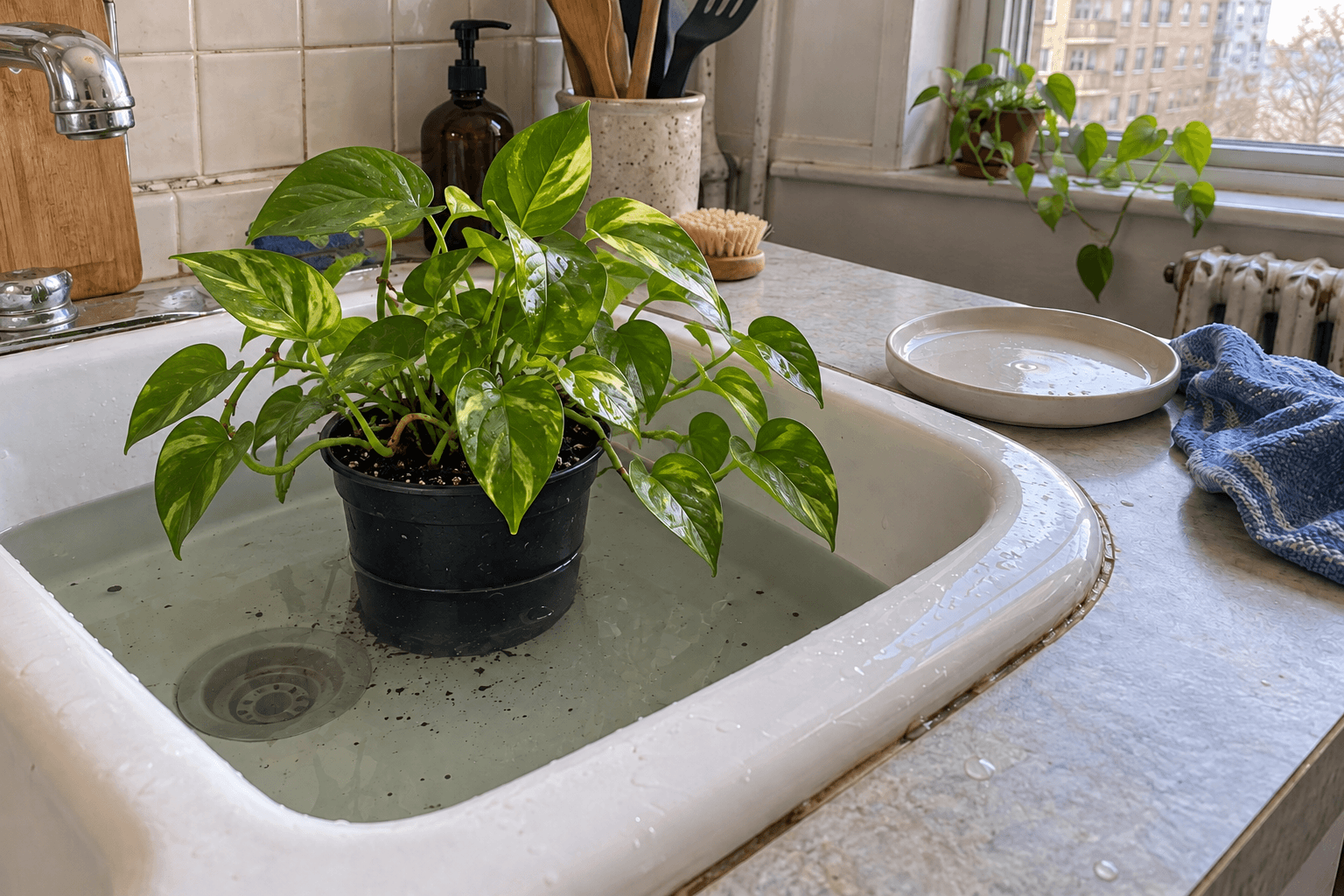
Start with a pot that needs water
Bottom watering is a method, not a reason to water. Check that the plant is ready and that the container has open drainage holes. It can be useful for small pots or foliage you prefer to keep dry. A sealed decorative pot cannot take up water through a hole it does not have.
Stay nearby
- Lift the pot first so you know its starting weight. Set it in a clean basin with a few centimetres of room-temperature water reaching the drainage holes. Keep the water below the rim and plant crown.
- Let moisture travel upward through the mix. In ordinary potting mix, check for a surface that begins to feel moist and a pot that has become noticeably heavier. Lift it out when those checks agree; do not wait for water to pool on top.
- Let the pot drain freely, then empty the basin and any runoff collected in its saucer. The soaking water is not a reservoir to leave beneath the plant.
Different mixes wick at different rates, so use these checks rather than a fixed soak time. The surface cue applies to ordinary potting mix. Coarse orchid bark needs its own watering method; do not keep it submerged while waiting for it to behave like soil.
Notice what it cannot do
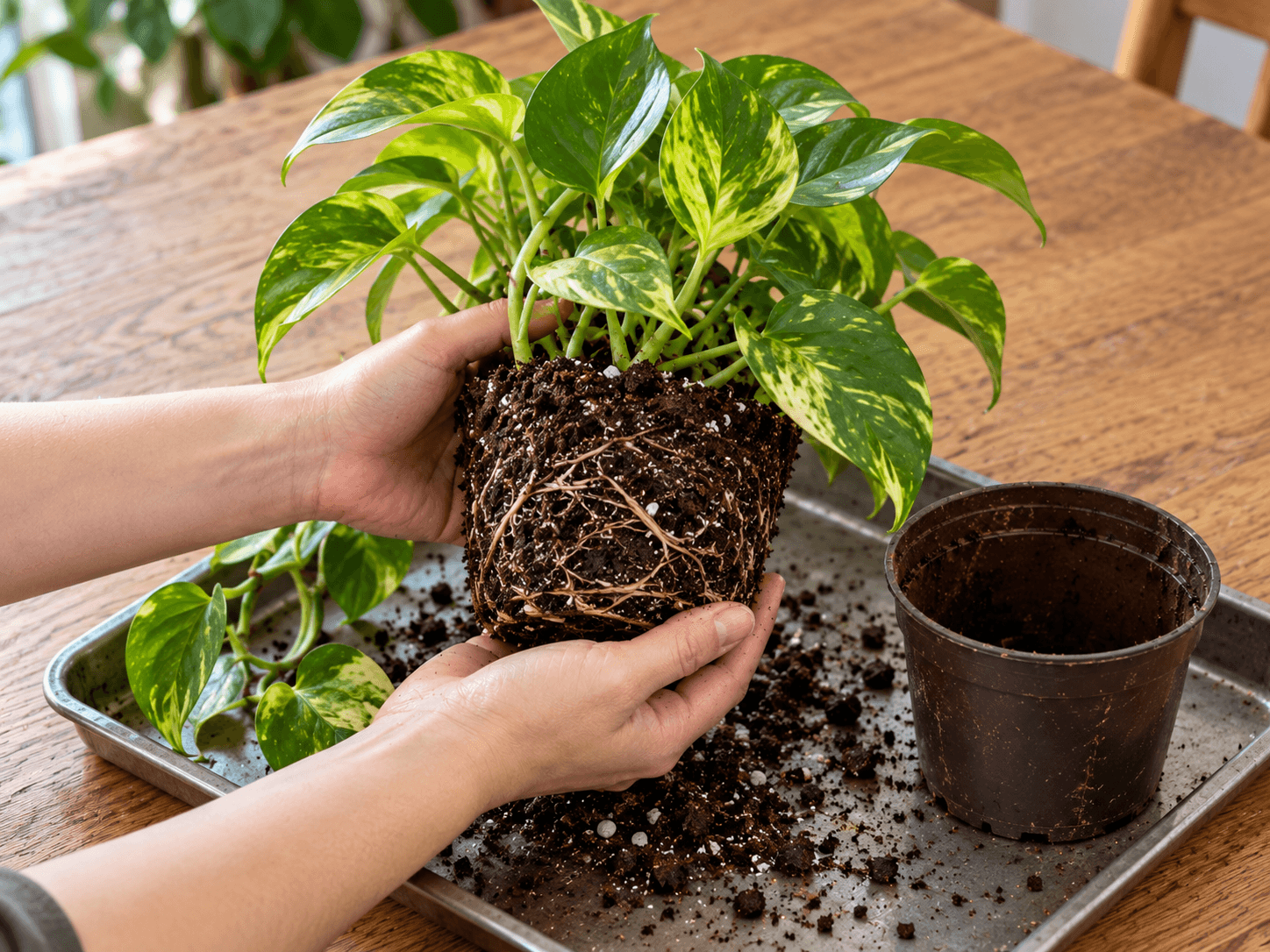
If the lower mix is wet but the centre remains dry, lift the pot out and investigate. Water-repellent dry mix or a tightly packed root ball may need the slower rewetting or repotting approach in the related guides. Extending the soak indefinitely does not confirm even absorption.
Bottom watering also leaves dissolved salts in the potting medium. Occasional appropriate top watering with free drainage can help move those out. Do not combine pots with suspected pests or disease in shared soaking water.
Return a drained pot
Let runoff finish before putting the plant back in its cachepot or on a wooden surface. Check again for trapped water. If this method makes a familiar plant harder to assess, top watering remains a useful option. Choose the routine that wets the roots effectively and lets you manage drainage without turning every watering into an elaborate operation.
Find a related guide below.
Back to the beginningSources & notes
Care guidance checked against these horticultural references on 20 October 2026.
- University of Illinois Extension: Watering houseplantsMoisture checks, meter limitations and bottom-watering method.
- University of Maryland Extension: Watering indoor plantsMoisture and pot-weight checks; top and bottom watering.
- Oregon State University Extension: Safe plant propagation and salesUse healthy propagation material and clean containers; inspect before sharing.
- Iowa State University Extension: How to care for houseplantsRewetting dry media, ordinary water sources and indoor care decisions.
- American Orchid Society: Phalaenopsis cultureMoth orchid light, roots, watering, crown care and repotting.