Measure the air beside the plant
Measure relative humidity near the plant before trying to raise it. Check several ordinary times of day, then consider the species, roots and room together. A maintained humidifier can change room humidity; a brief mist cannot sustain it. Avoid pursuing a tropical plant target that leaves your home persistently damp.
Which problem are you trying to solve?
The next step depends on the room as well as the plant. These checks help avoid changing the wrong thing.
The meter reads low and the room is dry
Check the species guidance and repeat the measurement at ordinary times, away from a mist plume. If you choose a humidifier, make its cleaning routine part of the decision. More humidity is not a universal cure for brown tips.
Compare the other causes of brown tipsThere is condensation on the window
Do not keep increasing humidity for one plant. Review the setting, device placement and the room conditions. A damp window is a household clue, not a target for tropical foliage. Consider a plant that suits the space instead.
Match a plant to the conditions you can maintainThe leaves drip but I have no air reading
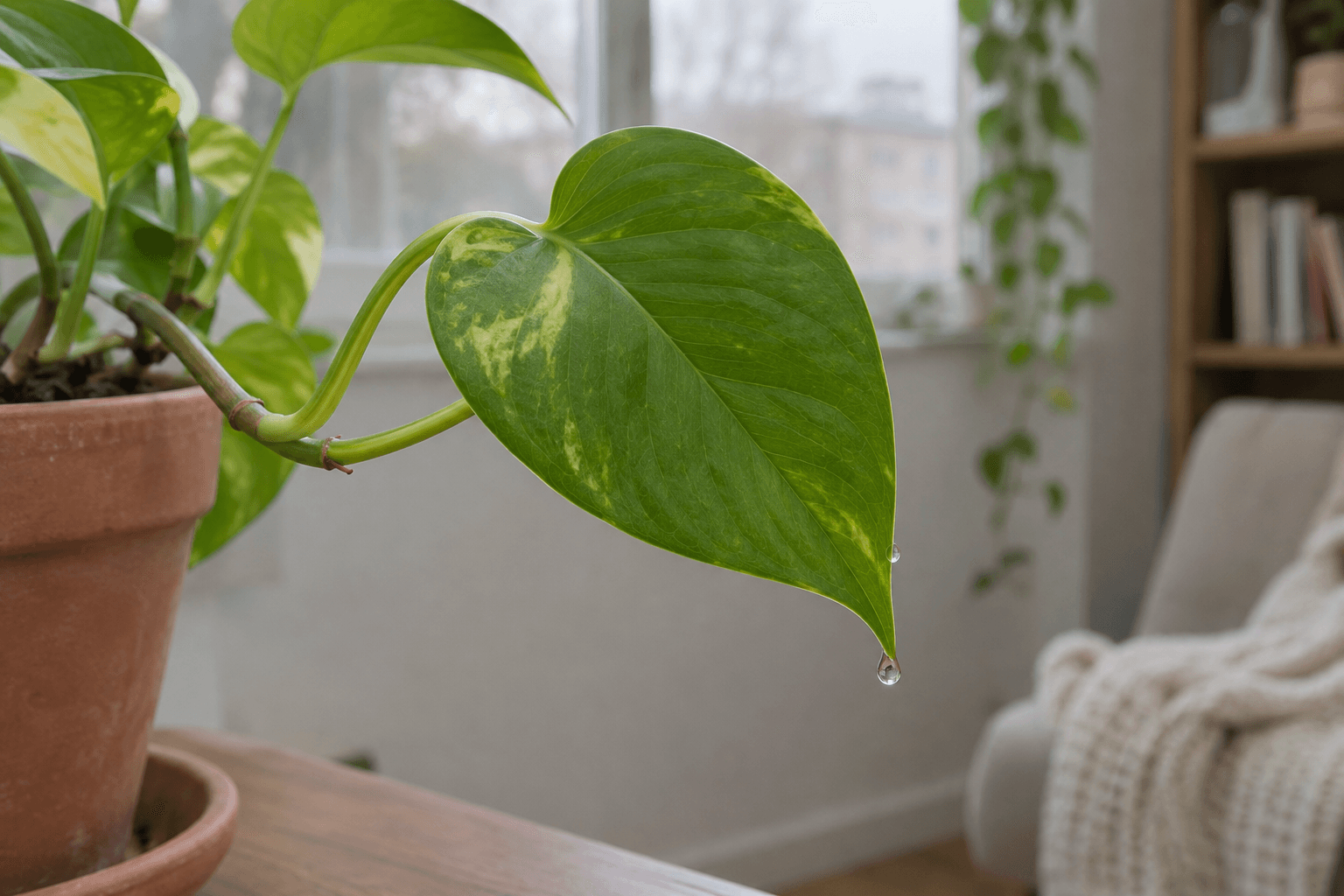
A leaf-tip drop can be guttation rather than condensation from the room. Check when and where it appears, then measure the air separately. Neither misting nor a dripping leaf tells you the room humidity.
Separate leaf-tip drops from room humidityMake the reading repeatable
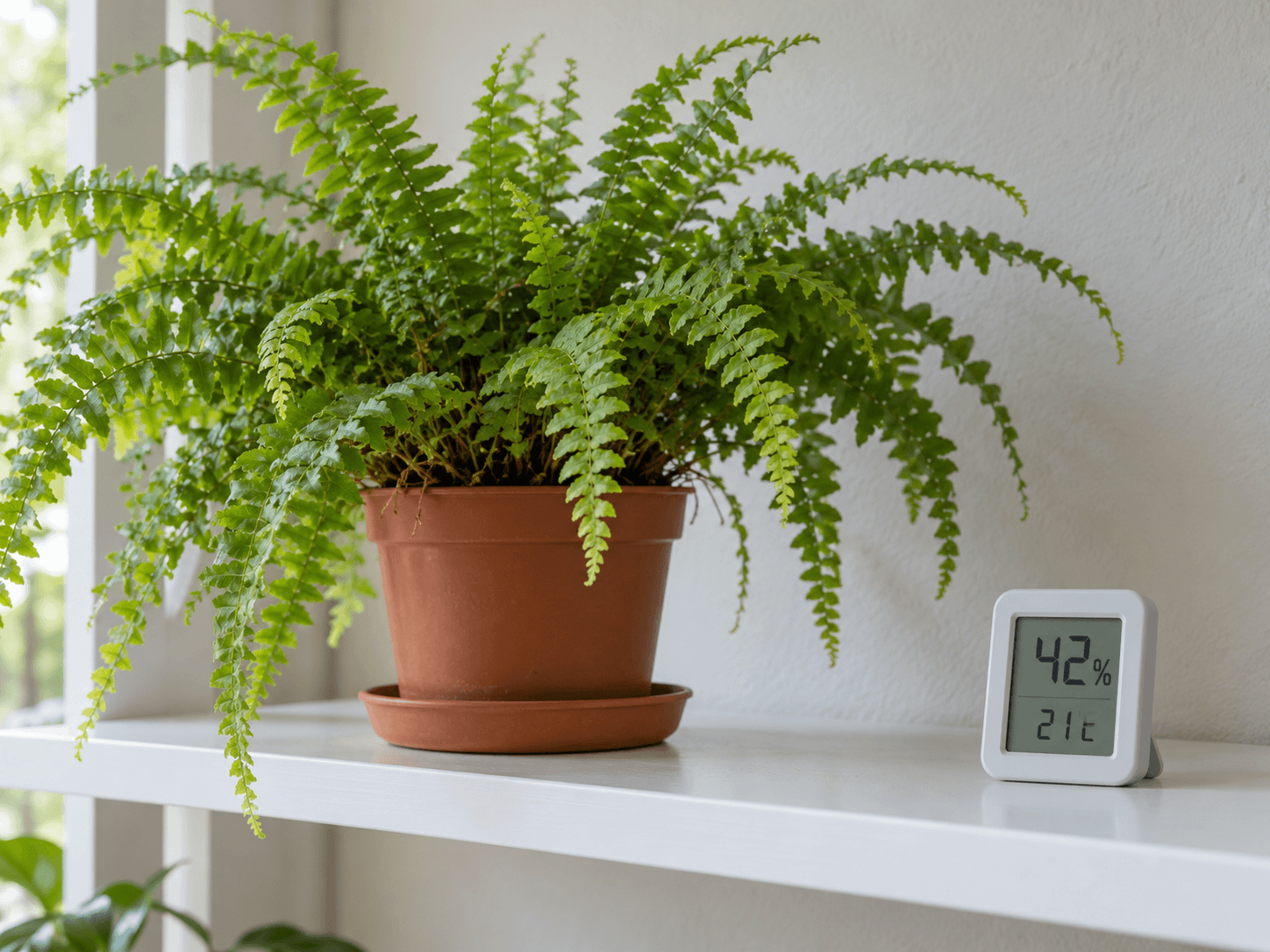
Put a hygrometer near the growing area, following its instructions. Keep it out of a direct mist plume or splashes. Let the reading settle before noting it, and record temperature too. A number beside a running shower describes that moment, not the bathroom for the rest of the day.
Try the same observation in the morning and later in the day over several days. Note when heating, cooling or a humidifier is running. This small record is more useful than moving the meter between rooms and comparing readings taken under different conditions.
Check whether humidity explains the problem
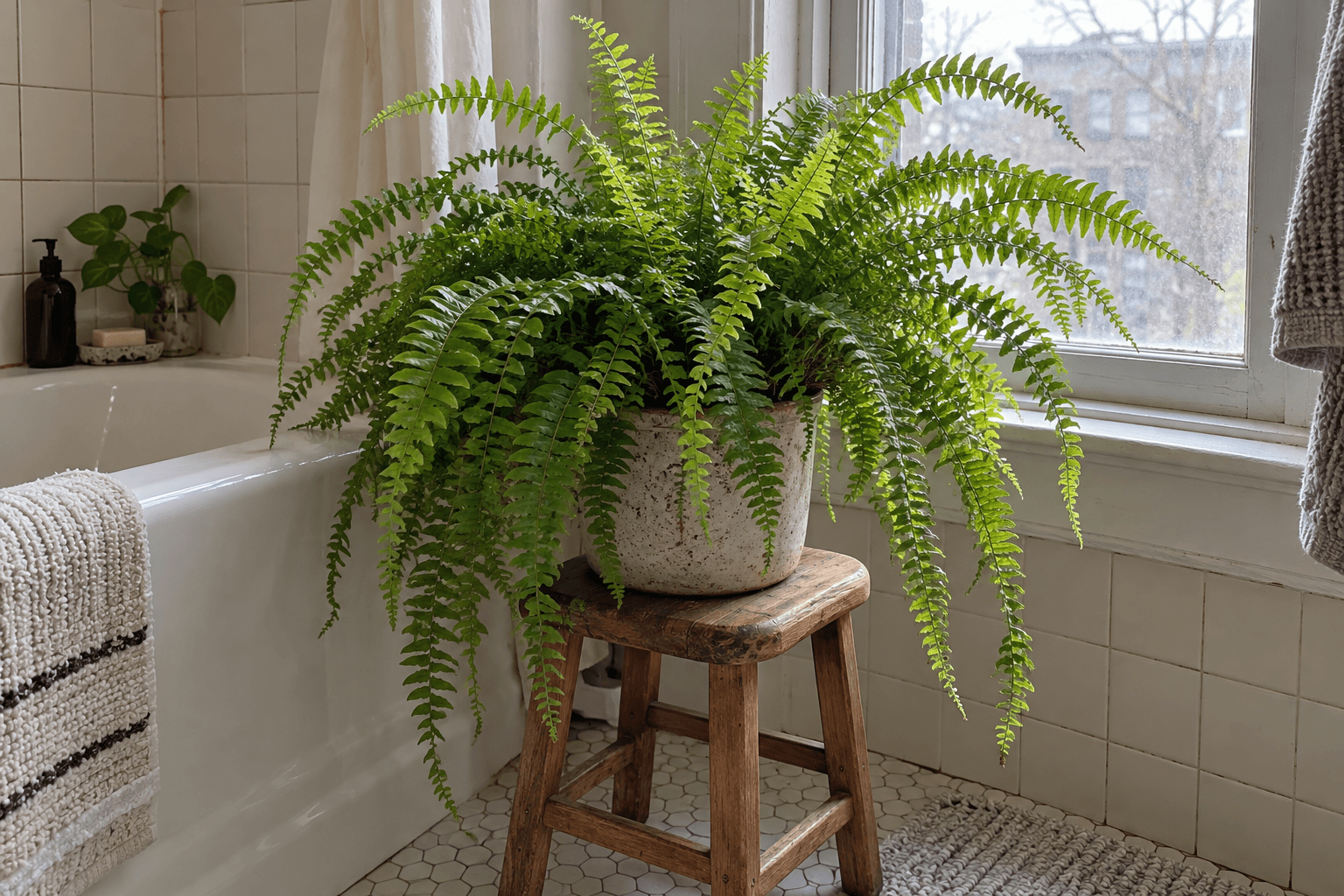
Iowa State notes that many houseplants prefer roughly 40 to 50 percent relative humidity, but that is not a requirement shared by every species. Ferns and moisture-sensitive tropical plants differ from many fleshy-leaved succulents. Use the profile for the plant you actually grow.
Brown tips alone cannot identify dry air. Review the root moisture, recent feeding, water source and direct drafts as well. If a pot has stayed wet for days and the plant is declining, adding humidity is not a substitute for inspecting its roots.
Choose a change you can maintain
A humidifier can raise room humidity, but it adds a cleaning routine. Follow the device instructions for water, placement, cleaning and disinfection. Health Canada advises emptying a cool-mist reservoir when it is not in use rather than leaving water sitting between uses.
Misting wets leaves briefly and is not an effective sustained room-humidity strategy. Grouping plants or a tray may alter the immediate surroundings, but measure the result rather than assuming it reaches the leaves. Keep pots above tray water so their roots are not soaking.
Keep the room in the decision
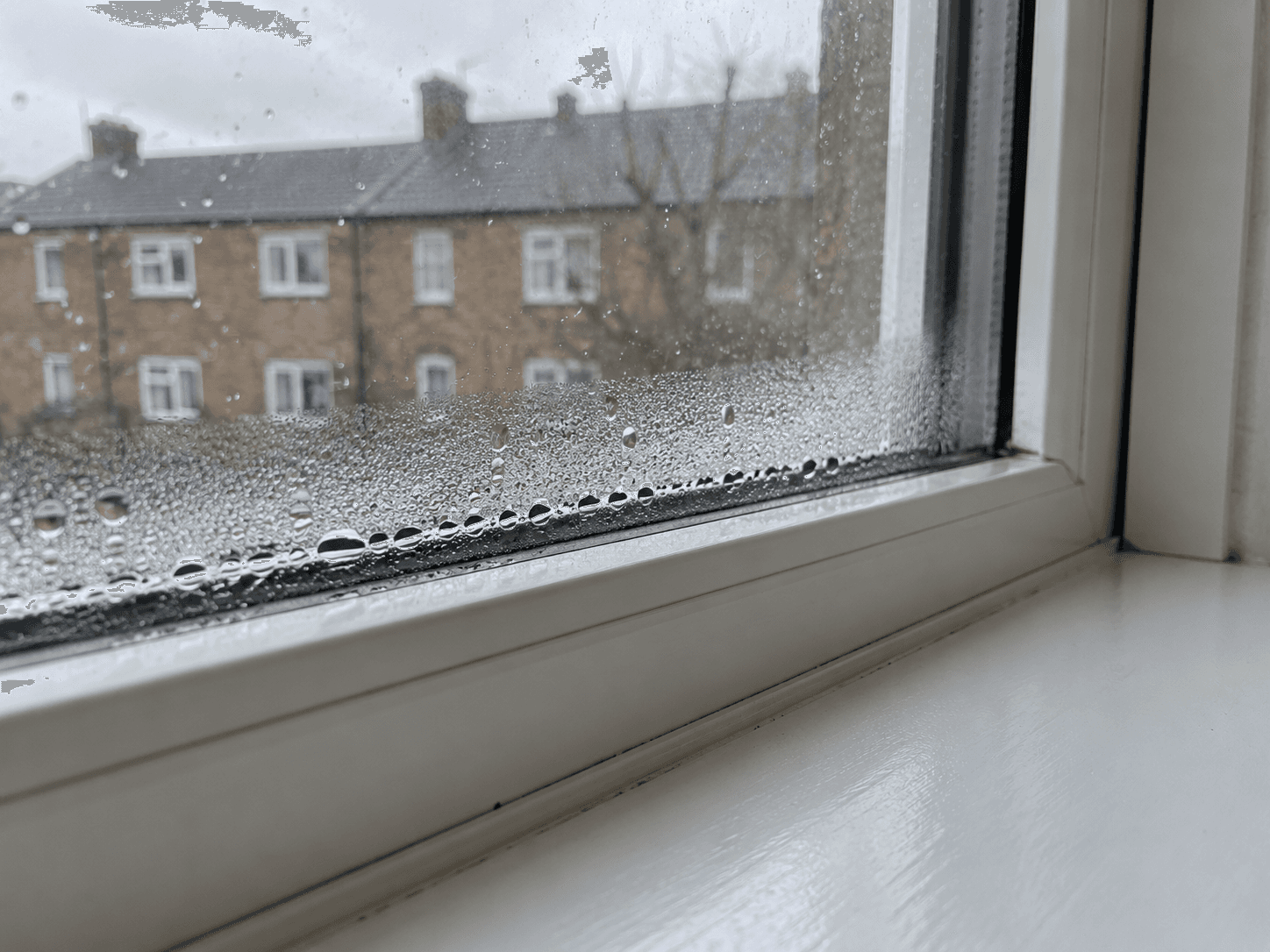
Health Canada recommends keeping household relative humidity in the 30 to 50 percent range. Its cool-mist guidance suggests the lower end in winter. Persistent condensation or damp surfaces mean the setup needs attention; do not keep increasing a humidifier to satisfy one plant.
After a change, keep checking the meter and subsequent growth. Old brown edges will remain brown. If the room is comfortable and dry but the plant still struggles, revisit its other conditions or choose a better-suited location.
Find a related guide below.
Back to the beginningSources & notes
Care guidance checked against these horticultural references on 20 October 2026.
- Iowa State Extension: Raising humidity for houseplantsHumidity preferences, humidifiers, local measures and the limits of misting.
- Health Canada: Cool-mist humidifiersHygrometer use, seasonal humidity guidance, reservoir cleaning and emptying.
- Health Canada: Improve indoor air quality in your homeSource control, ventilation, filtration and household humidity.
- University of Maryland Extension: Diagnose indoor plant problemsOverlapping causes of wilt, yellowing, poor growth and root damage.