An air plant still needs watering
Tillandsia ionantha
A small air plant needs more than a decorative holder. Make watering and complete drainage part of its display, with bright filtered light and airflow.
The short answer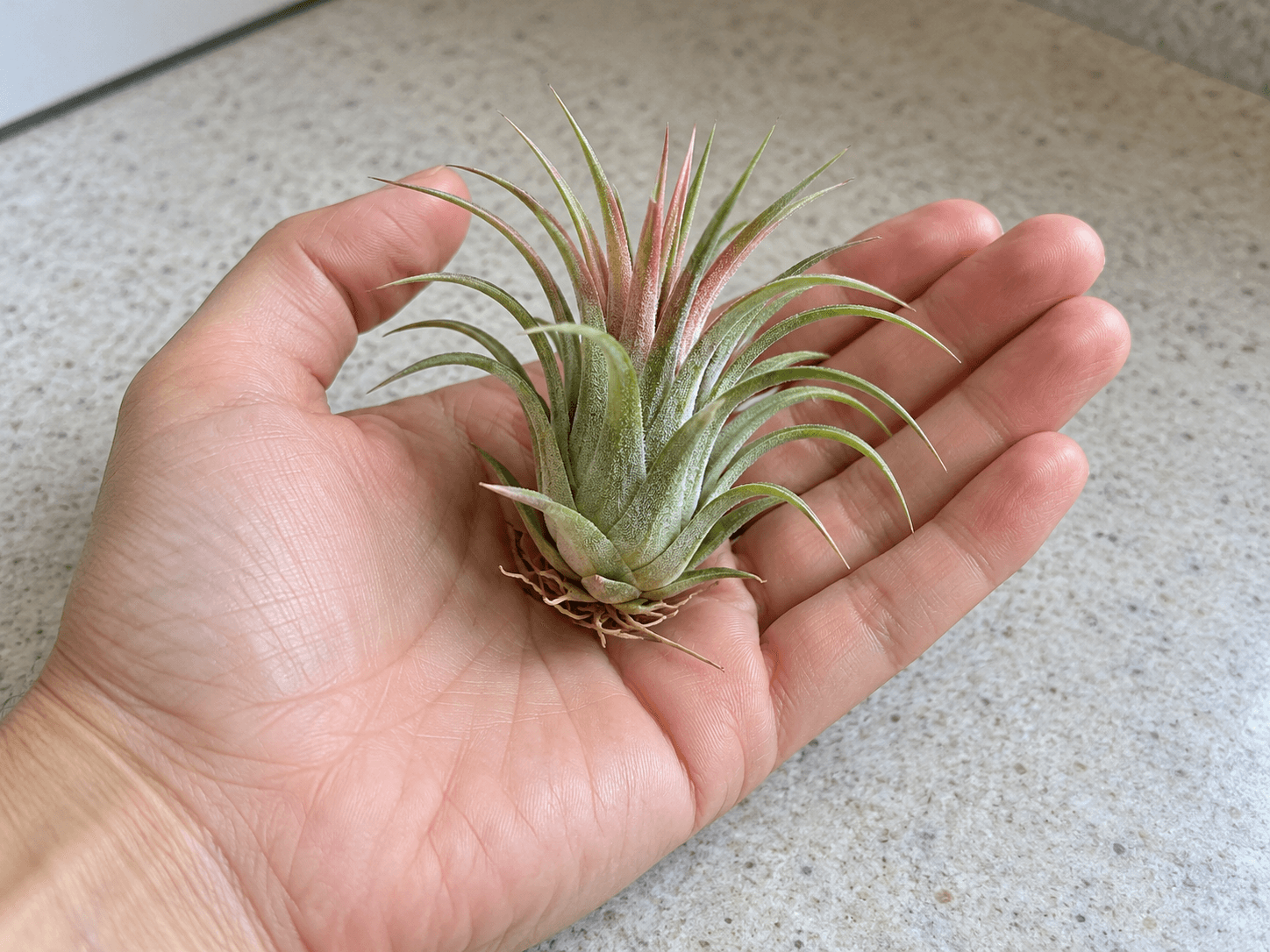
Choose a holder you can remove it from
The short wiry roots mainly anchor an air plant. Fine scales on the leaves help absorb water, giving this species its silvery appearance. A holder should support the plant without burying its base, crushing the leaves or making it impossible to take out for watering.
A narrow glass ornament can look spacious around a small rosette while offering little airflow. Before buying one, work out how you will wet, drain and dry the plant. Do not glue a new plant permanently into a display before learning how it behaves in your room.
Wet the leaves, then clear the crown
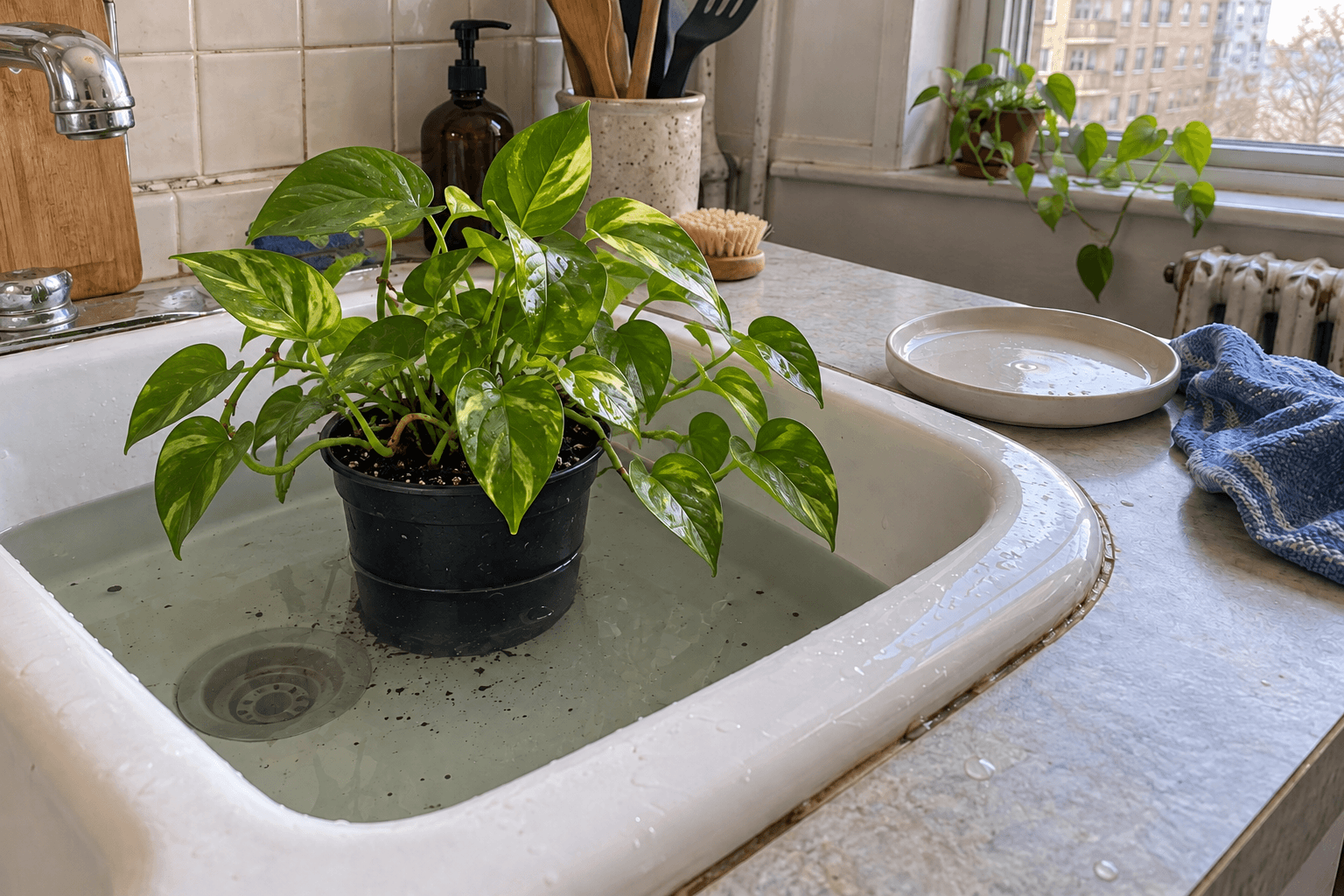
- Remove the plant from its holder and wet it thoroughly by immersing it in clean suitable water.
- Lift it out and gently shake or tip away water trapped between the leaves.
- Leave it angled downward in an airy position until it has dried before returning it to the display.
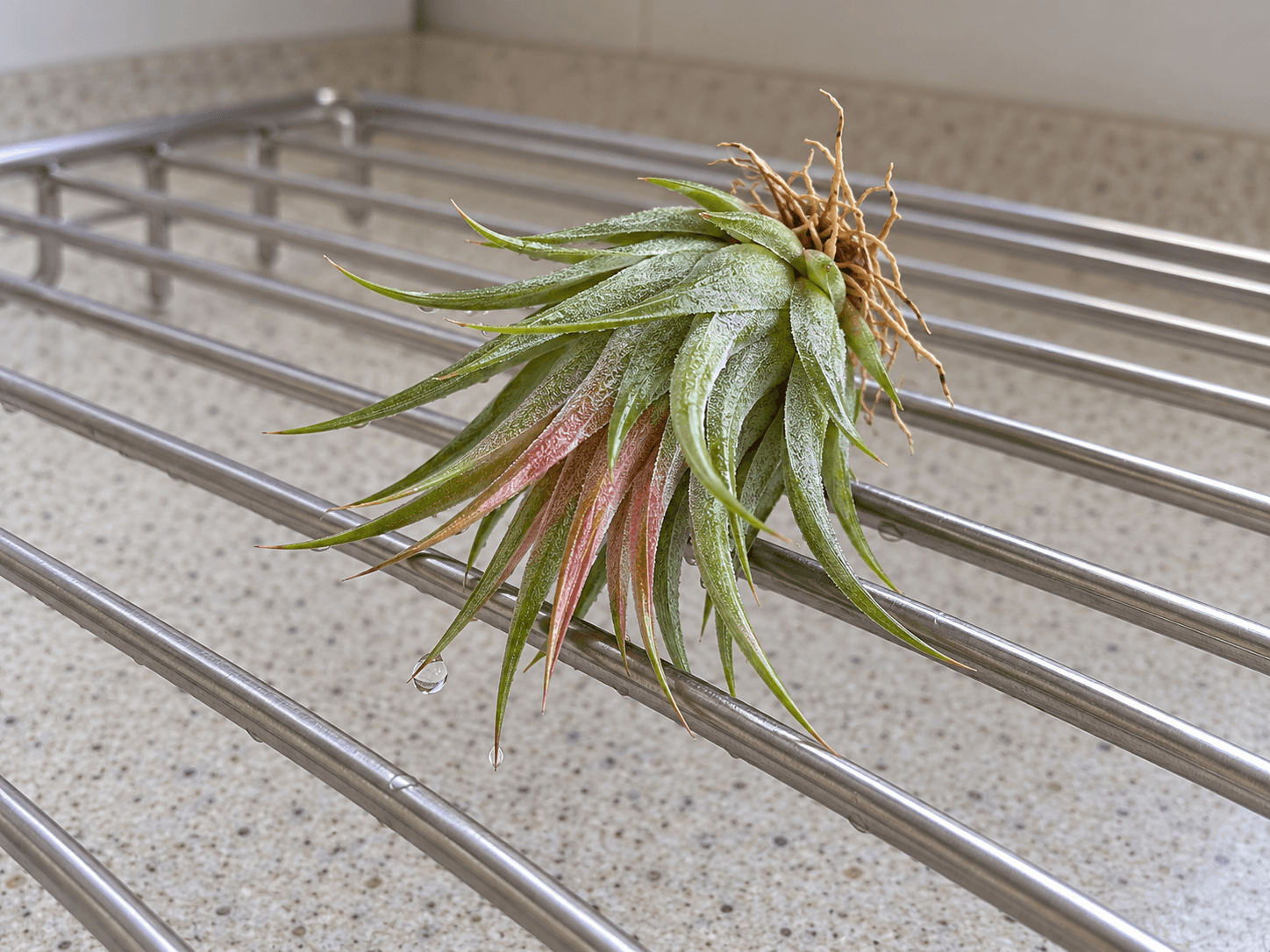
The RHS uses immersion several times a week as a growing-season reference, with adjustments for heat and humidity. Treat that as a starting point for observation, not a compulsory schedule in every apartment. Avoid continuous wetness. A quick occasional mist may not thoroughly hydrate the plant.
Light and drying belong together
Use bright diffuse daylight and protect a newly acquired plant from harsh direct sun. Keep it away from a cold window and direct heater airflow. A dark enclosed display can leave it both short of light and slow to dry after watering.
Water quality matters for these exposed leaf surfaces. The RHS recommends rainwater and cautions against hard tap water. Use a clean reliable supply and avoid sodium-softened water. Keep the same source and method while you learn the plant, rather than alternating several improvised mixtures.
Watch the base as well as the colour
Inner leaves often blush red before the small violet flowers appear, though cultivars differ. A flowering rosette will eventually decline while offsets develop around its base. Small offsets can stay attached and form a clump; separation is optional.
Find a related guide below.
Back to the beginningSources & notes
Care guidance checked against these horticultural references on 20 October 2026.
- RHS: Air plantsTrichomes, ventilation, immersion, drainage, drying and offsets.
- NC State Extension: Tillandsia ionanthaSmall rosettes, holdfast roots, leaf scales, blush and regular watering.
- RHS: Tillandsia ionanthaDiffuse light, no compost, drainage and offset development.