Care for the rosette after the colour fades
Guzmania lingulata and cultivated hybrids
The colourful bracts of a guzmania last longer than its small flowers. Care for its central cup and roots separately, then watch for young offsets.
The short answer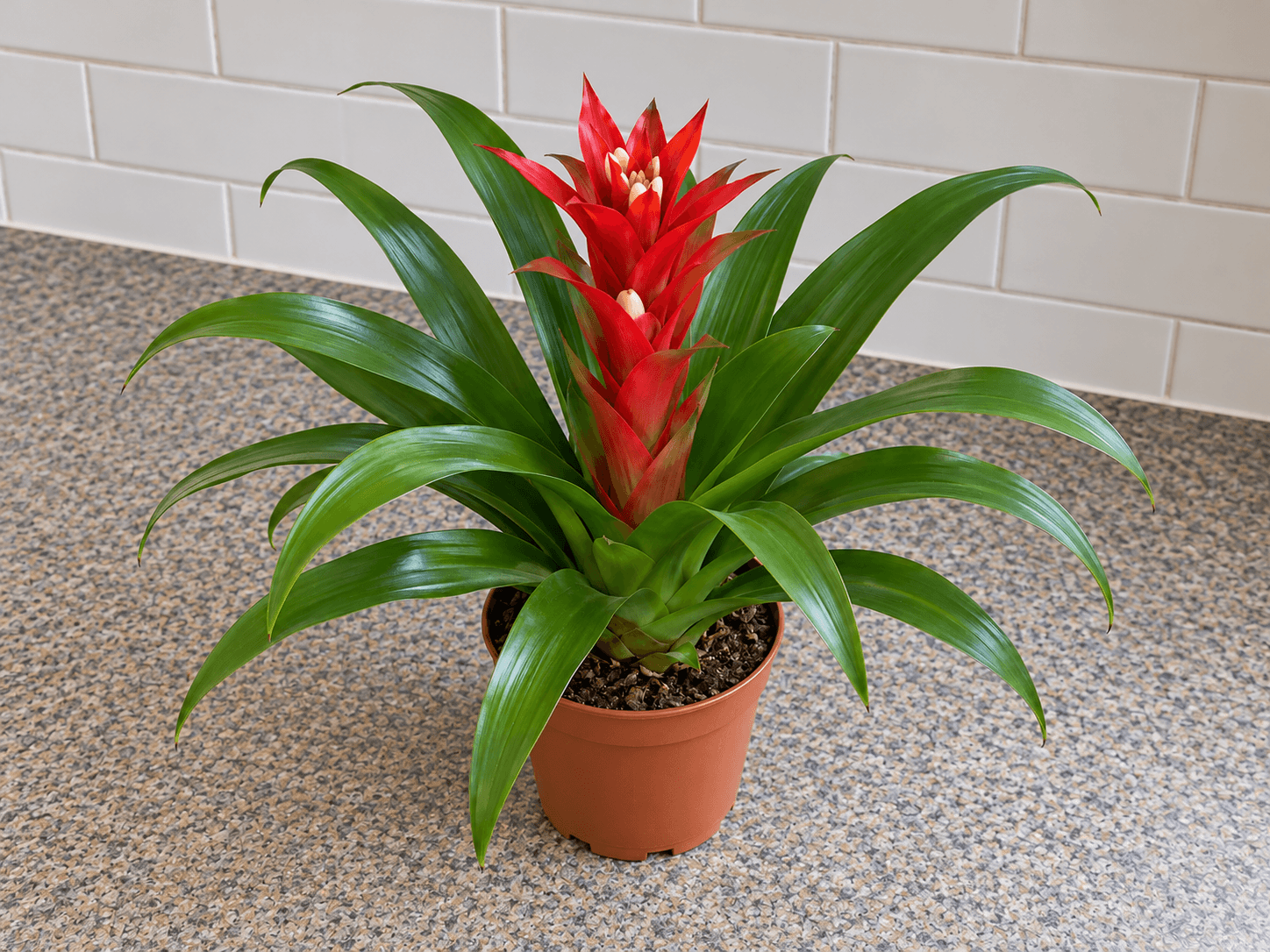
The red display is mostly bracts
Guzmania lingulata and related cultivated hybrids have a rosette of smooth strap-shaped leaves. The conspicuous red, orange or other coloured structures are bracts; the true flowers are much smaller. A long-lasting colourful display is therefore not a succession of large petals opening.
Keep the plant label because hybrids vary in size and colour. When choosing a place, allow for the full leaf spread and access to the centre. A tight decorative sleeve may hide both the lower leaves and the condition of the pot.
The leaf cup and the pot are different checks
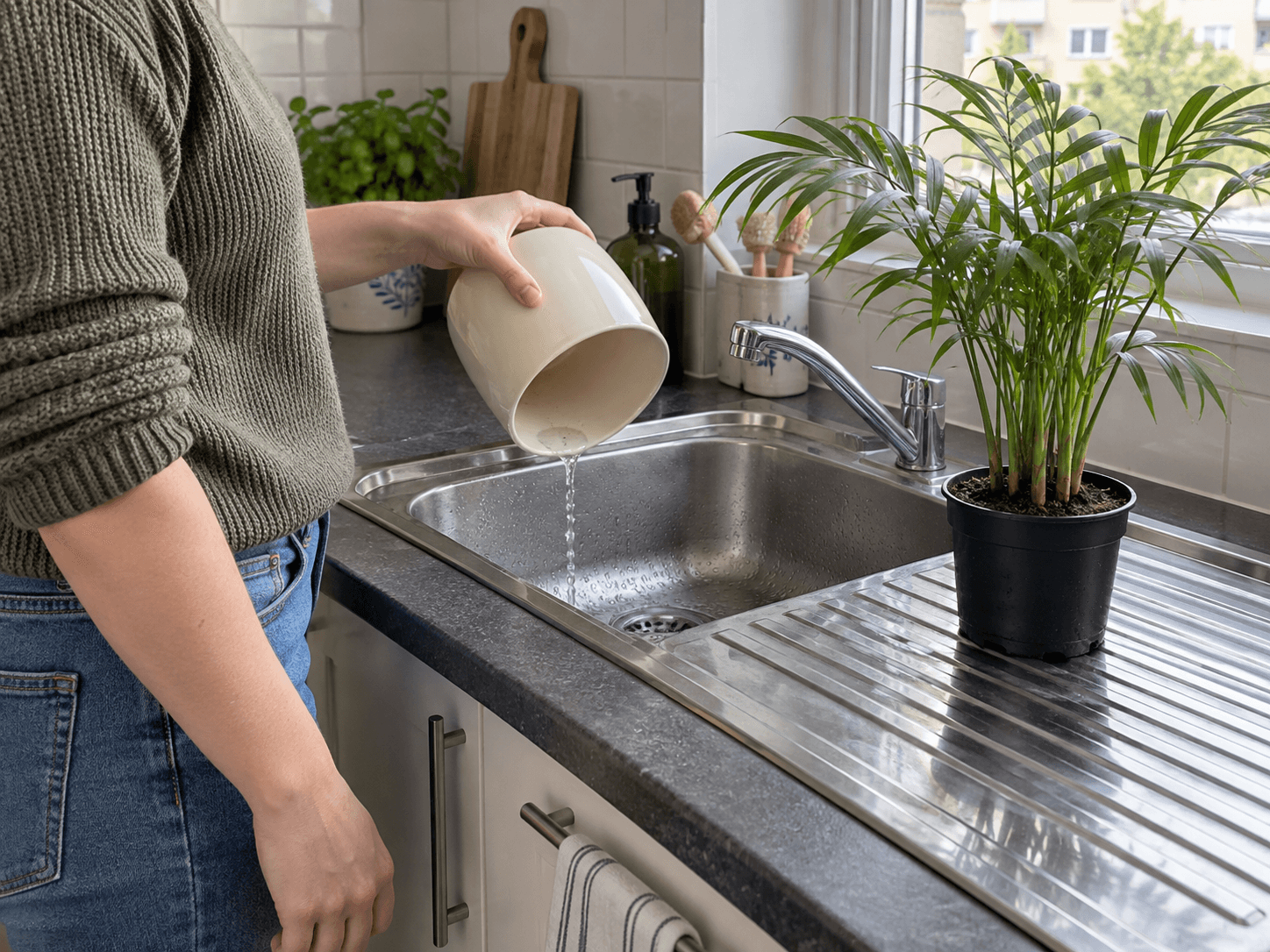
The overlapping leaf bases form a central well that holds water. Use clean water, preferably rainwater or distilled water as recommended by the RHS, and refresh it periodically rather than leaving old debris and water indefinitely. The RHS suggests emptying and refilling every month or two.
Check the potting mix separately. It should drain freely and retain air around the roots. Water the mix as needed during active growth without leaving it saturated; use less when growth slows. Water in the leaf cup is not a reason to leave the nursery pot standing in runoff.
Keep the room conditions steady
Choose bright filtered light, warmth and protection from cold drafts and direct heaters. Strong summer sun can scorch leaves. A bathroom can work only if it has useful light and a safe accessible position; shower steam does not solve a dark shelf.
Guzmanias have fairly modest root systems. Avoid moving a small plant into a large container of wet mix for visual balance. A suitable draining bromeliad or orchid-based mix is more useful than heavy garden soil packed around the base.
Look beside the parent
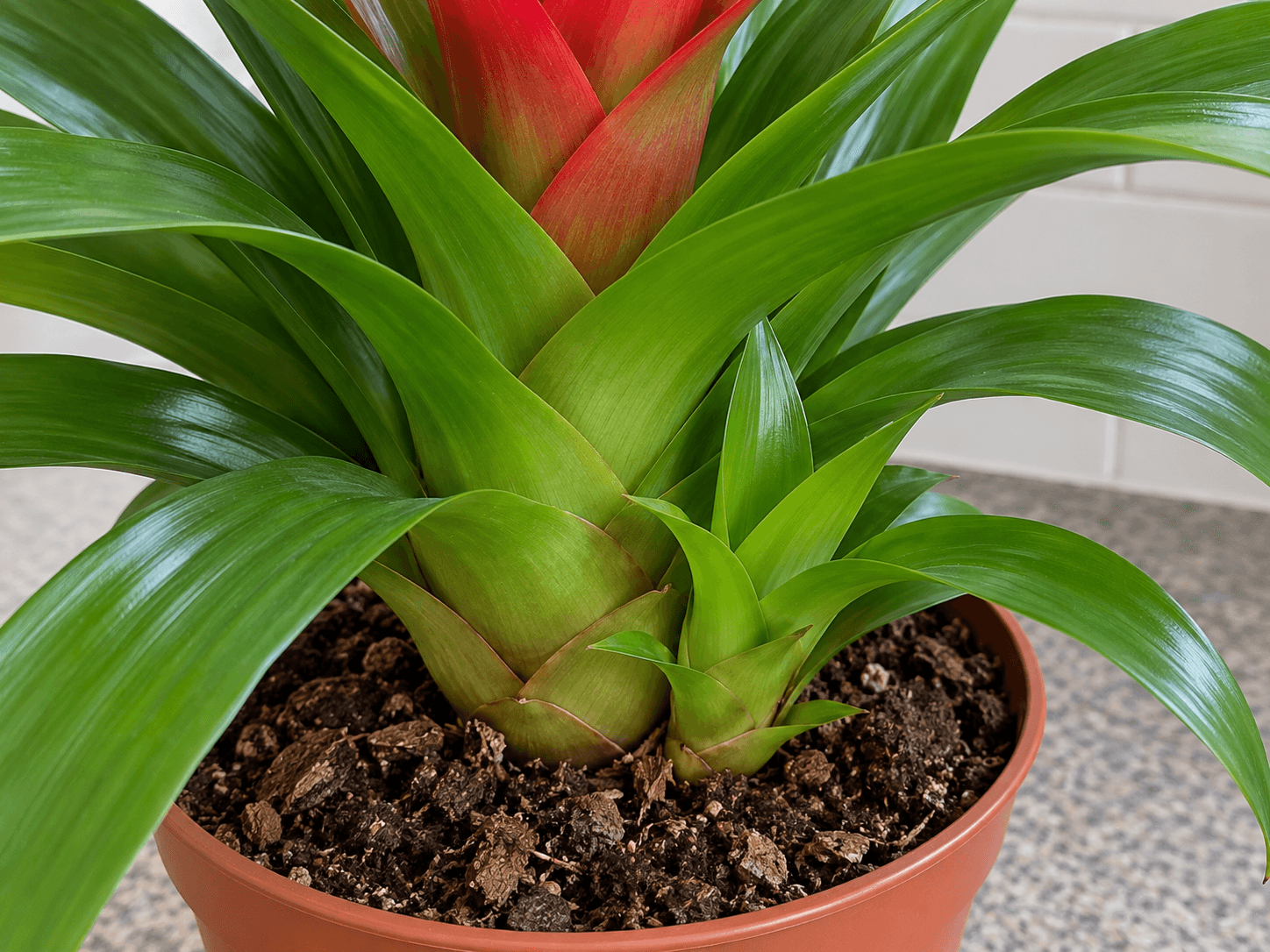
After the parent flowers, its gradual decline can be part of the normal life cycle. Continue caring for firm green growth and watch for offsets near the base. A fading bract alone does not justify discarding the whole pot or increasing feed.
Leave small offsets attached until they are substantial. Around one third of the parent size is a useful RHS reference for considering separation. Use a small draining pot if you divide one; leaving a healthy clump together is also a reasonable choice. Each new rosette needs time to mature before it can flower.
Find a related guide below.
Back to the beginningSources & notes
Care guidance checked against these horticultural references on 20 October 2026.
- RHS: How to grow bromeliadsCentral wells, refreshed water, airy mix, bracts and post-flowering offsets.
- NC State Extension: Guzmania lingulataBasal rosette, bracts versus flowers, cup water and parent decline.
- NC State Extension: Plants grown in containersContainer materials, potting media, nutrition and indoor care.