Start with the water you have
Most ordinary houseplants do not need an elaborate water station. Identify a real sensitivity before changing the routine.
The short answer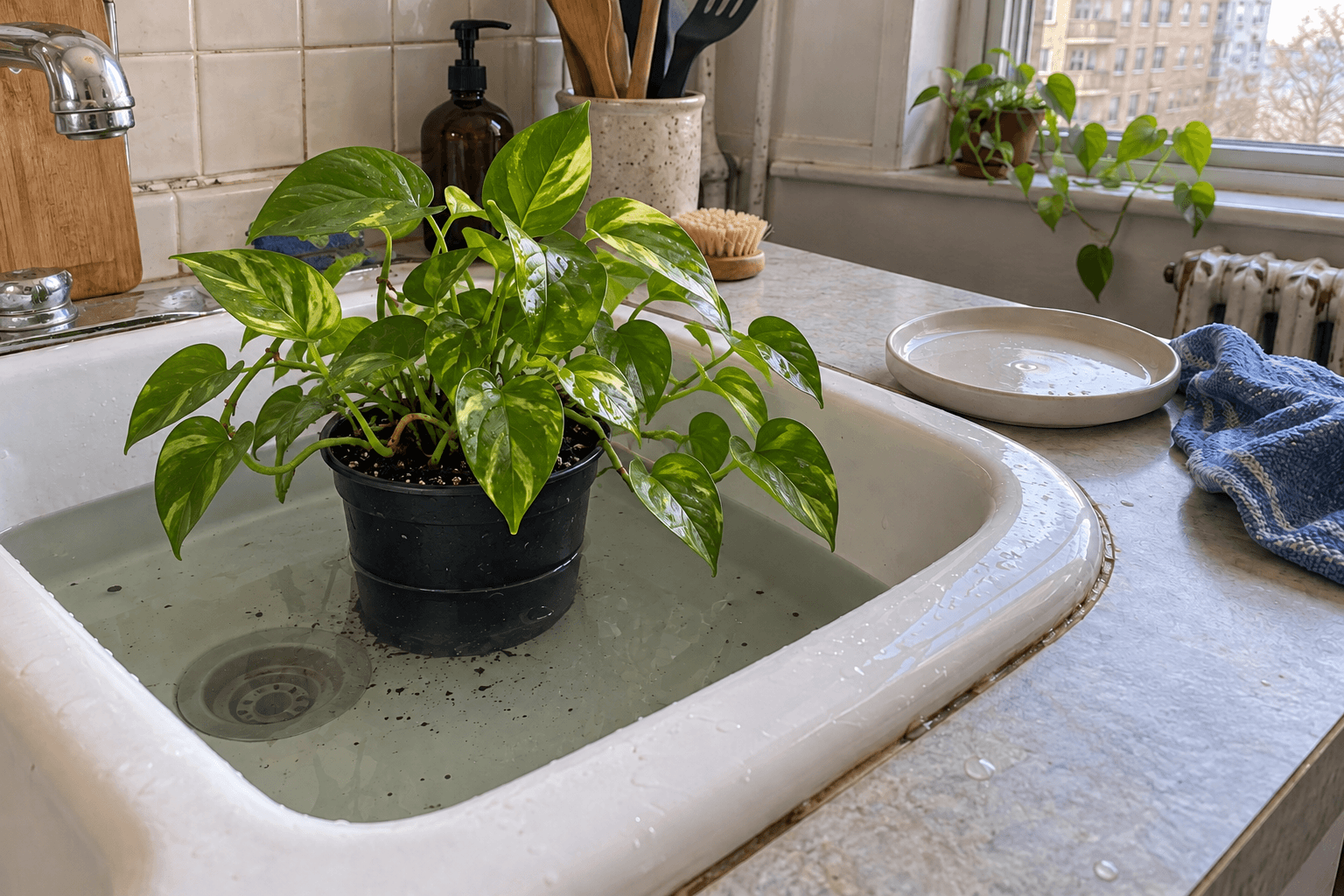
Know which tap you are using
A household softener changes the water before it reaches some taps. If you have one, identify an unsoftened source suitable for watering. Toronto publishes its treatment process and water reports; check the local authority for another municipality. A plant-care suggestion about an entirely different water supply may not describe what comes from your kitchen tap.
Keep ordinary care ordinary
For many common houseplants, room-temperature tap water and good drainage are a reasonable starting point. Avoid buying special water solely because an older leaf has a brown tip. Check watering, roots, fertilizer and exposure first. These causes overlap, and a new water source cannot repair damage caused by a permanently saturated root ball.
Change for a reason
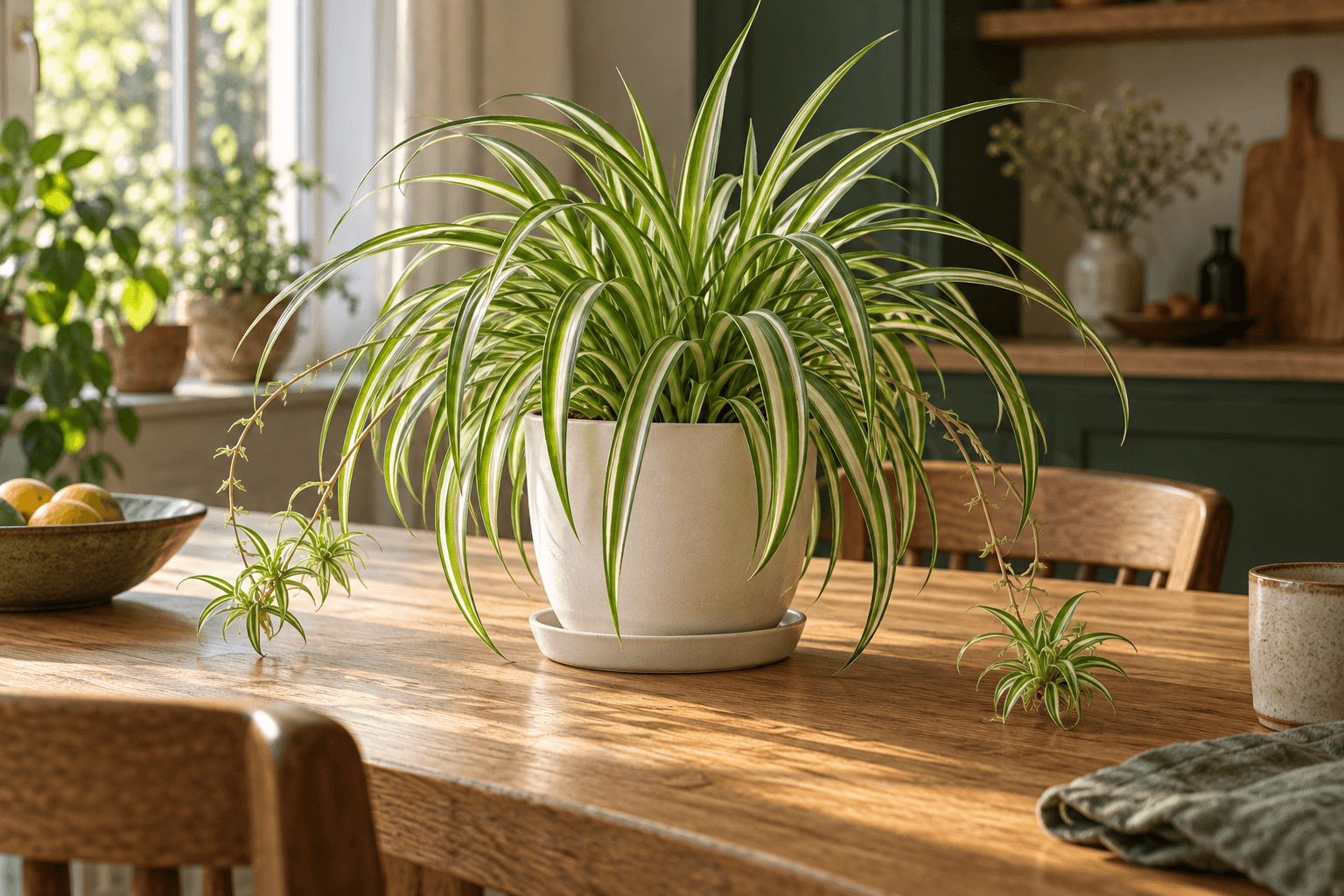
Spider plant (Chlorophytum comosum) is one specific case: NC State identifies chlorine and fluoride in tap water as possible causes of leaf-tip burn. Toronto lists fluoride among its water-treatment additives. This does not make every brown tip a water-quality problem; drying, wet roots and excess fertilizer still need checking.
If the plant is otherwise well cared for but keeps developing tip damage, trial distilled water while keeping the light and feeding routine steady. Photograph a newly developing leaf and compare later growth. Old brown tips will not turn green, so judging the change by the same damaged leaves tells you little.
Watch the pot as well
Water and fertilizer can leave deposits as moisture evaporates. Check for crust on the medium or pot and maintain suitable drainage. Standing water in a jug is not a salt-removal process. If you need detailed treatment information, use the supplier's current report rather than assuming that clear, odourless water contains nothing dissolved in it.
Find a related guide below.
Back to the beginningSources & notes
Care guidance checked against these horticultural references on 20 October 2026.
- Iowa State University Extension: How to care for houseplantsRewetting dry media, ordinary water sources and indoor care decisions.
- University of Maryland Extension: Watering indoor plantsMoisture and pot-weight checks; top and bottom watering.
- City of Toronto: Tap water in TorontoLocal drinking-water treatment and water-quality information.
- NC State Extension: Chlorophytum comosumPlantlets, light, moisture and leaf-tip sensitivity.