The window we kept
Mara rearranges one Toronto room, gives the good window to a monstera and discovers that the furniture can move too.
The table was already there
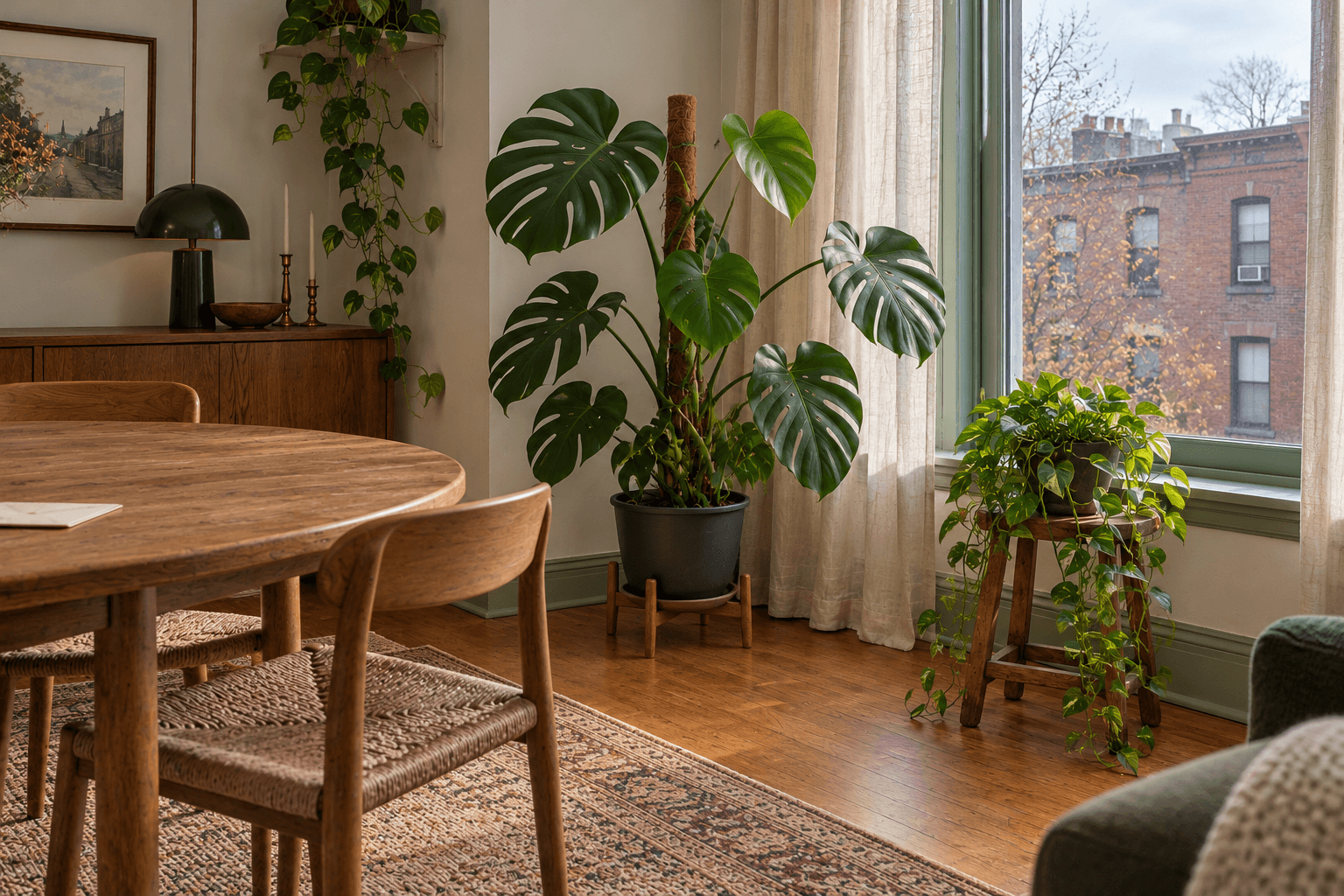
I had put the oak table against the east window because that was where it fitted in the photograph I sent my sister. Two chairs, a cream mug, a bowl that was too shallow for fruit. The rest of the room was mostly boxes. When Jules came upstairs, he stood in the doorway with a bag of oranges and asked where I planned to eat.
"At the table," I said. He looked at the bowl, then at the chair trapped between the table and the wall. "From which side?"
This was the second week in the apartment. The window frame was painted sage, badly in one corner, and the latch needed lifting before it would catch. Across the street, a brick wall changed colour through the morning. I liked that wall enough to forgive the latch. I had already decided a monstera would go beside the bookcase, at the far end of the room.
A mark on the floor
I borrowed a small plant stand from Jules and set an empty pot on it beside the bookcase. It looked excellent. By ten the room was full of reflected light, but the pot was in a dull patch. From where its leaves would sit, the window was mostly hidden behind the table and a chair back.
I moved the stand closer. Then closer again. At the third position I could no longer open the cupboard. I put a square of masking tape on the floor and wrote "plant?" in the burgundy notebook I had bought for rent receipts. By lunch there were four squares.
"You can move the table," Jules said. I had been treating this as a botanical problem.
The table came away from the window by the width of one chair. We turned it. The room became easier to walk through, which was irritating because I had spent a week admiring the first arrangement. The plant stand fitted beside the window without touching the glass.
One plant, carried carefully
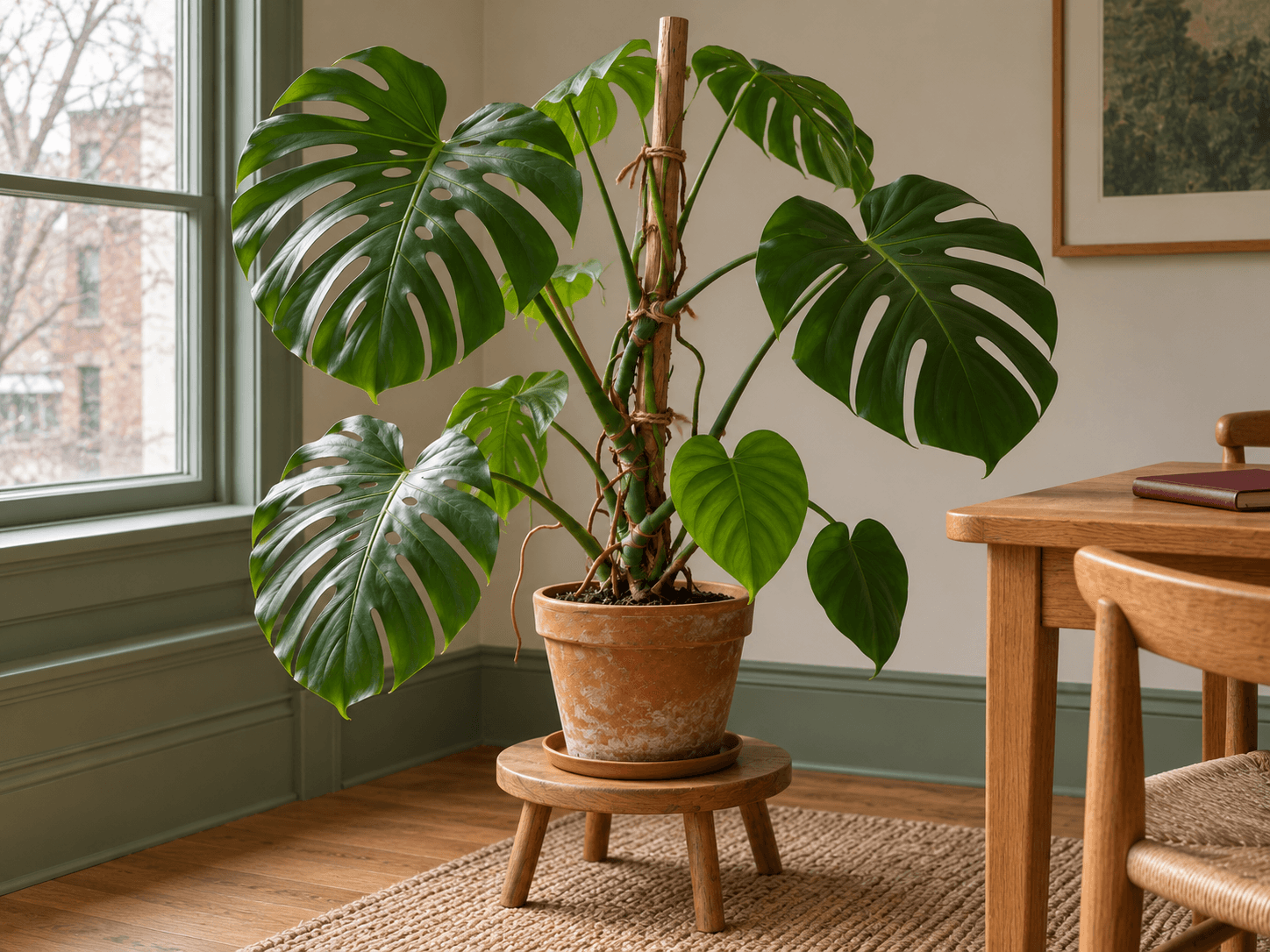
At the shop I chose a monstera small enough to carry without using its leaves as handles. I checked beneath them, took a photograph of the label and bought a saucer. The pot I wanted was plum and expensive. The nursery pot could stay for now.
At home, I put it on the stand and sat at the table from the newly available side. There was one whole young leaf among the split ones. I had nearly rejected it in the shop because I thought every leaf should have holes. Now I left it alone and wrote down what I could actually see.
The first entry was not impressive: "Near east window. No water today; mix still damp." I wanted a more satisfying job. There was nothing urgent to do, so I unpacked the plates.
What stayed
A few mornings later, the sun reached the table while I was opening the post. The plant had not transformed. Neither had the room. But I could lift the pot without moving a chair, see the backs of the leaves and reach the window latch. These were small improvements I had not thought to photograph.
Jules kept asking for his stand back. I kept offering oranges. We eventually agreed that I would return it when I found one with a base that did not wobble. The agreement was verbal and, according to Jules, already overdue.
More from the apartment, below.
Back to the beginningSources & notes
Care guidance checked against these horticultural references on 20 October 2026.
- University of Minnesota Extension: Lighting for indoor plantsWindow exposures, low-light limits and supplemental lighting.
- NC State Extension: Monstera deliciosaIdentity, climbing habit, light, watering and sap irritation.
- University of Minnesota Extension: Managing insects on indoor plantsInspection, isolation, pest signs and integrated management.