The cutting on the sill
A jar, a clean pair of snips and a small correction turn Mara’s first pothos cutting into a more useful experiment.
The vine above the shelf
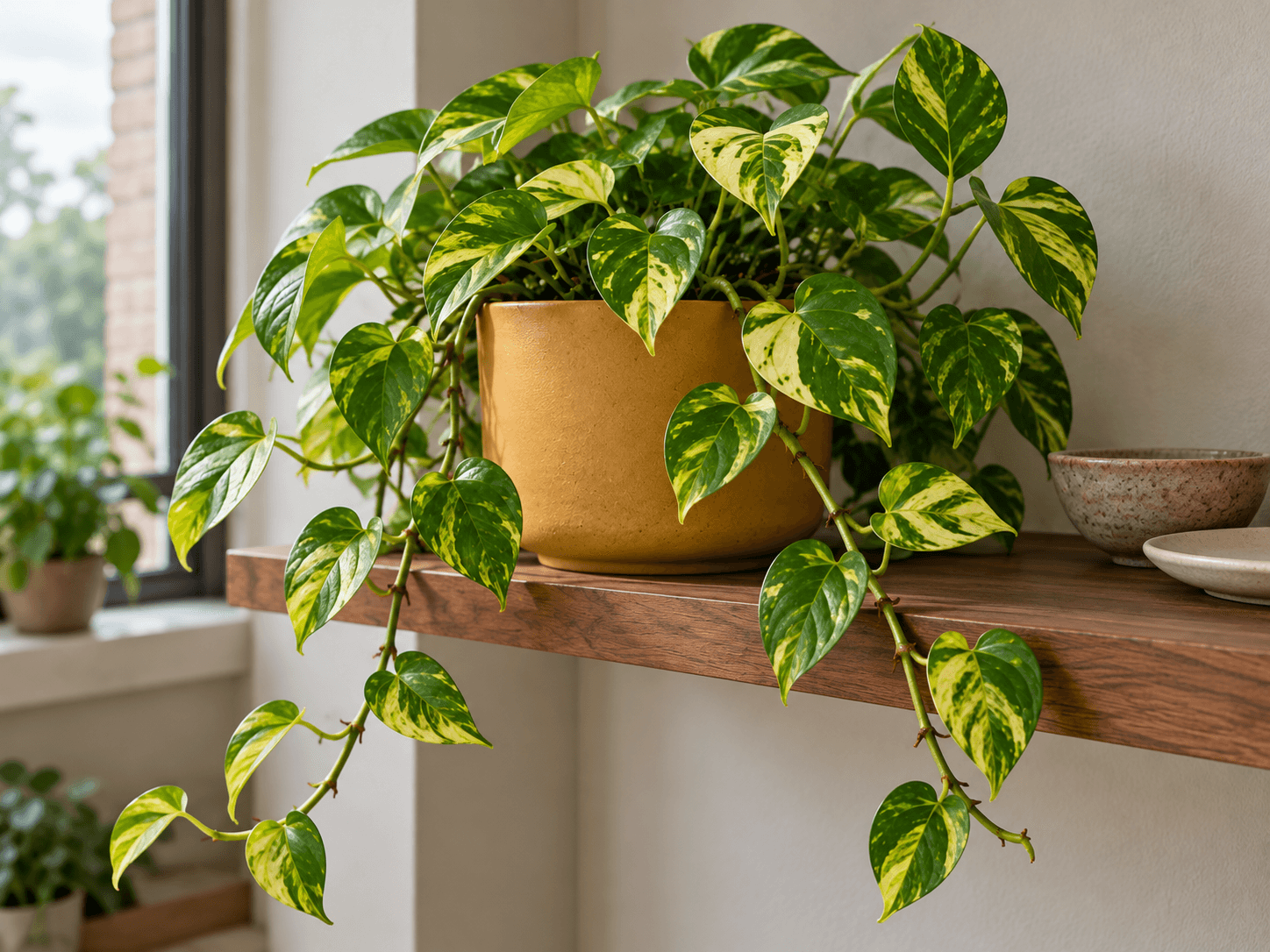
Jules brought the pothos upstairs in a shopping bag with the handles tied around the pot. One vine had escaped and was dragging along the stair rail. "It is getting in the way of the kettle," he said, as if the plant had chosen the route deliberately.
I had finally returned his stand. In exchange, he had decided I was qualified to manage a cutting. We put the pothos on the oak table, beside the burgundy notebook and the snips I used for flowers. I washed the snips while Jules untangled the vine. The longest section had three leaves at the end and a stretch of bare stem behind them.
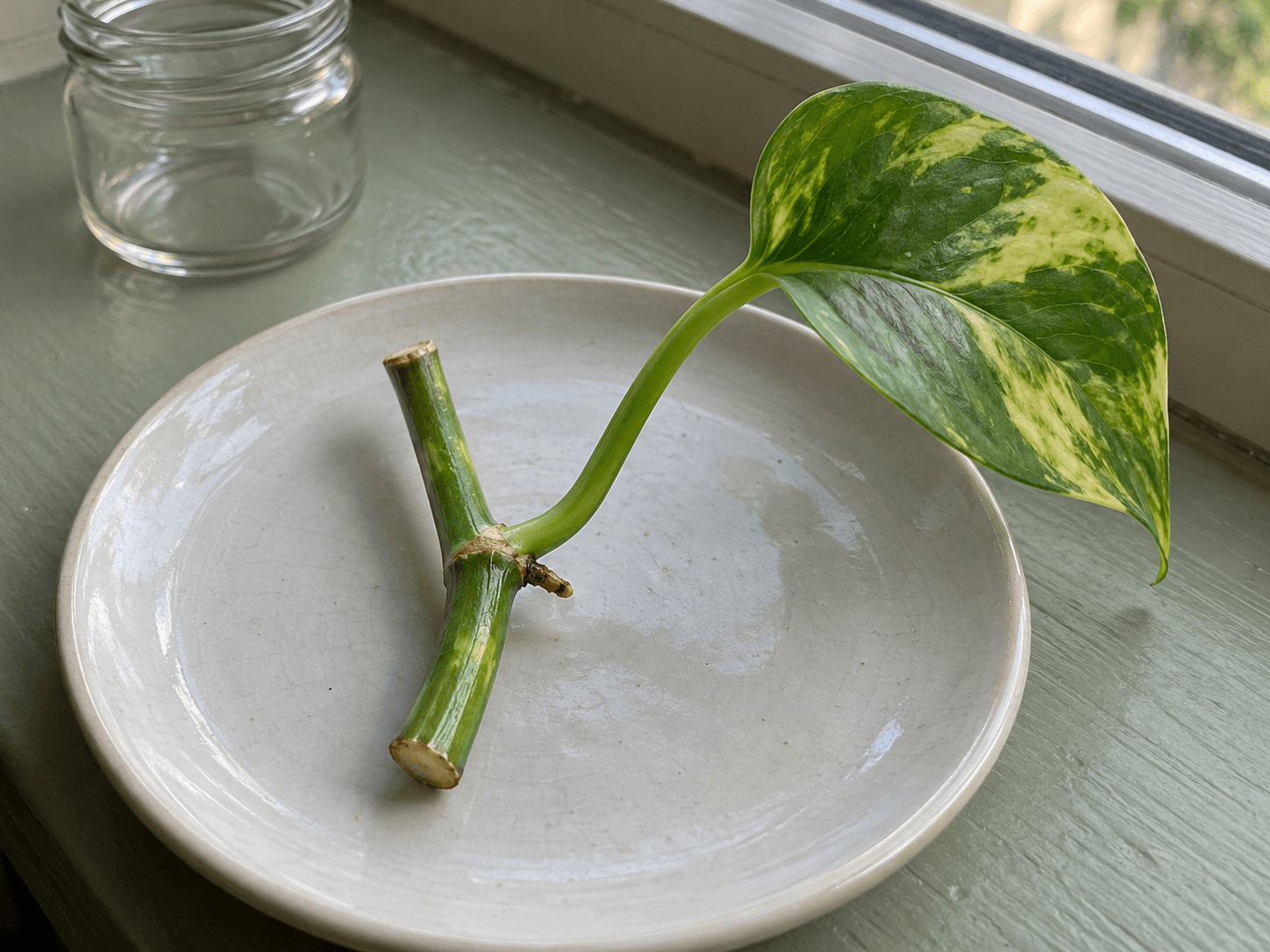
I pointed to a leaf stalk. "Here?" Jules shook his head. He was not an expert either, but he had brought the label and a care page on his phone. We followed the vine back to the small joint where a leaf met the main stem. There was a brown nub beside it.
The useful bit was small
The node was less dramatic than I expected. No obvious promise, no special colour, just a junction I could easily have cut away. I made one short cutting with a piece of stem and set it beside the jar. Then I checked it again before putting anything in water.
I had chosen the leaf for its shape. The part that mattered was the bit of stem I nearly discarded.
We removed the lower leaf that would have sat under the surface. The remaining leaf leaned over the rim, green with a yellow patch near the centre. The jar was a small one that had held mustard. I had imagined a tall glass vase, but the short jar let me see the stem clearly.
Jules asked when he would get a new plant. I said I would let the plant answer. He said that sounded like a convenient extension of the plant-stand agreement.
An experiment small enough to finish
I wrote the date on a scrap of paper under the jar. In the notebook I recorded where the node sat and which window I had used. I kept the leaves above the water, checked the level and refreshed it when needed. Once, while washing the jar, I nearly tipped the cutting into the sink with the old water.
The hardest part was resisting daily rearrangement. The sill was bright, but I checked that it was not cold against the glass. I wanted to move the jar into a shaft of stronger sun because that looked more productive. Instead I left it in gentle light and went to work.
I photographed the node from the same side each time. These were private notes, mostly useful for proving that I had already looked. The story was less about a miraculous result than about learning what a cutting actually consisted of.
A pot could wait
When I began choosing a pot, I reached first for one large enough to hold a future cascade. Then I put it back. The cutting needed a manageable small home once it had a useful root system, not a five-year plan.
Jules came up for the parent plant and stayed for tea. He had cleared the kettle shelf. I showed him the dated jar and the small pot waiting beside it. "So now we are both waiting," he said. This was accurate. The kettle, at least, was immediately useful.
More from the apartment, below.
Back to the beginningSources & notes
Care guidance checked against these horticultural references on 20 October 2026.
- NC State Extension: Epipremnum aureumIdentity, light, pruning, rooting and ingestion risk.
- Iowa State University Extension: Propagating houseplantsSpecies-appropriate stem cuttings, divisions and plantlets.
- University of Minnesota Extension: Propagating Monstera deliciosaNodes, cuttings and rooting conditions.