Room for a monstera
Monstera deliciosa
A practical monstera guide for a real living room, from judging dry soil to supporting the stem and understanding unsplit leaves.
The short answer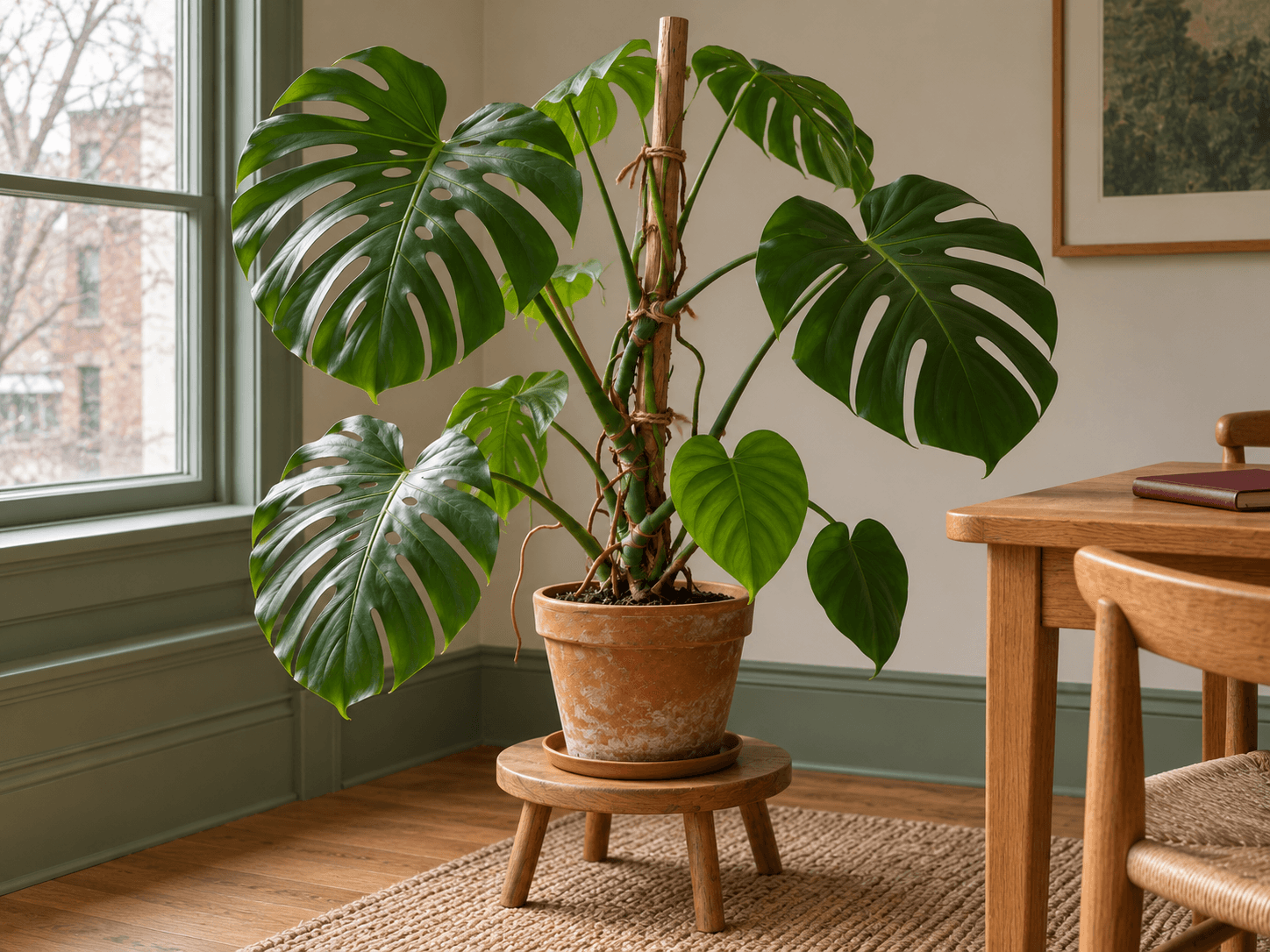
Choose the space before the pot
A small monstera is easy to underestimate. Its leaves may fit on a side table now, but the plant is a climbing vine, not a compact rosette. Choose a position with room for the next leaf, a stable floor or stand, and access for lifting the inner pot. A plant wedged behind the sofa is difficult to inspect and even harder to water well.
Look for a view of bright sky through the window, softened where strong afternoon sun hits the leaves. A sheer curtain can help. The far side of a bright-looking room may still be dim at plant height. Before buying a bigger specimen, check the proposed position at breakfast, midday and late afternoon.
Make the pot part of the decision
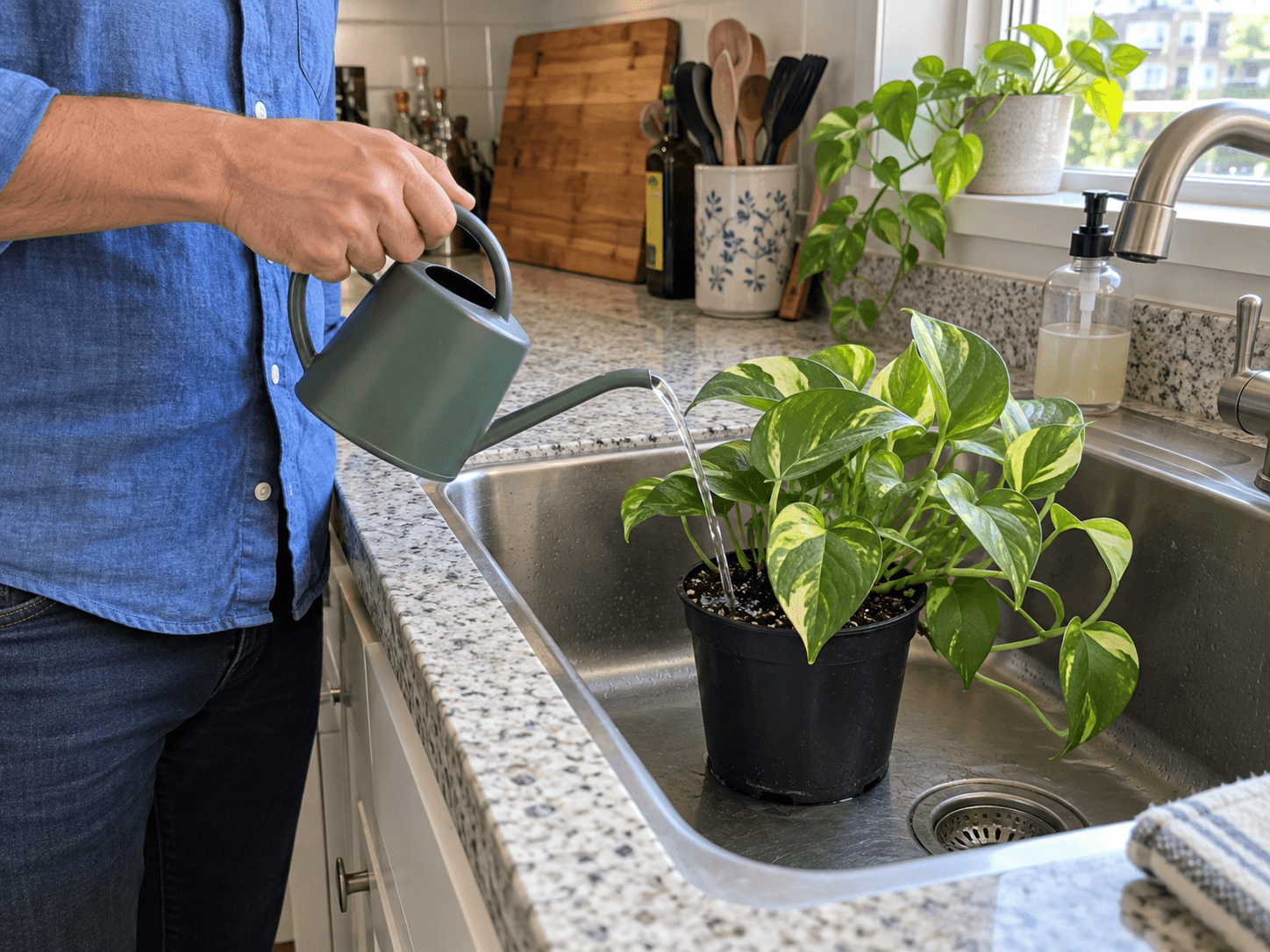
NC State recommends letting the upper quarter to third of the potting medium dry between thorough waterings. That is a condition to check, not a number of days. Compare the pot with its weight after watering, and feel below the surface. A decorative outer pot can hide several centimetres of standing water.
- Lift the growing pot out of its cover, if practical, and check the mix.
- When ready, wet the root ball evenly until excess water exits the drainage holes.
- Let it drain before returning it. Check the cover again for trapped runoff.
If the mix stays wet much longer than it used to, ask what changed: shorter days, a larger pot, a cooler room or blocked drainage. Adding fertilizer will not correct those conditions.
Support the stem, not the leaf stalks
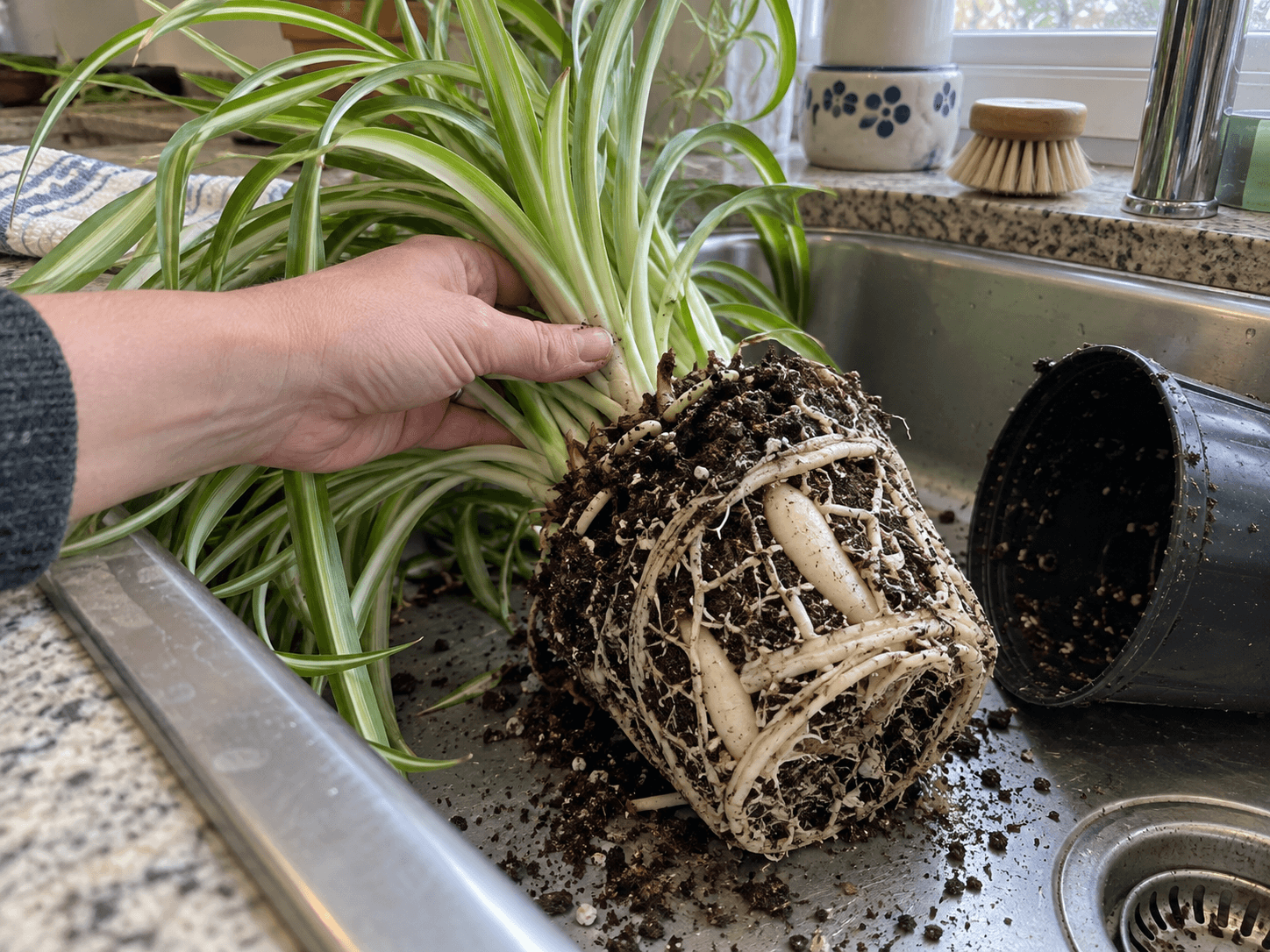
Find the thick vine and the nodes where leaves and aerial roots emerge. Attach that stem loosely to a sturdy stake or suitable climbing support. Leave the leaf stalks free to turn toward light. A support is easiest to place during repotting, when you can see the root ball and avoid driving a stake blindly through it.
Read the newest growth
| What you see | What to check |
|---|---|
| Small, whole leaves | Young plants naturally have unsplit leaves. Compare successive mature growth and the light available. |
| A new leaf still folded | Give it time to expand. Pulling it open can tear it. |
| Several leaves yellowing | Check moisture, drainage, light changes and the undersides of leaves before choosing a remedy. |
One older leaf is less informative than a pattern across the plant. Record the date and position of a change, then watch the next leaf. A photograph in the same light is a better comparison than memory.
Pruning, cuttings and daily life
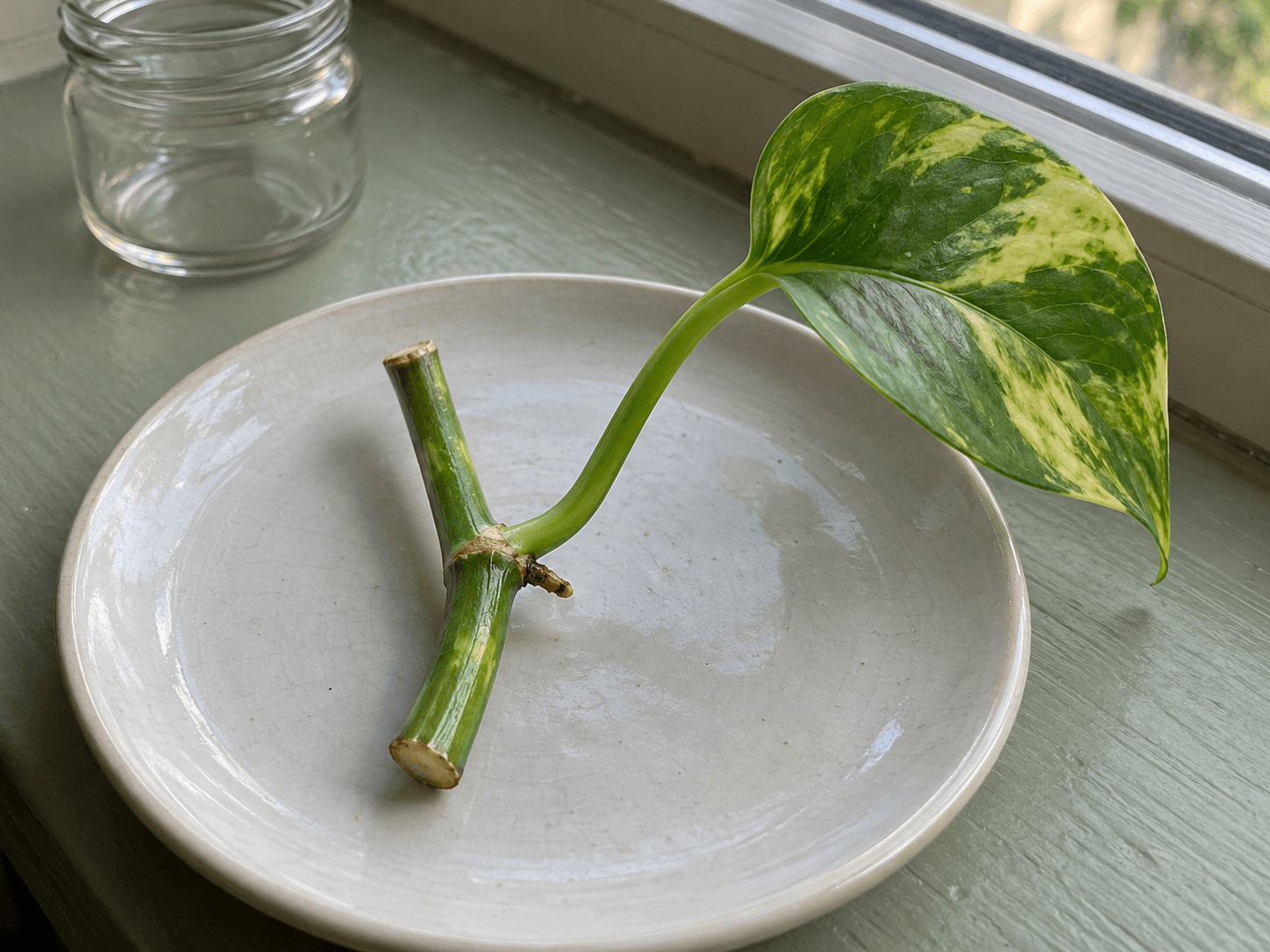
A viable stem cutting needs a node; a detached leaf stalk alone is not a new climbing plant. Plan pruning around the shape you want to keep, with clean tools and a stable surface. Wear gloves when handling sap, and keep cut material away from children and pets: monstera contains irritating calcium oxalate crystals.
For an ordinary week, the useful routine is short: check moisture, look beneath a leaf, empty the cover pot, and keep the support secure. Repot when the root ball and watering behaviour justify it. A handsome new planter can wait.
Find a related guide below.
Back to the beginningSources & notes
Care guidance checked against these horticultural references on 20 October 2026.
- NC State Extension: Monstera deliciosaIdentity, climbing habit, light, watering and sap irritation.
- University of Maryland Extension: Watering indoor plantsMoisture and pot-weight checks; top and bottom watering.
- University of Minnesota Extension: Propagating Monstera deliciosaNodes, cuttings and rooting conditions.
- University of Maryland Extension: Diagnose indoor plant problemsOverlapping causes of wilt, yellowing, poor growth and root damage.