Give the top of the pot some light
Curio rowleyanus
A string of pearls needs light across the top as well as along its trailing stems. Check the mix and crown before responding to shrivelled leaves.
The short answer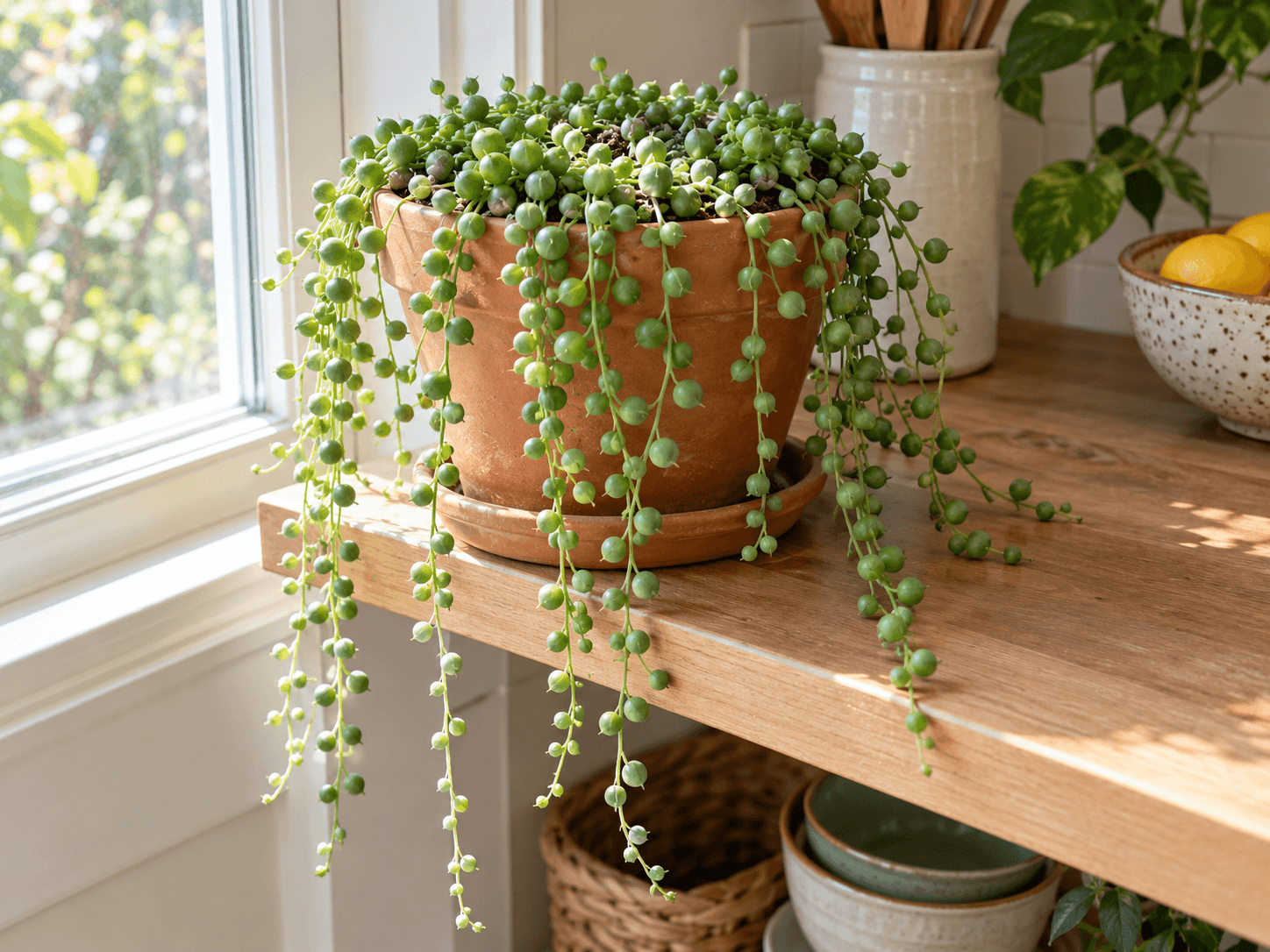
Look down into the pot
A high shelf may display long stems beautifully while keeping their bases in shadow. Check the view from above: the top of the pot needs daylight too. Choose a reachable position so you can inspect the crown and remove runoff without pulling on the vines.
Bright light near an east- or west-facing window is a useful starting point. Adjust for the actual exposure and introduce stronger light gradually. If the top becomes thin, photograph it and compare new growth after improving the position. Longer stems alone do not show that the whole plant is doing well.
The pearls are leaves
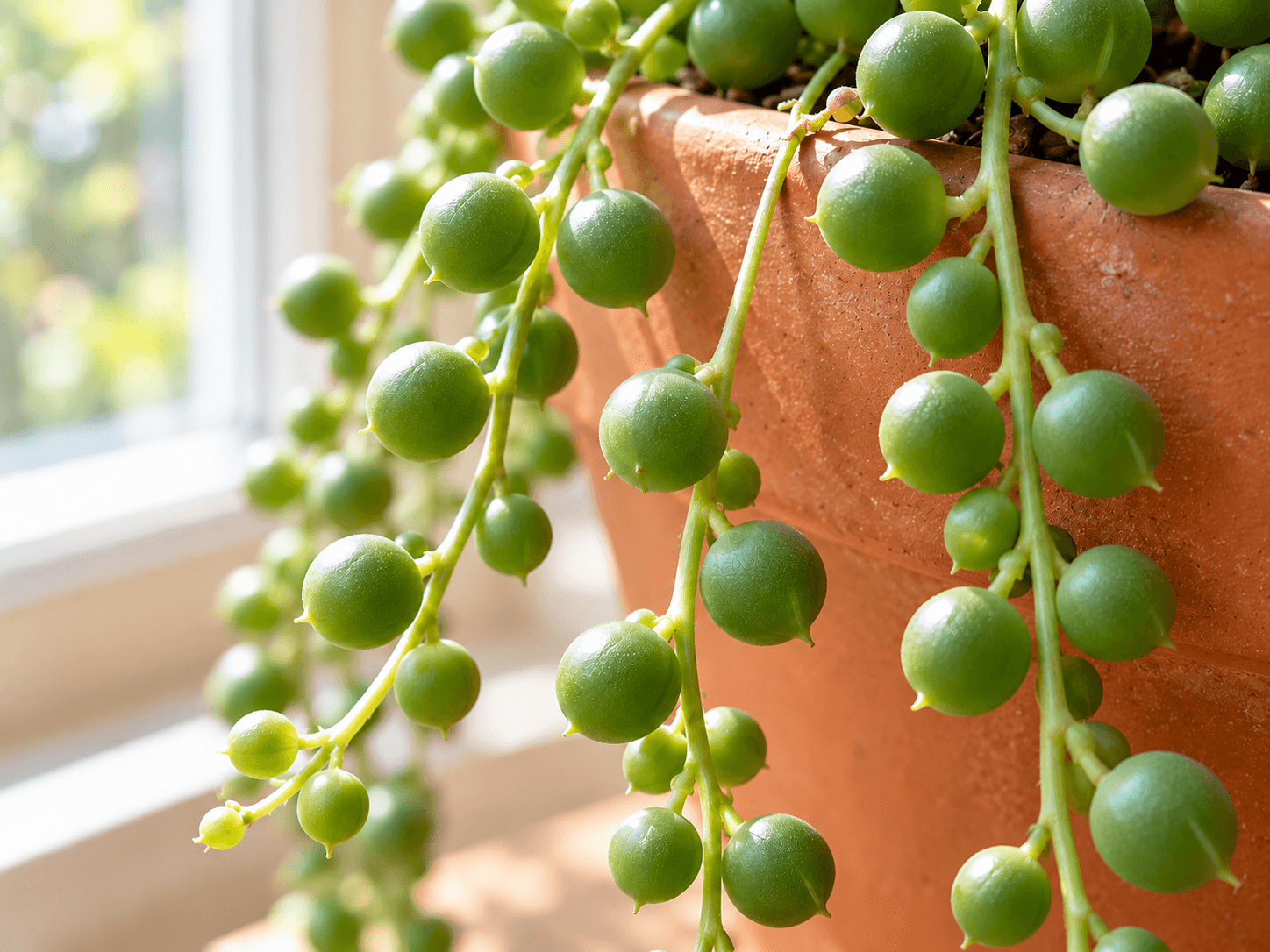
Curio rowleyanus has spherical leaves with a small pointed tip and a narrow translucent strip. It may still be labelled Senecio rowleyanus. String of bananas and string of watermelons are related but different plants; their leaf shapes should not be used as a standard for this one.
Follow the stem behind the leaves when checking a bare patch. A healthy firm section may still be useful for propagation. A dark, collapsing stem needs a closer investigation and should not be tucked into the pot as if it were a healthy cutting.
Check the crown and the roots together
Use a porous succulent mix and a pot with drainage holes. Allow it to approach dry, then water the root zone and let excess escape. Avoid leaving it saturated or allowing repeated severe drought. In a cooler, darker season, the interval will usually lengthen.
A shrivelled leaf is not enough information for a watering decision. Check moisture below the surface, pot weight and the condition of nearby stems. If the pot is already wet, another drink is unlikely to answer the problem. Inspect for root deterioration and blocked drainage.
Use stem pieces to renew a thin plant
A healthy stem can root at its nodes while it is still attached. To fill a thin crown, loop a flexible leafy length back across the mix and hold it gently against the surface with a small bent-wire pin. Do not bury the pearls or force a stiff stem into a tight bend. Keep the top of the pot in useful light while the nodes root.
For a separate plant, lay an attached stem across a small neighbouring pot of lightly moist, freely draining propagation mix and pin it in contact. Wait for roots to hold the stem before cutting its connection to the parent. A detached cutting about 10 cm long is another option: remove leaves from the part going into the mix and keep several nodes. Loose individual pearls are less useful starting material.
Find a related guide below.
Back to the beginningSources & notes
Care guidance checked against these horticultural references on 20 October 2026.
- RHS: How to grow string of beadsCurio identity, light, modest watering, pot sizing and harmful sap.
- NC State Extension: Curio rowleyanusSpherical leaves, translucent window, node rooting and moisture-related wilting.
- NC State Extension: Plants grown in containersContainer materials, potting media, nutrition and indoor care.
- University of Maryland Extension: Watering indoor plantsMoisture and pot-weight checks; top and bottom watering.