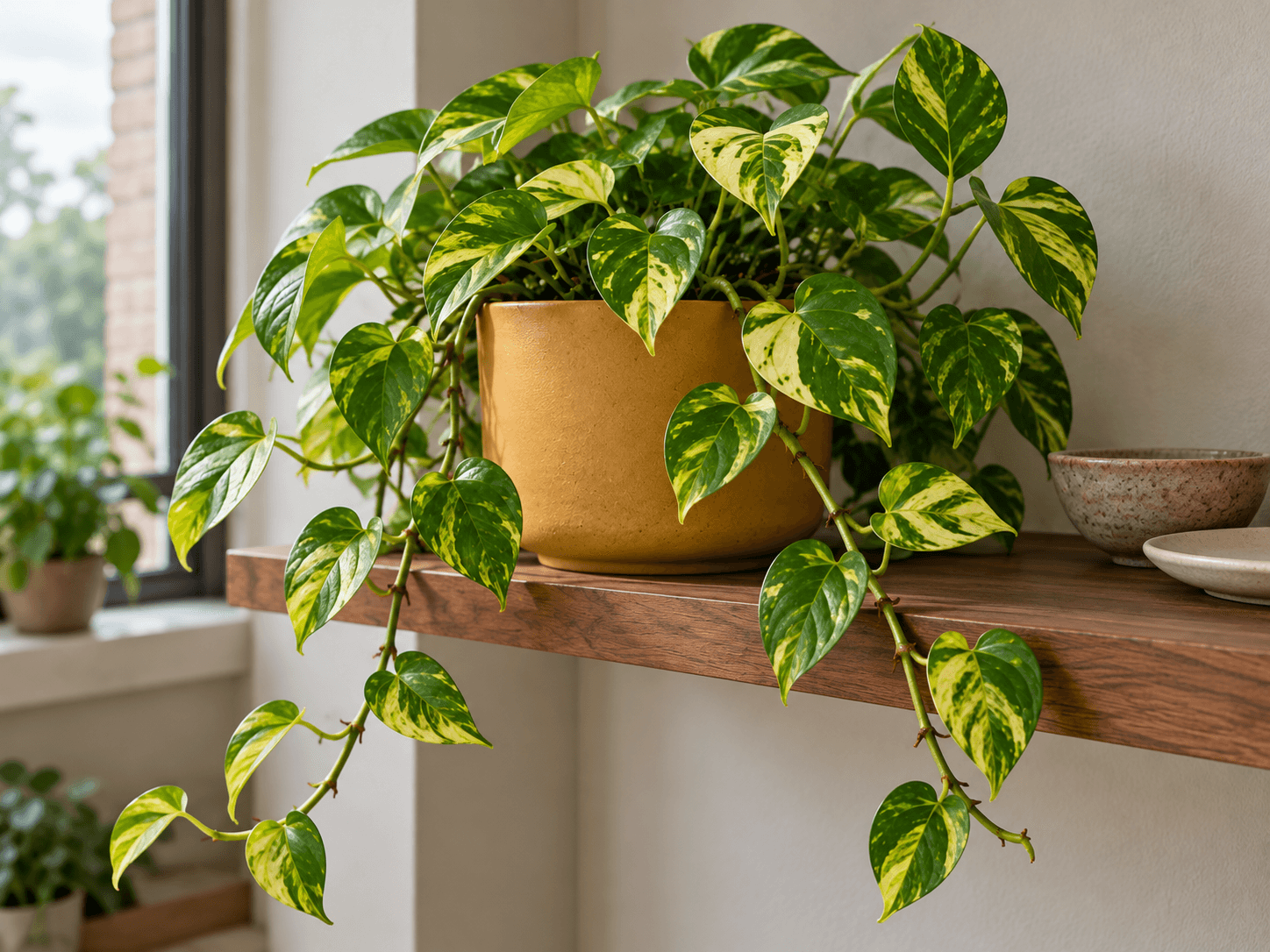
The gaps are getting longer
Long bare stretches can come from growth habit or inadequate light. Decide which before reaching for the scissors.
The short answer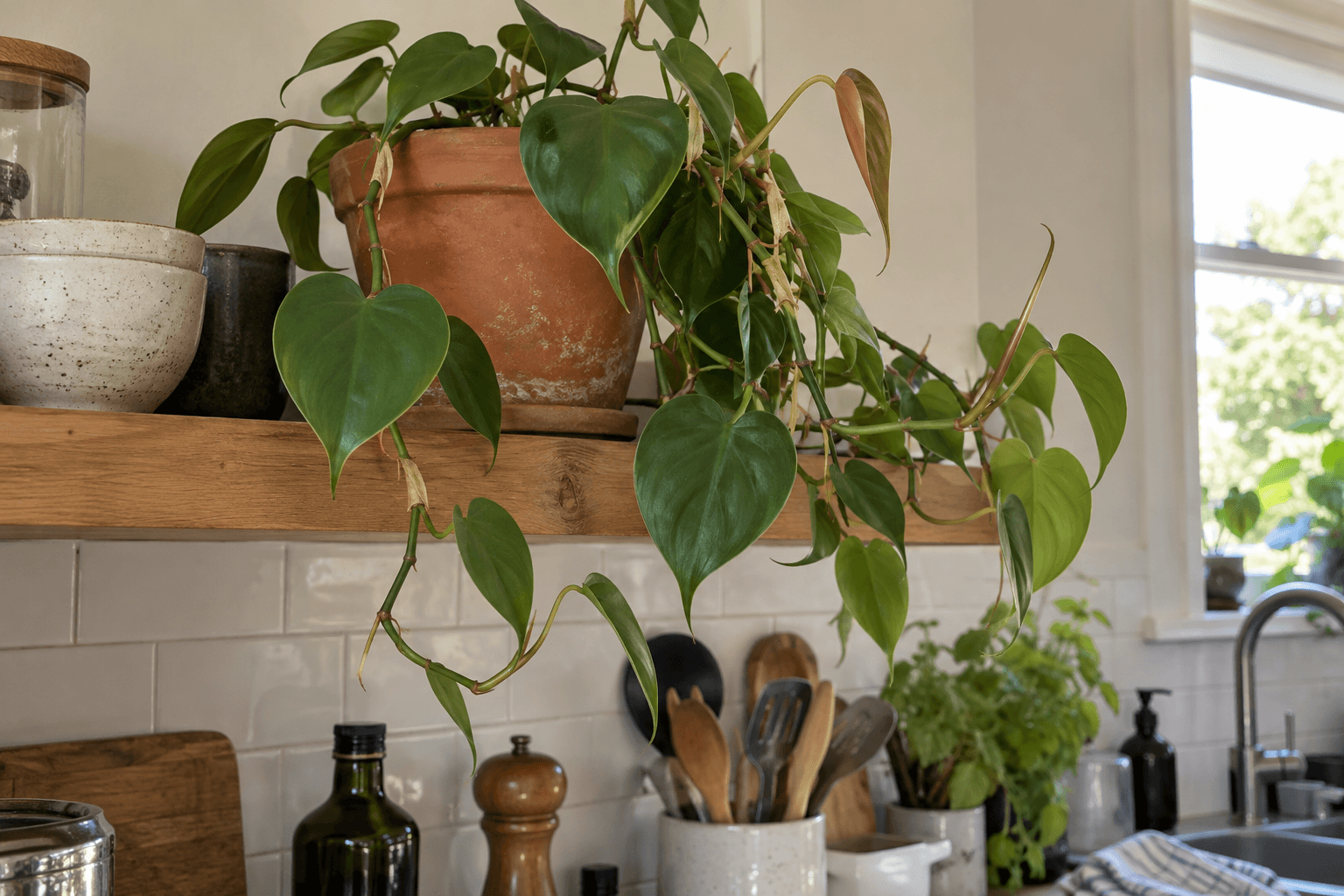
Some stems are meant to travel
A hoya can send out a searching vine, while an older pilea may develop a visible trunk. These habits are different from weak growth caused by inadequate light. Check the species and compare several new sections. A photograph from a nursery may show multiple plants grouped in one pot rather than the shape of a single specimen.
Inspect the growing tip's view
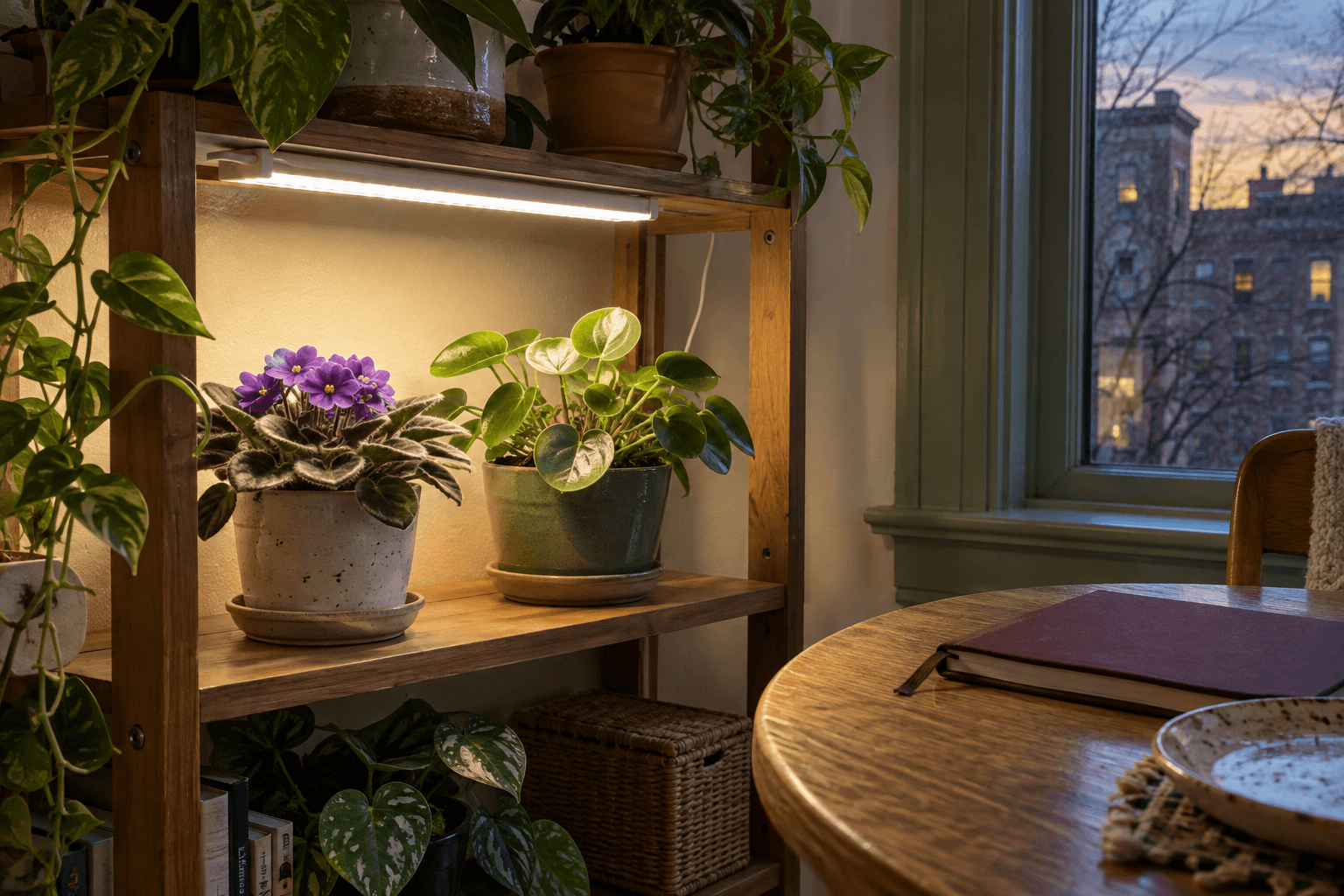
The base of a vine may be near a window while its newest growth trails into a dark corner. Look at where the leaves are developing. Move the plant or add appropriate light gradually; sudden strong sun can damage shade-grown foliage. A brighter room is useful only if light actually reaches the plant.
Make a plan for the shape
Once conditions support healthy growth, species-appropriate pruning can encourage a more manageable form. On a pothos, identify nodes before cutting and consider rooting suitable healthy pieces. Do not repeatedly shorten a plant in the same unsuitable position. A climbing plant may need support rather than a demand that it become a naturally compact shrub.
Old gaps will remain
Existing internodes will not shrink when light improves. Judge the response by new growth and plan gradual shaping if needed. Fertilizer is not a substitute for light, especially in a pot that remains wet for long periods. Keep the plant accessible enough that you can observe it without unwinding metres of vine from a curtain rod.
Find a related guide below.
Back to the beginningSources & notes
Care guidance checked against these horticultural references on 20 October 2026.
- University of Minnesota Extension: Lighting for indoor plantsWindow exposures, low-light limits and supplemental lighting.
- NC State Extension: Pilea peperomioidesRound peltate leaves, light, offsets and growth habit.
- NC State Extension: Hoya carnosaEpiphytic habit, draining medium and persistent flowering spurs.