A spring check without a repotting spree
Use stronger light and emerging growth to reassess care, while leaving well-suited pots alone.
The short answer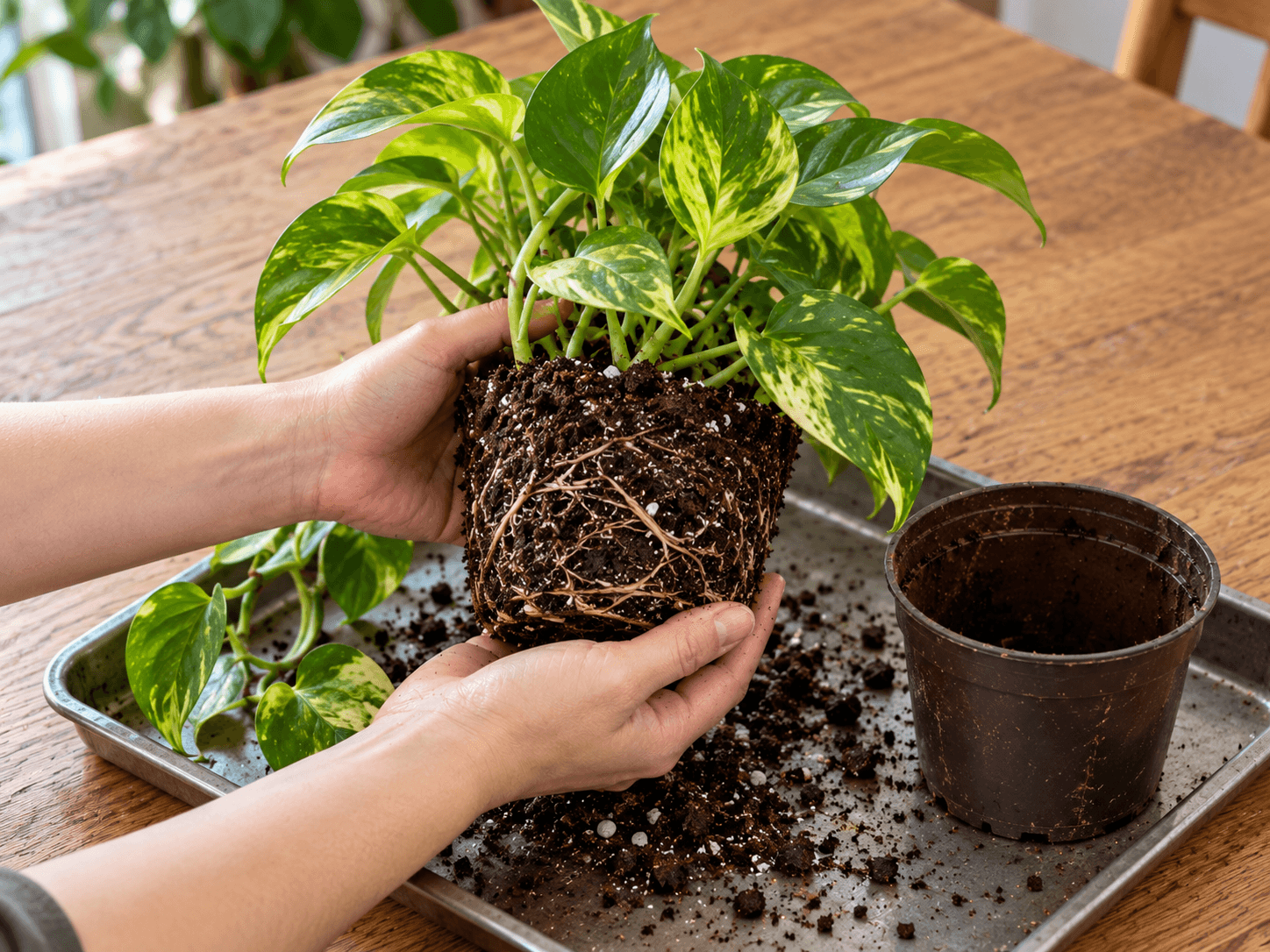
Look at the moving patch of sun
Longer days and a changing sun angle alter the light reaching familiar shelves. Trees outside may leaf out and shade a window that was bright in winter. Check the actual plant position at different times of day. Introduce a stronger exposure gradually and clean dusty windows or leaves where appropriate before deciding the plant needs a new home.
Inspect before rearranging
Examine new growth and leaf undersides, especially on plants that have been crowded together. Isolate a suspicious pot rather than distributing it among freshly cleaned shelves. Note old damage so you can tell whether the next leaves improve. A few photographs are often more useful than repeatedly turning every blemish into a new diagnosis.
Repot for a reason
Check whether water reaches the root ball, whether the medium stays wet unusually long and whether roots have become crowded. These observations guide the decision better than the month. Some plants can remain in their current pots. Others may need fresh medium or only a modest size increase, with drainage and a mix suitable for their roots.
Adjust from what the plant is doing
Active growth and better light can increase water and nutrient use, but different pots respond at different speeds. Check moisture and follow fertilizer directions instead of applying one stronger routine to the whole room. If considering a summer outdoors, wait for suitable weather and plan a gradual transition. The spring check can end with several plants left exactly where they are.
Find a related guide below.
Back to the beginningSources & notes
Care guidance checked against these horticultural references on 20 October 2026.
- University of Minnesota Extension: Spring houseplant careIncreasing light, growth-led spring care and gradual outdoor adjustment.
- University of Maryland Extension: Potting and repottingRoot-ball placement, aeration and why not to add gravel.
- NC State Extension: Plants grown in containersContainer materials, potting media, nutrition and indoor care.