Keep the pot, refresh the roots
A plant does not always need a larger pot. Decide whether refreshing medium, dividing or careful root work suits this particular plant.
The short answer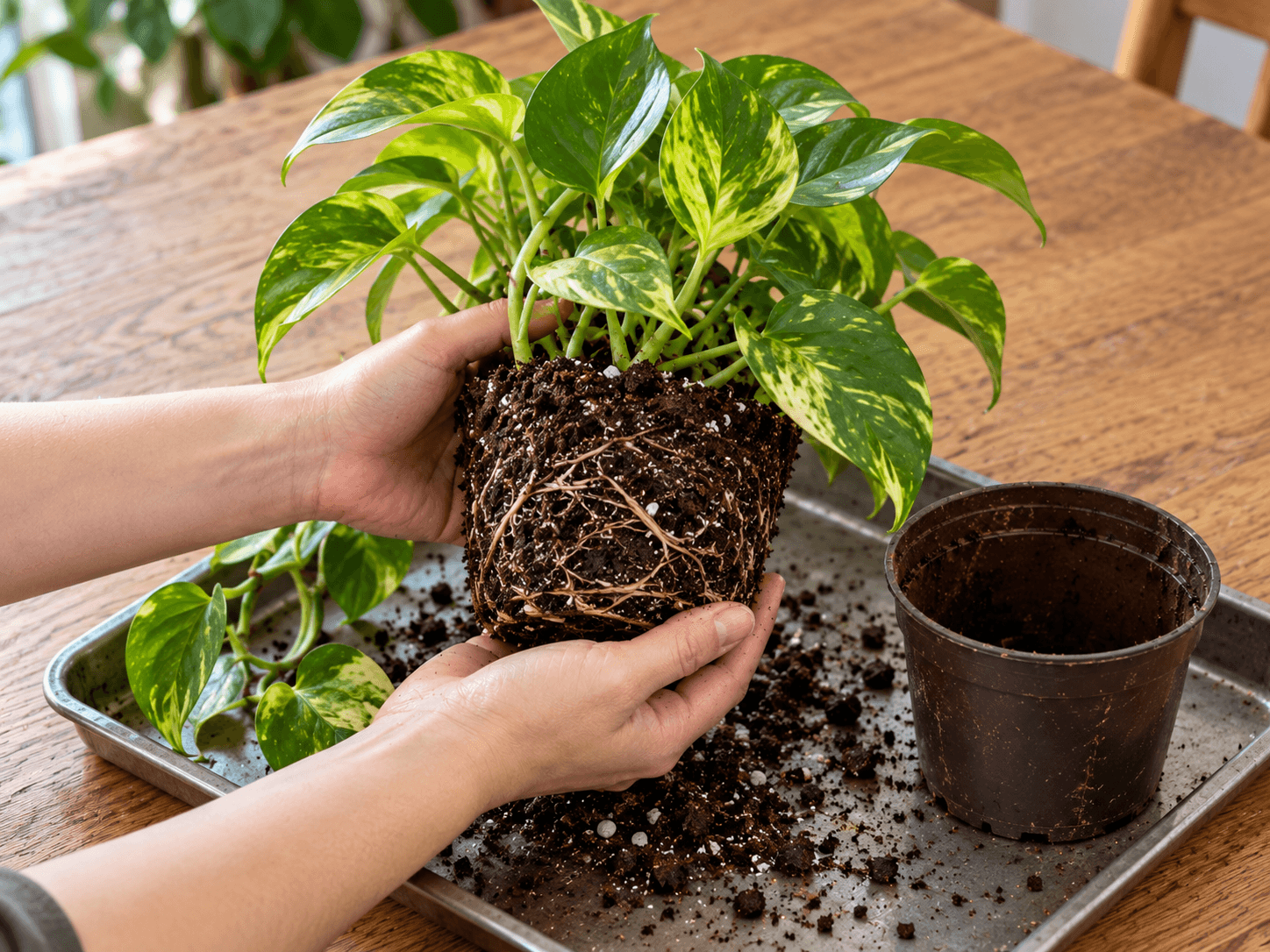
Name the reason for repotting
Is the medium degraded, the pot full of roots, or the plant simply too large for the room? These are different problems. Replacing some worn medium may help one plant; dividing a healthy clump may suit another. A larger container is not the only option, but keeping the existing one should not require damaging a struggling plant.
See what can be retained
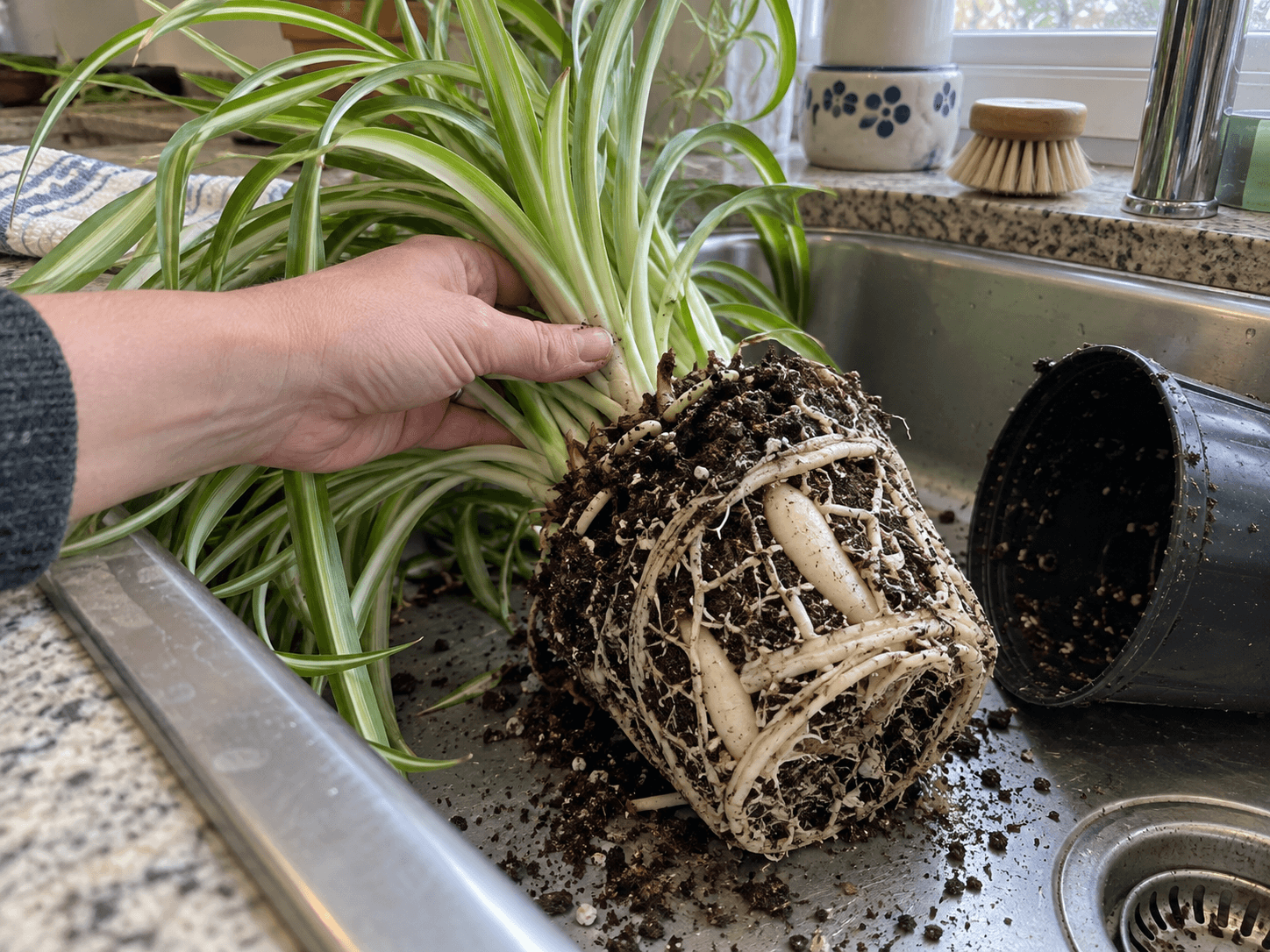
Gently remove the pot and assess the root system. Preserve healthy roots where possible and avoid stripping every particle of medium from a plant that does not need it. Some species tolerate root pruning better than others. Timing matters too: an appropriate active-growth period generally offers a better opportunity for planned work than a cold, dark week.
Choose a species-appropriate method
| Root-ball condition | Practical option |
|---|---|
| Sound roots with loose, worn mix around them | Gently remove loose old mix from the top and sides. Add fresh mix beneath and around the root ball, keeping the stem base at its original depth. |
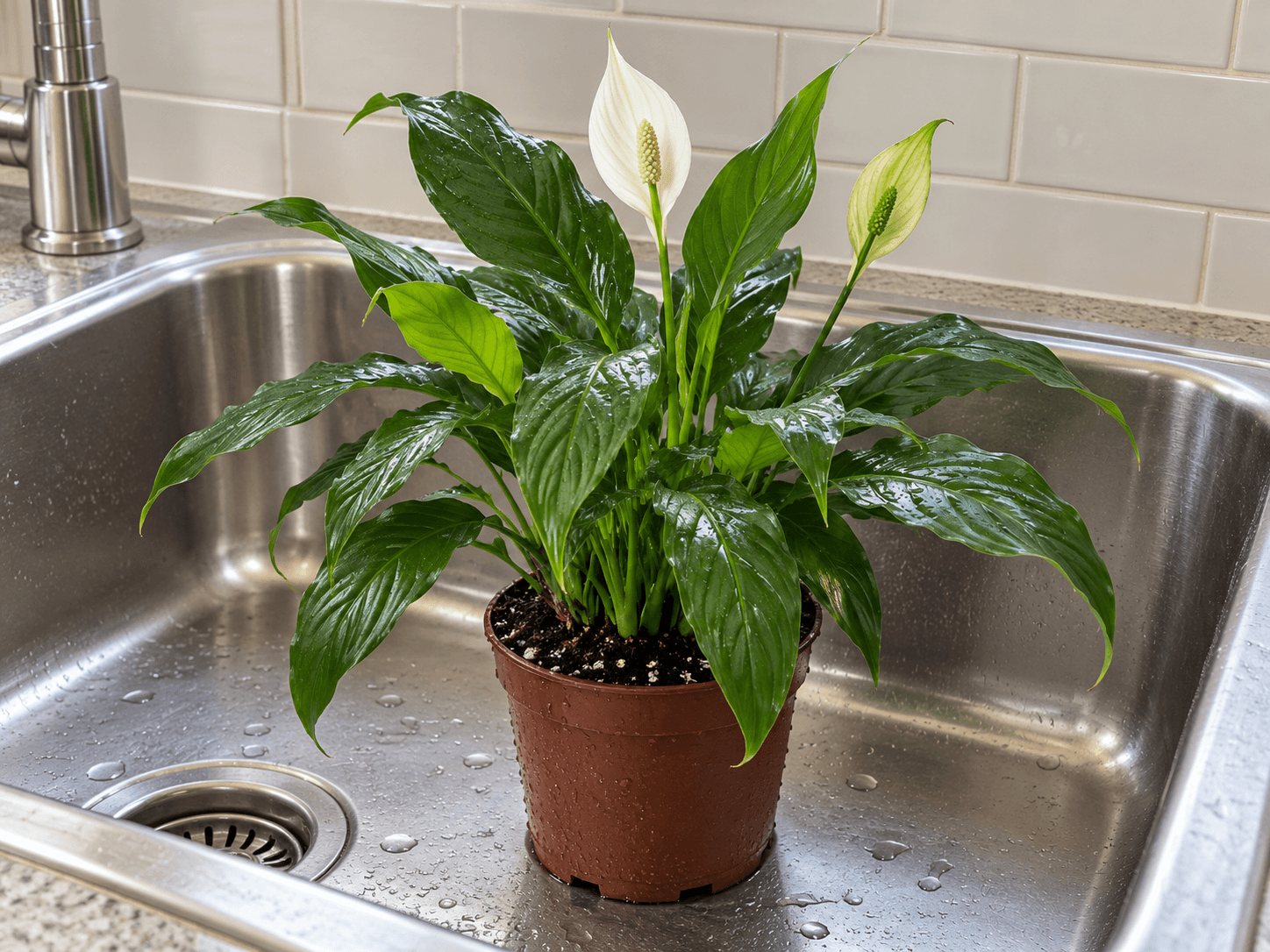
| A healthy, crowded clump that can be divided | Keep a smaller complete rooted section in the original pot and pot the other divisions separately. The peace-lily division guide shows the approach. |
| A dense root ball with no room for fresh mix | Simply lifting it out and squeezing it back will not create room. Choose a larger pot or obtain species-specific root-pruning guidance before cutting. |
These are options for healthy plants. Soft, collapsing roots belong in the root-rot guide before planned size control. Use a clean pot with open drainage holes; keeping the same container does not mean retaining spoiled mix.
Relearn the watering interval
The refreshed root environment may hold water differently from the old one. Check it directly and watch subsequent growth. Do not compensate for root work with heavy fertilizer. If the plant has fundamentally outgrown the available space, passing a healthy specimen to someone with room can be a better decision than repeatedly forcing it into an unsuitable container.
Find a related guide below.
Back to the beginningSources & notes
Care guidance checked against these horticultural references on 20 October 2026.
- Royal Horticultural Society: How to repot a plantContainer choice, root inspection and refreshing potting material.
- University of Maryland Extension: Potting and repottingRoot-ball placement, aeration and why not to add gravel.
- Iowa State University Extension: Propagating houseplantsSpecies-appropriate stem cuttings, divisions and plantlets.