Before the first afternoon outside
Choose sheltered shade, watch overnight temperatures and introduce outdoor conditions gradually.
The short answer
Use the forecast, not a holiday date
A warm lunchtime can be followed by a cold night. For many ordinary tropical houseplants, wait until overnight lows are reliably above 10 C before planning an outdoor stay; warmth-loving species may need a higher minimum. Check the species guidance and several nights of the forecast. A frost-free forecast alone is not enough. Keep a practical route back indoors if conditions change.
Start with protection
Start with a few hours in sheltered outdoor shade, clear of strong wind and busy balcony edges, then extend the time as the plant adjusts. If the species needs a brighter position, introduce that light over roughly 10-14 days. Shade-loving foliage can remain in a shaded outdoor position all summer; full sun is not the finish line for every plant.
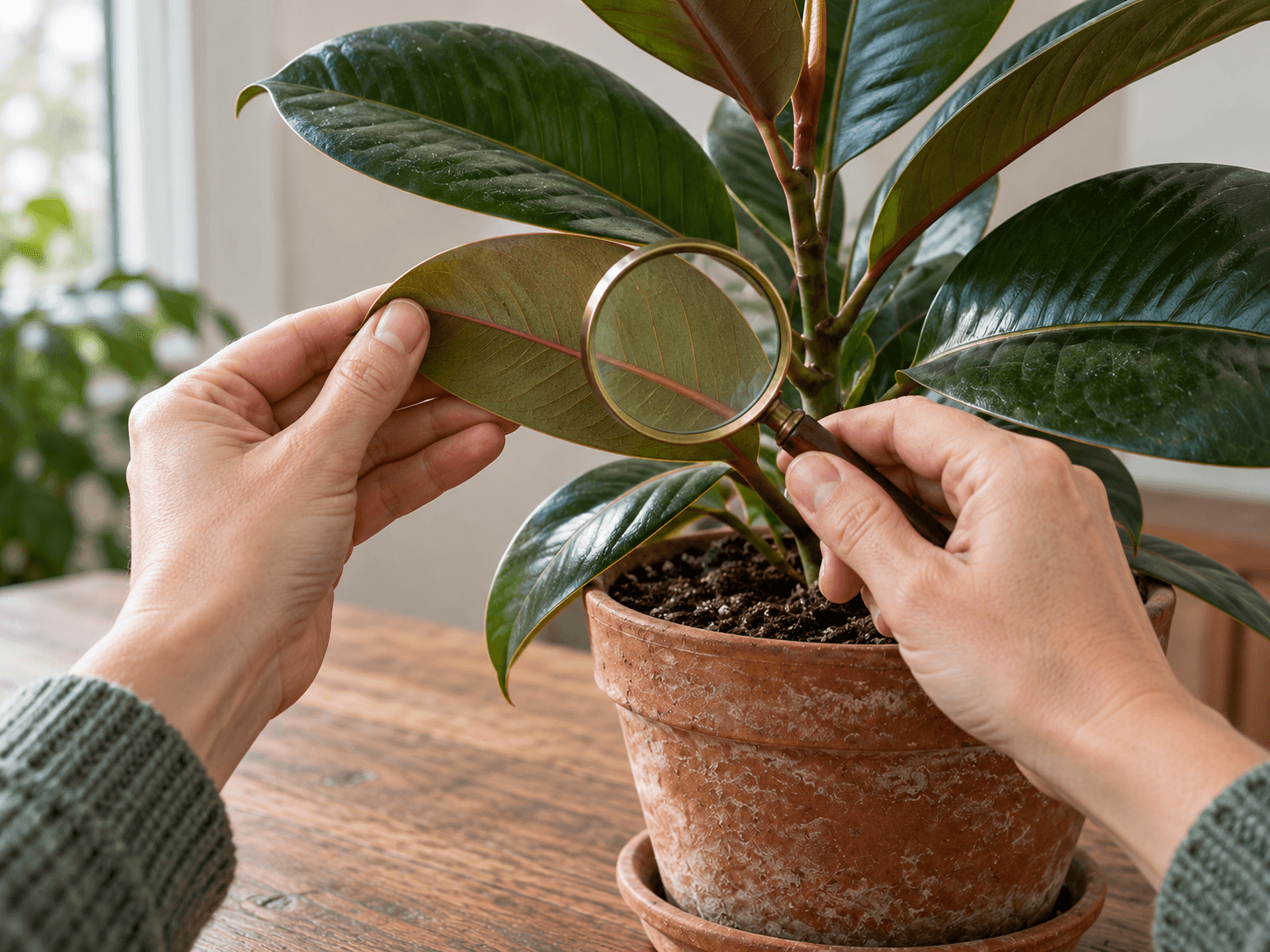
Check for new bleached patches or scorched edges as exposure increases. If they appear, move back to a more protected position before extending the time again. A roofed balcony can still receive strong low-angle sun, so inspect the spot later in the day as well as at breakfast.
Check what rain actually reaches
Use containers with drainage and empty outer pots after rain. A canopy or deep balcony may keep a plant dry while the pavement is wet. Wind and warmth can also increase drying. Feel the medium and lift manageable pots before watering; the indoor interval is no longer a dependable guide. Secure containers against tipping without blocking their drainage.
Some plants can stay inside
Moving outside is optional. A stable indoor position may be easier for sensitive plants or for a household that cannot monitor the weather. Inspect outdoor plants regularly for pests and damage, and plan their return before autumn temperatures fall. Leave enough room indoors for the plant you expect to bring back, including the growth it may make during summer.
Find a related guide below.
Back to the beginningSources & notes
Care guidance checked against these horticultural references on 20 October 2026.
- University of Minnesota Extension: When houseplants go outsideSheltered light, outdoor watering and plants that may remain indoors.
- Iowa State Extension: Moving indoor plants outside for summerGradual light adjustment, night-temperature checks, stable containers, changed water needs and autumn pest inspection.
- University of Minnesota Extension: Spring houseplant careIncreasing light, growth-led spring care and gradual outdoor adjustment.
- University of Maryland Extension: Excess lightBleaching, scorch and adjustment to stronger exposure.